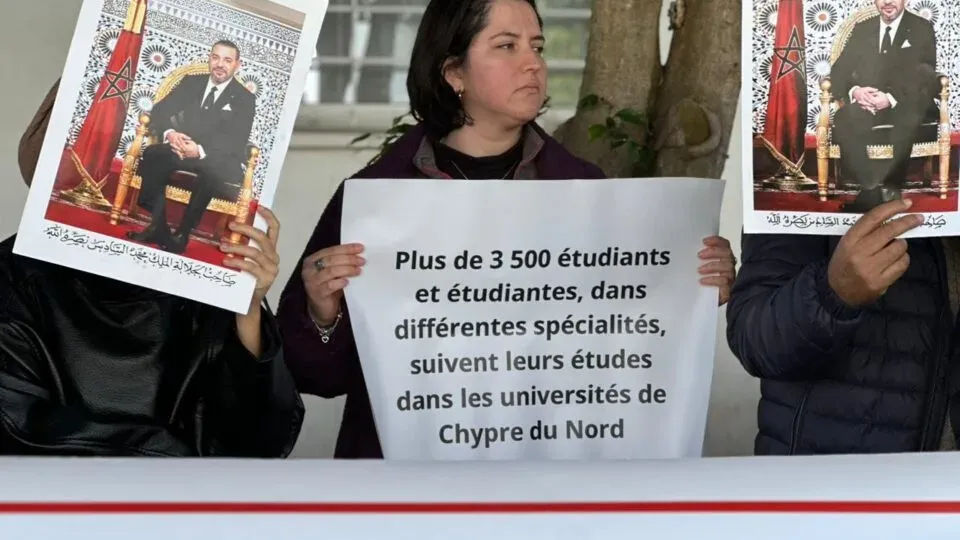

Protests Erupt in Rabat Over Degree Recognition Policy
In a significant display of discontent, Moroccan students and graduates gathered outside the parliament in Rabat on Wednesday to protest the government's abrupt decision to cease the recognition of degree certificates obtained from universities in northern Cyprus. This decision has left over 3,500 Moroccan nationals in a precarious situation, as they are now unable to validate their degrees upon returning home, particularly affecting those who graduated in 2023 and 2024. Historically, Moroccan authorities had accepted these degrees as equivalent to those awarded within the country, relying on validation from Turkey's higher education council (Yok). However, the landscape shifted dramatically in 2024 when the Moroccan government announced the cessation of this recognition policy without prior notice, leaving many students in limbo.
Ashraf Khattab, a pharmacy graduate from the Cyprus International University and coordinator of a committee formed to advocate for the rights of affected students and graduates, shared insights with local media outlet Sawt Al Maghrib. According to Khattab, the policy reversal was prompted by a communication from Morocco’s foreign ministry to the education ministry, which argued that the universities in northern Cyprus are located in a region whose political status is not recognized by the United Nations or the international community. This rationale has been met with frustration by many graduates, as Khattab emphasized that these institutions are well-established, hold respectable positions in global academic rankings, and are recognized by Turkey's educational standards.
Khattab further highlighted the plight of more than 3,000 students who have been left in a state of uncertainty, particularly those who had received assurances about the recognition of their degrees prior to enrolling in their programs. He described the situation as an instance of “administrative injustice,” urging the government to take immediate action to rectify the situation for all impacted individuals. Over the past nine months, campaigners have tirelessly engaged with government officials, lodged complaints with political parties and parliament, and reached out to Morocco’s ombudsman in hopes of finding a resolution, yet they have seen little progress, amplifying their concerns as the number of affected graduates continues to grow without any official guidance or explanation.
As reported by kiprinform.com.