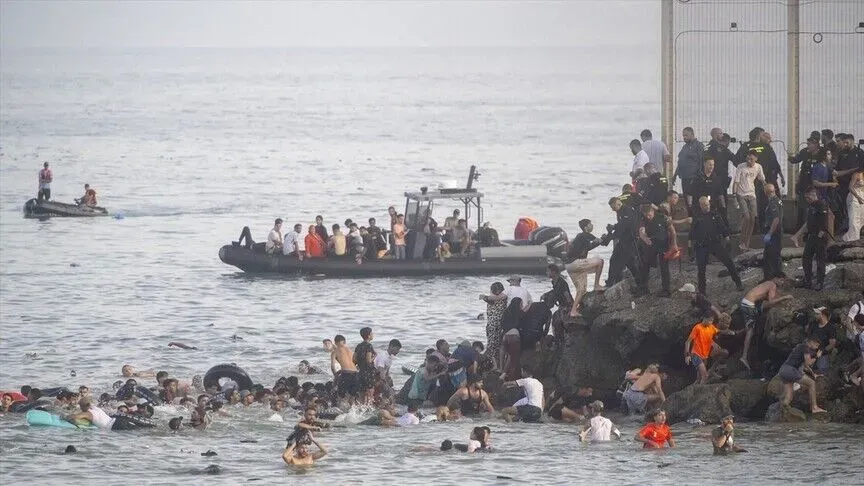

On September 10, 2026, Morocco expressed its discontent regarding the ongoing utilization of the kingdom by certain political and media circles in Spain to serve internal agendas. This statement comes in light of the recent controversy surrounding the surge of irregular migration towards the city of Ceuta. The assertion was made in an official communiqué issued by the Moroccan Ministry of Foreign Affairs, which was reviewed by Anadolu Agency's correspondent.
The statement lamented, "It is profoundly regrettable that historically significant parties, which are expected to possess expertise in governmental administration, have fallen into this quagmire." Furthermore, it added that "esteemed legislative and judicial institutions have adopted misguided initiatives that fuel discord." Morocco's foreign ministry firmly rejected the notion of being treated as a mere commodity ahead of elections and stated it will not accept being a scapegoat for settling political scores.
Moreover, the ministry reaffirmed that cooperation in the field of migration has always been coordinated and effective. It emphasized that the unfortunate events that transpired in July necessitate an in-depth investigation to ascertain the circumstances and the involved parties. The controversy persists regarding one of the largest waves of irregular migration towards Spain, which saw over 70,000 irregular migrants cross from Morocco into Ceuta on July 30 and 31.
The ministry further articulated, "Beyond any debate and conflict, the voice of reason and a candid discourse necessitate direct questions: Why do the accusations against Morocco continue in the absence of any data, facts, or reports substantiating any involvement by Moroccan authorities?" It questioned why irregular migrants have not been repatriated, especially since the Moroccan government had officially committed to receiving them back, and why unaccompanied minors are being kept away from their families, given that Morocco has urgently requested their return.
The statement stressed that the answers to these inquiries should not be sought in Morocco but rather from the relevant Spanish actors. The cities of Ceuta and Melilla, along with the Chafarinas Islands and other rocky islets in the Mediterranean, are administered by Spain, yet Morocco considers them to be occupied Moroccan territories. Migrants from various countries continue to attempt to cross irregularly through Morocco towards Europe, seeking a better life amid economic crises and armed conflicts in their home countries.
As reported by aa.com.tr.