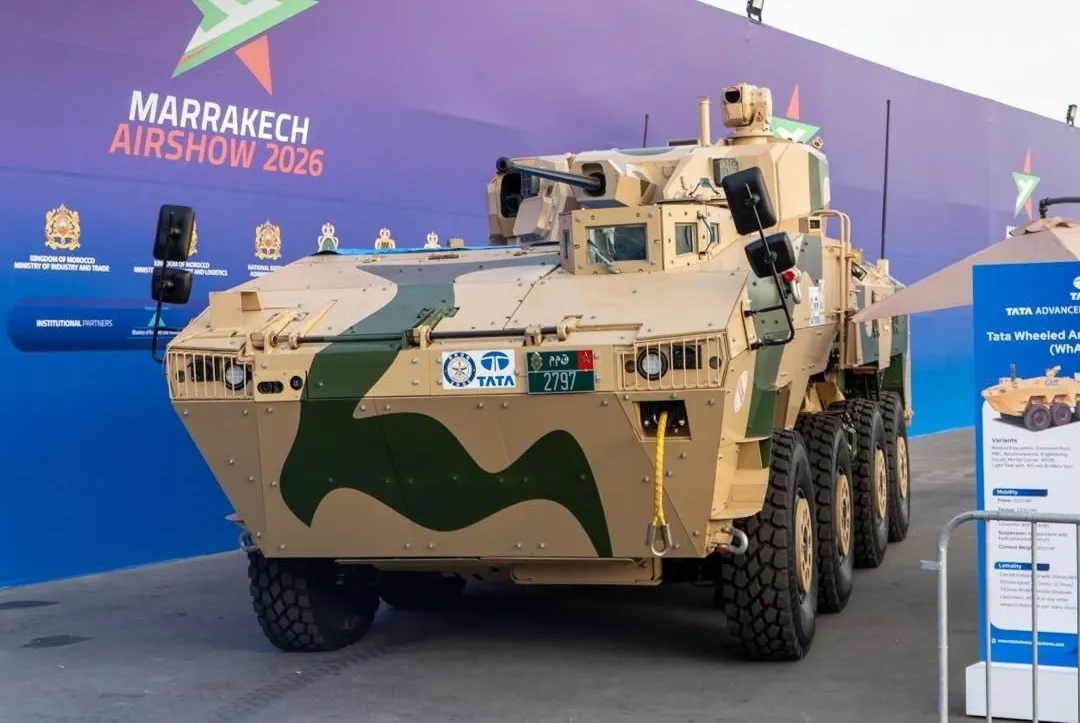

Morocco is set to significantly bolster the combat capabilities of its locally manufactured WhAP 8x8 armored vehicles, produced by the Indian company TATA, by equipping them with combat towers developed domestically by the Moroccan Military Industry (MMI), a subsidiary of the Israeli group Elbit Systems. The first deliveries to the Royal Armed Forces are scheduled to commence in March 2027, marking a pivotal moment in Morocco's military modernization efforts.
This development was unveiled during the Marrakech Air Show, where MMI announced an agreement with the National Defense Administration to manufacture the combat towers that will be installed on the TATA-produced armored vehicles. Additionally, the agreement includes the production of munitions related to these systems, indicating a comprehensive approach to enhancing the military's operational capabilities.
The March 2027 deadline represents a significant milestone in this project, as it signals the beginning of the delivery of domestically manufactured combat towers, thereby integrating local industrial capabilities with the armored vehicles produced within Morocco. This initiative moves beyond the initial focus on the local assembly of WhAP 8x8 vehicles, paving the way for a more self-sufficient military industry.
In May 2025, specialized reports indicated that Morocco was exploring the utilization of weapon systems produced by Elbit Systems to enhance the firepower of its Indian-manufactured armored vehicles. This effort reflects Morocco's strategy to combine local military vehicle production with specialized weaponry from defense industry experts.
This strategic move aligns with Morocco's partnership with TATA to manufacture ground combat vehicles within the kingdom, representing a significant step towards localizing military vehicle production and establishing a sustainable defense industry.
Currently, MMI operates a specialized weapons systems facility in the Midpark industrial zone near Casablanca, and a second factory is under construction in Sidi Yahya, north of Rabat, dedicated to producing medium and large-caliber munitions.
Furthermore, the project is not limited to the towers designated for armored vehicles; MMI is also developing a drone countermeasure version of the same turret. This initiative aims to provide a cost-effective defensive system to address the growing challenges posed by unmanned aerial threats faced by armed forces worldwide.
At the Marrakech Air Show, MMI announced that the munitions for the drone countermeasure version will also be produced in Morocco. This system will feature a small radar designed to detect incoming drones and activate an explosion that disperses tungsten fragments to destroy the target.
Additionally, MMI plans to expand its production capabilities in Morocco to include a self-propelled mortar system that can be mounted on military vehicles. This indicates a broader trend in local defense manufacturing, moving from simple assembly towards the development and production of a wider range of military systems and equipment.
Morocco continues to lay the industrial foundations for this sector through partnerships with various companies and countries, aiming to build a defense industrial base capable of producing military equipment domestically while simultaneously benefiting from the expertise and technology provided by specialized international firms.
King Mohammed VI emphasized the importance of supporting military localization programs in his daily order addressed to members of the Royal Armed Forces on the occasion of the 69th anniversary of their establishment in May 2025. He underscored the need to provide the necessary legal, logistical, and procedural conditions to attract both Moroccan and foreign investors and partners, contributing to the establishment of a comprehensive national defense industry.
As reported by assahifa.com.