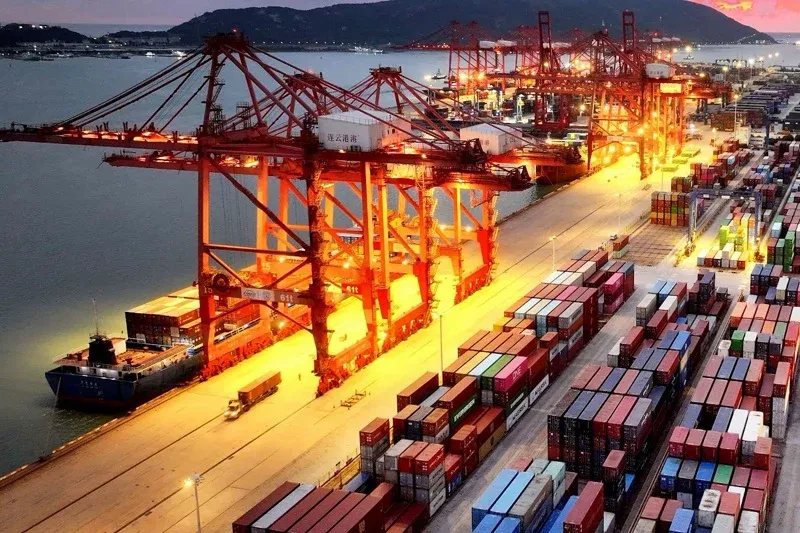
Morocco continues to affirm its status as the best-performing economy in North Africa, surpassing Algeria, Egypt, and Tunisia amidst rapidly changing global economic conditions that have raised concerns about inflation, energy costs, and tightened financing conditions. This achievement comes at a time when pressures on regional countries are mounting due to rising import bills and dwindling financial maneuverability. In contrast, Morocco benefits from its strong appeal for foreign investments, robust tourism inflows, and solid domestic demand.
Recent assessments from the credit insurance company "Coface," released in October 2026, show that Morocco has maintained a "B" rating on the country risk index, reflecting a medium level of risk associated with economic activities and business transactions. Additionally, Morocco holds an "A4" rating for its business climate, indicating an acceptable level of risk. This evaluation highlights the national economy's ability to sustain a leading regional position, even as several of its production sectors remain exposed to external market fluctuations and rising production costs.
Moroccan Economic Resilience Amid Regional Pressures
The "Coface" report emphasizes that Morocco has achieved the best economic performance in North Africa, bolstered by three main factors: its strong attractiveness to foreign visitors, its capacity to attract capital, and the continuous strength of domestic demand. According to the international institution's evaluation, these elements support the national economy in facing external fluctuations, especially when compared to neighboring economies that grapple with challenges related to soaring import costs and pressures on foreign currency reserves. The importance of Morocco retaining its "B" rating is underscored by the nature of the index used by the credit insurance company, which measures the risks of companies failing to meet their financial obligations across various countries, taking into account the economic, financial, and political conditions affecting business transactions.
The "A4" rating for the business climate offers a relatively independent assessment of the quality of the environment in which companies operate, including access to financial information, institutional effectiveness, and the legal framework governing commercial transactions and dispute resolution. The combination of these two indicators provides a comprehensive view of the risks facing investors, exporters, and commercial credit institutions.
In contrast, Algeria, Egypt, and Tunisia have turned towards tighter import controls to support local production and preserve their foreign currency reserves, signaling the pressures these economies face due to rising costs of external purchases. Such measures are particularly significant in light of increasing energy and raw material prices, which add additional burdens to balance of payments and production costs. In the case of Egypt and Tunisia, "Coface" warns of ongoing economic repercussions from the conflict in the Middle East, despite a decrease in the intensity of military operations compared to previous periods. The rising costs of energy and other production inputs, coupled with foreign tourists' cautious behavior, complicate the economic situation in both countries. Furthermore, logistical disruptions related to the war in the Black Sea have driven up the cost of grain imports, adding further pressure on economies reliant on food imports.
However, Morocco's performance is not devoid of vulnerabilities, as the report notes a deceleration in certain national industries due to rising input prices and reduced European demand. This particularly pertains to industrial activities linked to international value chains that remain sensitive to fluctuations in raw material and energy prices, as well as changes in consumption and investment patterns among European trading partners. Coface has provided a detailed analysis of the trends in Moroccan industrial production, based on a moving average over four quarters, using 2019 as a comparative baseline. The data reveals varying trajectories among these sectors in recent years, reflecting different degrees of exposure to external shocks and showing that not all industrial branches benefit equally from the national economic dynamics.
Emerging Economies Under Pressure from Global Shocks
Coface warns that ongoing geopolitical disruptions and rising commodity prices threaten to undermine the resilience of emerging economies amidst increasing inflationary pressures and escalating borrowing costs. The report indicates that the conflict in the Middle East has caused continuous disruptions in maritime traffic and energy supplies, which have impacted the prices of refined petroleum products, particularly "diesel," which has reached record levels due to reduced refining capacities. The report highlighted that the price of oil exceeded $100 per barrel again in September, while disruptions in the Strait of Hormuz and the Red Sea have contributed to increased transport and insurance costs, extending delivery times. Additionally, attacks on Russian energy facilities and logistical disruptions in the Black Sea have intensified pressures on international markets, as energy and food-importing countries face rising costs for their external purchases.
The agricultural sector has also been affected, as grain crops have suffered from heat waves and drought in several major production areas, coinciding with disruptions in export movements across the Black Sea. These factors have contributed to a 40% year-on-year increase in wheat prices, heightening the risk of food inflation in economies reliant on imports. In its outlook for the global economy, Coface has raised its growth forecast for 2026 from 2.3% to 2.5%, based on better-than-expected performance in the first half of the year, but cautioned that the negative effects of inflation and tightened monetary policies will become more evident towards the end of this year and early 2027. The cumulative loss related to the conflict in the Middle East is estimated at about half a percentage point of global growth over the next two years.
Coface's anticipated limited improvement in global growth to 2.6% in 2027 does not necessarily reflect a broad recovery, as most economies are expected to experience a slowdown or stability in their growth rates. However, some Gulf countries might benefit from improved activity if a resolution to the conflict is reached. Major economies, including the United States and China, are also likely to continue recording gradual slowdowns. These risks are exacerbated by tightening international financial conditions, as major central banks, notably the U.S. Federal Reserve, the European Central Bank, and the Bank of Japan, have raised interest rates to combat inflationary pressures. The report notes that the rise in long-term sovereign bond yields to their highest levels in nearly two decades rekindles concerns about the capacity of debt-laden nations to bear financing burdens.
In a further indication of the deteriorating global business environment, Coface predicts a 6% increase in business bankruptcies in 2026, followed by another 5% rise in 2027. If realized, this would mark the sixth consecutive year in which bankruptcy cases rise, bringing the total to about 40% higher than the pre-COVID average. The wave of deteriorating economic risks has even affected countries with significant financial and energy capabilities, as the agency has downgraded Saudi Arabia and Qatar from "A3" to "A4" and the UAE from "A2" to "A3" due to the regional conflict's implications for energy production, exports, transportation, and investment. It highlighted that disruption to maritime corridors and rising shipping and insurance costs are squeezing companies' profitability and their ability to meet financial obligations. Conversely, the agency upgraded the ratings of four countries, namely the Bahamas, El Salvador, Montenegro, and Zambia, based on improvements in some of their economic and financial indicators. Furthermore, it conducted 12 downward revisions of sector risk ratings, compared to eight upward revisions, with notable deterioration seen in the food industry across six countries due to weather fluctuations and other factors.
As reported by hespress.com.