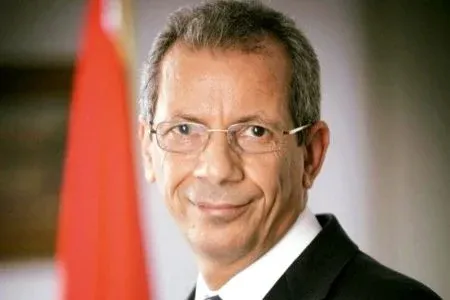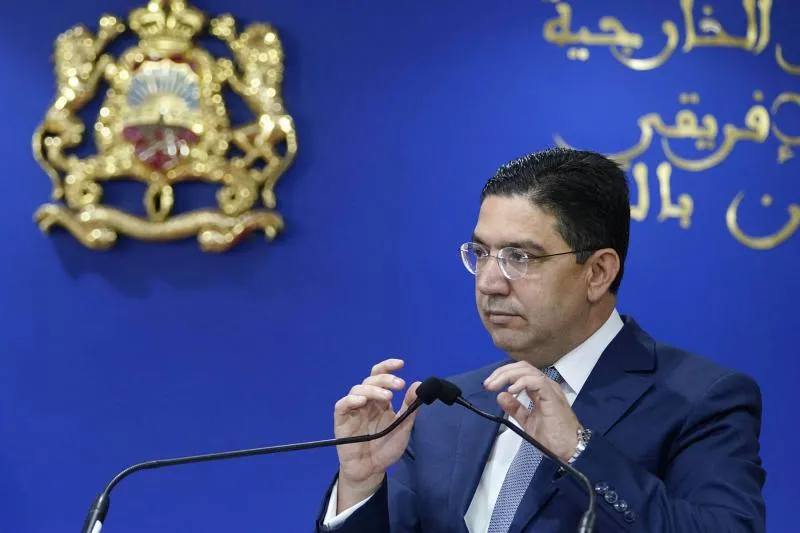
In a decisive move underscoring its commitment to regional security, Morocco has reaffirmed its unwavering support for the Gulf Cooperation Council (GCC) states amidst escalating tensions attributed to Iranian actions in the Gulf region. This position reflects Rabat's perspective that the stability and security of the Gulf are integral to the broader framework of Arab security. Moroccan Foreign Minister Nasser Bourita articulated the kingdom’s “full support” for the GCC members in their confrontation against what he termed “unjustified Iranian aggression.” He emphasized that Morocco stands resolutely alongside the Gulf nations in their efforts to uphold their sovereignty, defend their security, and ensure the safety of their citizens and residents.
Bourita's remarks were made during the eighth joint ministerial meeting conducted via videoconference, which convened officials from the six-member GCC, including Saudi Arabia, the United Arab Emirates, Qatar, Kuwait, Bahrain, and Oman. He highlighted that the current phase of regional turbulence necessitates a fortification of the strategic partnership between Morocco and the Gulf states, adapting it to the escalating geopolitical challenges that confront them. Moreover, Bourita clarified that Morocco perceives its relationship with the Gulf nations not merely as a political alliance but as a multidimensional strategic partnership founded on shared interests and mutual challenges.
The Moroccan stance was further emphasized through a series of communications made by King Mohammed VI to various Gulf leaders following the recent Iranian provocations. Analysts interpret these calls as a clear political message reinforcing Rabat's solidarity with its Gulf allies during critical times, showcasing the depth of both political and personal ties that have developed over the past decade between Morocco’s leadership and that of the Gulf states. Morocco has consistently articulated that the security of the Gulf region is intertwined with its own national security considerations, which reflects a strategic vision that recognizes the interconnected nature of regional stability across the Arab world.
Bourita pointed out that the challenges faced by the region today transcend military and security issues, asserting that national security increasingly encompasses economic resilience, social stability, and the capability of states to secure essential needs for their populations, particularly during crises. This broader perspective aligns with a significant evolution in Arab strategic thought, where elements such as energy security, supply chain reliability, and food security are now recognized as critical components of both national and regional stability.
This strategic vision builds upon the foundations laid by King Mohammed VI during the Morocco-Gulf summit in 2016, which emphasized that the ties between Morocco and the Gulf states rest not only on cultural and religious commonalities but also on shared values, interests, and security concerns. This summit marked a pivotal moment in the evolution of relations, leading to a more structured partnership characterized by regular meetings and collaborative action plans.
The foreign ministers of the GCC have expressed their appreciation for Morocco’s supportive position, recognizing that Rabat’s commitment reflects the profound historical connections between Morocco and the Gulf region, as well as the special political relationships that King Mohammed VI has cultivated with Gulf leaders. They noted that such solidarity would bolster joint efforts aimed at enhancing regional stability and expanding the strategic partnership between the two parties.
International relations scholar Khalid Chiat commented that the joint ministerial meeting showcased a significant level of trust and cooperation between Morocco and the Gulf states. He noted that Morocco’s solidarity with its Gulf allies is part of a broader strategic vision aimed at promoting stability throughout the Arab world. Chiat also remarked that the presence of US military bases in certain Gulf nations does not justify the Iranian attacks on those countries, especially when several Gulf governments maintain diplomatic relations with Tehran.
Beyond political and security coordination, Morocco and the GCC are also focused on deepening their economic collaboration. Bourita announced the extension of the joint action plan between Morocco and the Gulf states to span from 2025 to 2030, emphasizing the need to enhance economic and investment cooperation. He advocated for a more significant role for the private sector and sovereign wealth funds in supporting joint initiatives, arguing that stronger economic integration is pivotal for the long-term sustainability of the strategic partnership. Officials believe that establishing a robust economic foundation is crucial for maintaining political cooperation, particularly as the global economy experiences significant technological and structural transformations.
Morocco’s supportive approach towards the Gulf states is indicative of a broader strategic vision centered on reinforcing Arab solidarity in the face of mounting regional challenges. Through its diplomatic endeavors, Rabat is positioning itself as a pivotal strategic partner within the regional security framework while promoting enhanced Arab cooperation to effectively manage the escalating crises that are reshaping the Middle East. In light of this, closer coordination among Arab states is increasingly seen as a strategic necessity as the region grapples with a volatile geopolitical landscape.
As reported by thearabweekly.com.