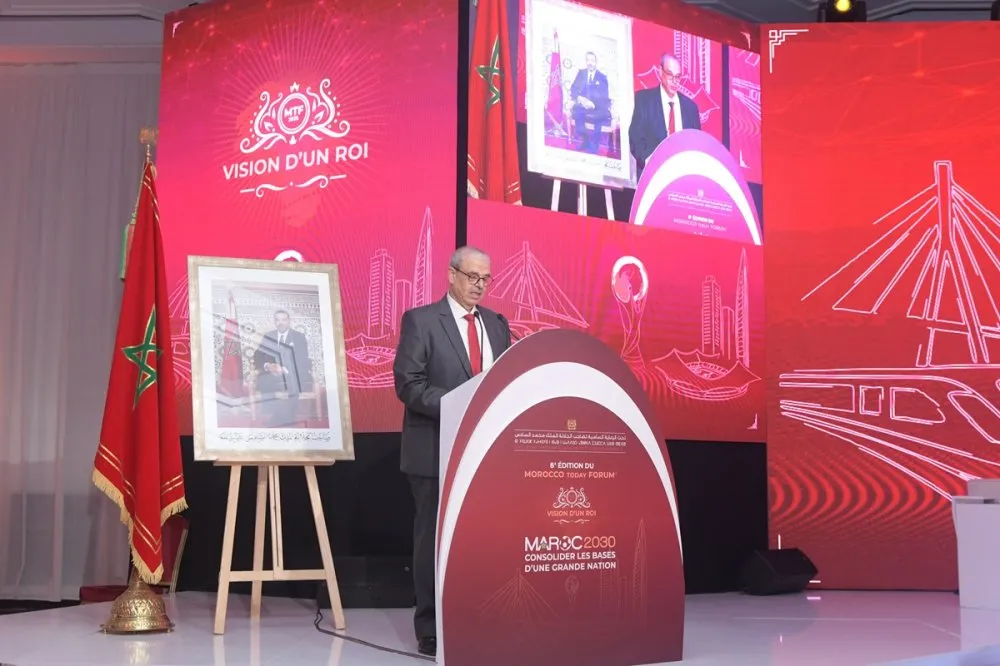

This Friday marks the opening of the ninth edition of the Morocco Today Forum in **Errachidia**, a location chosen for its proximity to the real-life challenges facing Morocco, far removed from major urban centers. Under the theme "Morocco of Territories: Towards Integrated and Inclusive Emergence," this forum aims to transform local development from mere diagnostics into concrete, measurable actions that positively impact the everyday lives of citizens.
The selection of this theme is timely, as Morocco has embarked on significant structural projects and major reforms over recent decades, leading to profound transformations in its infrastructure, economy, and social policies. However, these advancements have not fully mitigated the disparities existing between regions or between urban and rural areas. Access to public services, connectivity, mobility, employment opportunities, economic attractiveness, and overall quality of life continue to be pressing challenges that need addressing to ensure that every citizen has equal opportunities for development, regardless of their location.
The Morocco Today Forum seeks to center its discussions around a critical question: how can national dynamics yield visible changes across all territories? How do we transition from institutional frameworks and announced programs to tangible improvements in access to roads, water, healthcare, education, transportation, and telecommunications networks?
According to **Mohammed Haitami**, CEO of Groupe Le Matin, the focus must now shift from merely documenting regional inequalities to actively monitoring the deployment of solutions and evaluating their real impact on local populations. The aim is to enable residents of remote areas to access healthcare facilities, markets, and administrative services more easily, even when adverse weather conditions hinder travel.
Bridging Expertise with Ground Realities
The MTF 2026 builds on prior reflections initiated through a strategic orientation workshop that gathered representatives from various sectors, including administration, elected officials, civil society, economists, sociologists, and specialists in territorial development. The goal is to synthesize diverse perspectives and avoid an exclusively institutional reading of regional disparities. "The Morocco Today Forum seeks to facilitate dialogue between expertise, policymakers, and ground realities," emphasizes M. Haitami. This approach aims to align public decision-making with the genuine needs expressed within communities and confront existing policies with the concrete expectations of citizens. This philosophy is particularly relevant as a new generation of integrated territorial development programs begins to take shape.
The Forum aims to explore the levers of a more balanced emergence, focusing on reducing inequalities, leveraging each region's unique potentials, and accelerating local development as a means of fostering shared prosperity. It is clear that a one-size-fits-all solution is not feasible; each territory has its own needs, constraints, resources, and developmental trajectory. For example, one municipality may prioritize road infrastructure, while another may need healthcare facilities, dormitories, or social equipment. Hence, public responses must be founded on precise local diagnostics and maintain sufficient flexibility in project programming and execution.
Errachidia: A Symbolic Choice
The decision to host the event in Errachidia extends beyond mere geographical decentralization. It embodies the theme of this edition. As the capital of Draâ-Tafilalet, Errachidia is at the heart of a region that encapsulates many of the challenges the Forum aims to address: water stress, isolation, mobility, connectivity, and attractiveness. Moreover, it boasts remarkable heritage, natural resources, significant economic potential, and numerous opportunities for value creation. "Draâ-Tafilalet is particularly significant for discussing territorial development. The region has resources that remain underutilized, especially in the mining, agricultural, agri-food, and tourism sectors," asserts the CEO of Groupe Le Matin.
The date palm sector, vegetable farming, desert landscapes, and destinations like Merzouga and Erfoud have the potential to generate more wealth and jobs. However, their development necessitates improved connectivity, adequate accommodation capacities, appropriate promotion, and offerings tailored to visitor expectations. Thus, Draâ-Tafilalet reflects the "Morocco of Territories" that the Forum aims to highlight: a Morocco characterized by contrasting realities, rich in diversity, yet still facing the challenge of converting its potential into sustainable opportunities.
The Forum’s activities will be structured around three complementary panels. The first, titled "From Architecture to Impact: Advanced Regionalization in Light of New Royal Guidelines," will examine the necessary conditions to translate institutional ambitions of regionalization into tangible results perceived by citizens. Discussions will address governance, financing, the transfer of competencies, and the coordination of various regional development instruments. They will also explore how to evaluate territorial policies. Success cannot merely be judged by the budgets allocated or the number of facilities built; it must also consider their utility, accessibility, and ability to sustainably meet the populations' needs.
The enhancement of local capacities will constitute another key aspect of this reflection. The upskilling of elected officials and local leaders is essential for designing, managing, and evaluating projects while enabling local authorities to fully assume their responsibilities. This must be accompanied by strengthened governance of regional structures responsible for execution and a long-term vision that transcends electoral deadlines to reach even the most remote communities.
The second panel will focus on enhancing the attractiveness of territories for both citizens and businesses. It will explore the conditions necessary for emerging regions to have clear economic vocations capable of attracting investments, creating jobs, and offering a high quality of life. While public investment remains crucial, it cannot achieve its full effect without greater mobilization of the private sector. Attractiveness encompasses not only fiscal advantages and infrastructure but also the quality of legal frameworks, logistics, available skills, and services offered to families. A company considering relocating to a region must find the profiles it needs, and its employees must have access to schools, healthcare services, housing, and an environment that meets their expectations. Economic attractiveness and quality of life are thus intrinsically linked. This dynamic aligns with the objectives of the social state, where the valorization of regional resources and job creation should enable populations to gradually gain economic autonomy.
The third panel will delve into the role of digital technology and artificial intelligence in serving humanity and governance. Digital technologies can enhance access to public services, bolster the effectiveness of public actions, and help bridge territorial divides. "Digital technology and artificial intelligence can help reduce distances and accelerate territorial transformation; however, their use must be governed clearly and respond to identified needs rather than being an end in itself," highlights Mohammed Haitami. Possible applications include telemedicine, remote administrative services, digital education, intelligent resource management, and public decision support. Their relevance will depend on their ability to enhance services to citizens and avoid creating new forms of exclusion in less connected areas.
Since its inception in 2016 under the High Patronage of His Majesty King Mohammed VI, the Morocco Today Forum has established itself as a platform for reflection and exchange on the Kingdom's major development challenges. Each edition brings together public officials, experts, economic stakeholders, and civil society representatives, culminating in the production of a White Paper that consolidates the recommendations arising from the discussions. Through this ninth edition, Groupe Le Matin also aims to reaffirm the civic role of the media. For Mohammed Haitami, the press must highlight difficulties, amplify diverse voices, and contribute to the search for solutions without succumbing to pessimism or complacency. By bringing this year’s debates to Errachidia, the Morocco Today Forum seeks to bridge national reflection with local realities and facilitate the transition from diagnosis to action. The ambition is clear: to develop a model where progress is not solely gauged by economic performance but by its ability to enhance the lives of each citizen. The Morocco of tomorrow cannot be a dual-speed Morocco; it must be a Morocco that moves forward, with all its territories, towards a shared future.
As reported by lematin.ma.