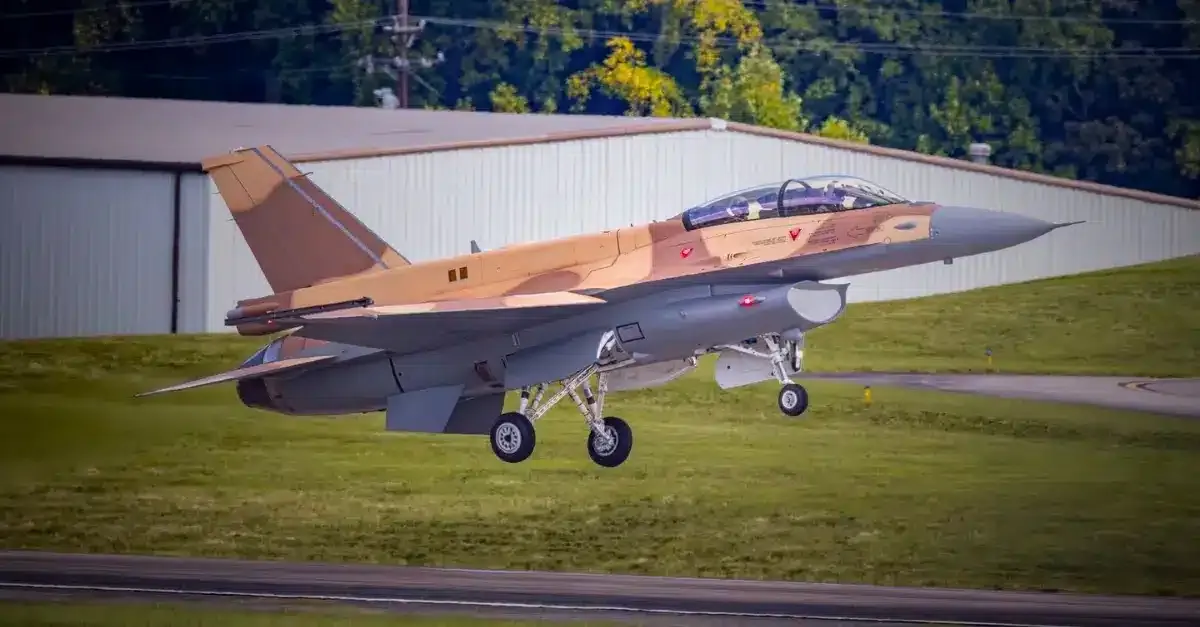

The inaugural flight of the first F-16D Block 72, destined for the Royal Moroccan Air Force, took place on October 6, 2026, at Lockheed Martin’s facility in Greenville, South Carolina. This significant achievement arrives amid escalating tensions between Morocco and Algeria, particularly as Algeria has started to receive Su-35 fighter jets and is preparing to introduce the advanced Su-57E into its arsenal. The introduction of the new F-16s serves as a strategic countermeasure to Algeria's military enhancements, particularly following the unsuccessful transfer of Mirage 2000-9s from the United Arab Emirates, which has limited Morocco’s immediate options for bolstering its air capabilities.
F-16D Block 72: Strengthening Morocco's Air Force
Before the official handover to Morocco, the F-16D Block 72 must undergo additional flight testing; however, a specific timeline for this process has yet to be disclosed. Mike Shoemaker, leader of Lockheed Martin’s Integrated Fighter Group, commented on the maiden flight, stating, "This first flight reflects the considerable advancements made in Morocco’s F-16 Block 72 program and marks a vital step toward enhancing Morocco’s future air power." The delivery of these aircraft will depend on the successful completion of a comprehensive testing campaign in the United States. Morocco is set to receive 25 new F-16C/D Block 72 jets, also known as F-16 Vipers, while its existing fleet of 23 F-16C/D Block 52+ aircraft will be upgraded to the F-16V standard. Consequently, the Royal Moroccan Air Force will operate a total of 48 aircraft with similar configurations, distributed across two squadrons. This standardization will streamline crew training, technical support, and spare parts management, while also ensuring that the fighters currently in service benefit from updated avionics and mission systems that are on par with those of the newly manufactured aircraft.
The Block 72 features enhanced avionics, improved sensors, and upgraded mission equipment, including the Pratt & Whitney F100-PW-229 engine, which is already used in Morocco’s current fleet. These advancements are designed to boost the aircraft's detection, engagement, and air defense mission capabilities, providing Morocco with an operational range that can compete with the Russian aircraft utilized by the Algerian Air Force, especially when supported by aerial refueling and detection systems.
Geopolitical Context and Future Prospects
As of March 2026, Algeria has received at least one Su-35, although the exact number of aircraft now operational remains unclear. An agreement for the acquisition of the Su-57E was made public in February 2025, with reports suggesting that Algeria may have already received two of these advanced jets. Furthermore, Algerian personnel are reportedly undergoing training in Russia, which would facilitate a quicker integration into service once the aircraft arrive. The potential acquisition of Chinese J-10CE fighters and KJ-600 airborne early warning systems by Algeria adds to the sense of urgency for Morocco, even though no concrete timelines or quantities have been disclosed. Upgrading the existing F-16s alone may not suffice to rapidly expand the number of available aircraft, underscoring the need for Morocco to pursue qualitative modernization in partnership with Lockheed Martin.
Morocco had also anticipated acquiring 30 Mirage 2000-9s from the UAE to expedite the reinforcement of its fleet. However, this transfer has faltered due to Abu Dhabi's decision in early February 2026 to retain these aircraft in a state of high readiness at Al Dhafra Air Base. These Mirage jets would have provided Morocco with additional airframes without waiting for the production of new units, while Dassault Aviation is set to continue supporting Mirage 2000 maintenance and supply into 2035. Simultaneously, negotiations for the procurement of 12 to 18 Rafale F4s from France have been reported, although initial deliveries, if confirmed, are not expected until 2030-2031.
Lockheed Martin is actively preparing Moroccan crews for the arrival of the new aircraft. CAE Inc. has secured a US contract valued at up to $42.1 million to supply two full-mission simulators, instructor stations, and a representative cockpit for the F-16 Block 72. This equipment will be installed at Sidi Slimane Air Base in Morocco and is projected to be completed by April 30, 2029. Additionally, from September 23 to October 2, 2026, four Moroccan F-16s participated in Exercise ORYX alongside Rafale jets from the French Air Force, focusing on air-to-air refueling, tactical formations, air combat, and electronic warfare training.
Lockheed Martin is also planning to establish a maintenance, repair, and overhaul facility in Benslimane covering over 8,000 square meters, developed in collaboration with Moroccan industry. Initially intended for heavy maintenance and upgrades of C-130 Hercules aircraft, this facility could potentially expand its capabilities to include the F-16 fleet, thereby reducing Morocco's reliance on foreign support operations and bolstering the long-term operational viability of a standardized Viper fleet.
The maiden flight of the F-16D signifies a pivotal moment in Morocco’s efforts to modernize and expand its fighter fleet. While the integration of the Block 72 is underway, immediate needs arising from Algeria's military buildup and the lack of available Emirati Mirages remain unaddressed. The modernization of the existing F-16s represents a crucial first step, but further acquisitions will be necessary to ensure that Morocco can maintain a competitive edge in the face of evolving military capabilities in the region.
As reported by meta-defense.fr.