
According to a recent report from the International Energy Agency titled "Global Mineral Outlook 2026," Morocco is solidifying its position as a key player in the strategic minerals market, leveraging its substantial phosphate reserves alongside its growing presence in the cobalt and graphite sectors. These minerals are witnessing increased demand due to the global expansion of electric vehicle (EV) battery production and clean energy technologies.
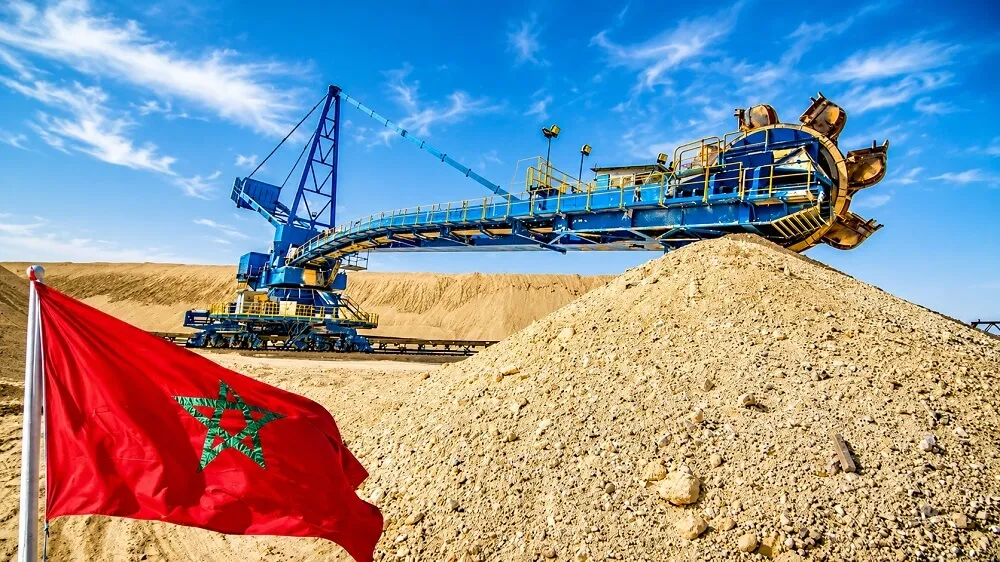
The report highlights that Morocco holds approximately 70% of the world's phosphate reserves, making it the largest holder globally. Despite this significant position, the country currently accounts for only about 15% of global supply, while China continues to dominate global production, despite having limited reserves. The Moroccan phosphate is a crucial raw material in the production of refined phosphoric acid, which is utilized in the manufacturing of lithium iron phosphate batteries, the most widely used batteries in electric vehicles. The International Energy Agency forecasts that Morocco's contribution to this sector will increase in the coming years as global demand for these technologies continues to rise.
Furthermore, the report emphasizes that the free trade agreements between Morocco and both the European Union and the United States provide the kingdom with a significant competitive advantage. These agreements allow industrial projects established in Morocco to access these markets under preferential conditions, which has encouraged several major Chinese companies to invest in the battery sector within the kingdom.
In this context, the report notes that prominent Chinese companies such as Gotion, BTR, Huayou, and CNGR have launched industrial projects in Morocco, capitalizing on the availability of raw materials, industrial infrastructure, and trade agreements. This development further strengthens Morocco's position as a regional hub for producing components for electric vehicle batteries.
The report also highlights that Morocco is working on developing its cobalt sector through the Managem Group's project in the Bou Azzer region, which aims to produce cobalt sulfate, a material used in battery production. Additionally, a graphite factory project in Tangier is expected to contribute to the production of materials tailored for electric vehicle batteries by 2030.
The International Energy Agency considers that Morocco is now in a strong position among countries poised to play a larger role in global mineral supply chains, thanks to its natural reserves, industrial investments, and network of trade agreements. This enhances the kingdom's prospects of becoming a strategic center for industries related to energy transition and the green economy.
As reported by assahifa.com.