
Morocco's Commitment to Dialogue with Spain on Minor Immigration Issues
In a recent statement, Moroccan Justice Minister Abdellatif Wahbi affirmed that communication between Morocco and Spain regarding the issue of unaccompanied minors is both ongoing and will continue into the foreseeable future. He emphasized that Morocco does not rely on social media or unofficial channels to manage this sensitive issue; rather, it is guided by direct communication between the relevant institutions in both countries. Wahbi's remarks were made during an interview with Moroccan television channel 2M, where he highlighted that the situation surrounding unaccompanied minors is surrounded by numerous political interpretations. He urged the public to distinguish between media narratives and the factual information exchanged between official Moroccan and Spanish institutions.
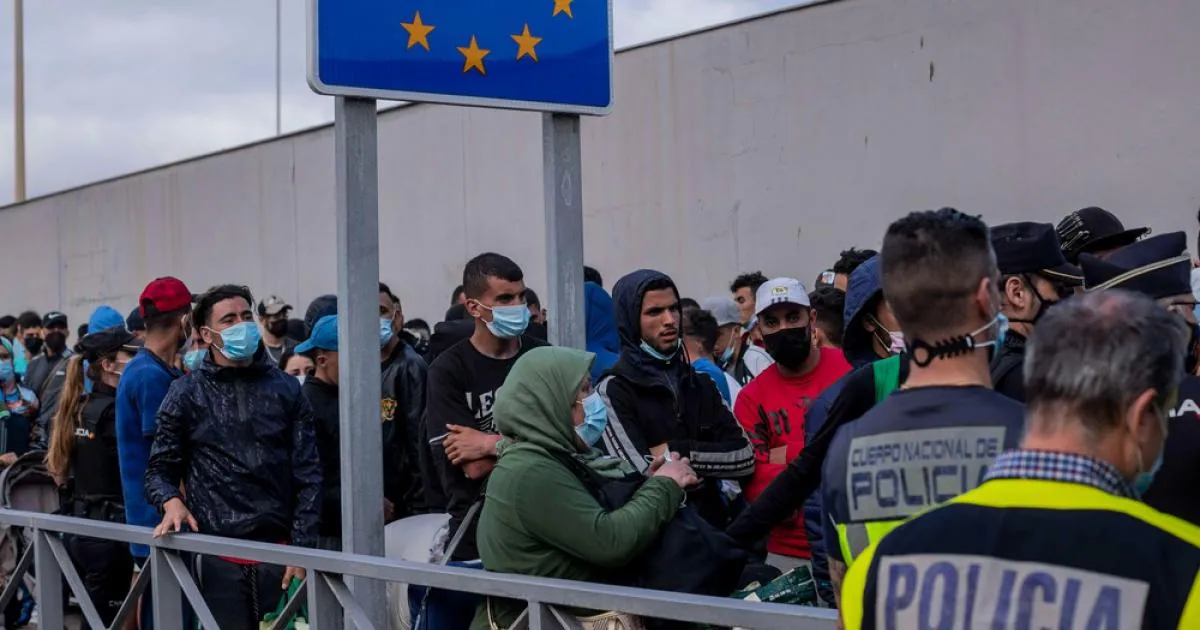
This approach reflects Morocco's desire to keep the matter of unaccompanied minors away from political wrangling, especially as it intersects with more sensitive issues such as irregular migration, border protection, and bilateral relations with Spain and the European Union. The Moroccan government maintains that the minors present in Spain, including those in the occupied cities of Ceuta and Melilla, should not be seen as part of any political disputes between the two nations, but rather as children in need of legal and humanitarian aid that serves their best interests.
Humanitarian Focus and Diplomatic Coordination
Wahbi asserted that the Moroccan authorities view unaccompanied minors as victims rather than criminals, highlighting the need for a legal framework that considers their age and legal status, rather than solely viewing them through the lens of irregular migration. Moreover, the minister reiterated Morocco's readiness to repatriate Moroccan minors, stating that the country is even prepared to send buses for their return. However, he clarified that the repatriation process must follow a specific protocol, which includes verifying their nationality, identifying their circumstances, and completing the necessary procedures for their transfer.
This means that Morocco does not treat repatriation as a mere administrative task; rather, it is a complex operation requiring coordination with the Spanish side, ensuring the minors' identities and situations are thoroughly checked, and adhering to relevant legal procedures. The Moroccan government's actions regarding unaccompanied minors are part of a broader strategy to combat irregular migration. Wahbi noted that Moroccan authorities thwarted 79,000 attempts of illegal migration in 2024 and 74,000 in 2025, alongside dismantling 632 smuggling networks and rescuing 32,000 individuals at sea during the same period. These efforts are presented by Morocco as part of its responsibility to safeguard its borders and save lives, particularly in northern regions that serve as crucial transit points to Spanish territory.
At the same time, Morocco emphasizes its support for regular migration, provided it is conducted legally and in an organized manner, distinctly differentiating it from irregular migration and human trafficking networks. Importantly, the careful management of the issue surrounding unaccompanied minors does not signify that Morocco is relinquishing its stance on the occupied territories of Ceuta and Melilla. Wahbi firmly stated that the matter of these two cities will continue to be a topic of dialogue between Morocco and Spain, reiterating the kingdom's historical and geographical claims over them. Notably, the minister's approach underscores the separation of this sovereign issue from the daily humanitarian concerns associated with minors and migration. Morocco is keen to continue collaborating with Madrid on migration, security, and humanitarian issues, while maintaining its political position regarding the future of Ceuta and Melilla.
Wahbi called for establishing a framework for dialogue concerning these cities, asserting that the issue cannot be overlooked and must be discussed to eventually reach a final resolution. Thus, Morocco appears determined to avoid conflating the issue of unaccompanied minors with contentious discussions surrounding Ceuta and Melilla, preferring to handle each issue based on its unique nature, while keeping the sovereign matter within a separate, long-term political trajectory. The Justice Minister's statements reveal a Moroccan approach aimed at managing sensitive matters with Spain through institutional channels, rather than through reciprocal statements or media campaigns. He noted that Moroccan-Spanish relations are historic, characterized by crises and resolutions, and urged that the past should not dictate the future, imploring future generations to forge a better relationship between the two nations. Furthermore, he called on Spain and the European Union to engage in dialogue regarding minors, emphasizing that achieving a lasting solution necessitates cooperation that transcends piecemeal and temporary measures.
In this context, the minister's statement that "diplomacy is about creating solutions, not managing crises" encapsulates Morocco's strategy of reducing noise surrounding the issue of unaccompanied minors, intensifying institutional communication, and organizing their return. Consequently, Morocco strives to address the minors' situation calmly without compromising its interests or positions regarding Ceuta and Melilla, all while attempting to maintain a cooperative path with Madrid and Brussels on migration, one of the most sensitive areas in Moroccan-European partnership.
As reported by middle-east-online.com.