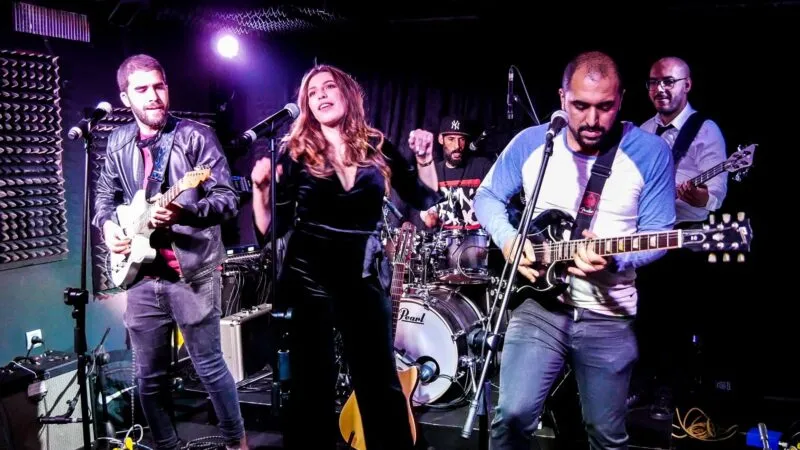

As the sun sets over the bustling streets of Casablanca, a city renowned for its rich cultural heritage and vibrant nightlife, the sound of clinking beer mugs and animated conversations fills the air in one of the city's historic brasseries. It is a typical Tuesday evening at 7:00 p.m., where 28-year-old musician Walid Rakik finds himself in a familiar setting, seated in a back booth while engaging in conversation with the house pianist. The evening's performance, featuring Rakik alongside a talented darbouka player, is a testament to the challenges faced by artists in Casablanca's music scene, as they rely on tips as their primary source of income. Following his first set, Rakik swiftly transitions to a late-night venue, embracing the dual nature of his profession, where live music serves as both a passion and a secondary source of income. This reality is not unique to Rakik, as many musicians in Casablanca navigate a complex landscape of gigs that exist in the shadows of the city's more glamorous nightlife.
The history of nightlife in Casablanca dates back to the early 20th century, when colonial developments transformed the coastal area into a leisure hotspot known as the Corniche. By the mid-20th century, several nightclubs emerged, creating a vibrant platform for local musicians to showcase their talents in genres ranging from jazz to rock. Over the decades, this musical scene has evolved significantly, with a wide array of venues catering to various audiences, from upscale cabarets to casual pubs. Amid Morocco's economic liberalization at the turn of the millennium, a burgeoning middle class propelled the nightlife industry forward, giving birth to innovative nightlife concepts that continue to shape the cultural landscape of Casablanca today.
For musicians, the ability to adapt is paramount, as they are often expected to perform an extensive repertoire that encompasses multiple genres, including Moroccan Chaabi and Western music. Aymane Fattal, a skilled synth player, describes the demands of live performance, which require not only technical proficiency but also the ability to connect with fellow musicians. The camaraderie among band members is essential, as it fosters a supportive environment where creativity can flourish. However, the competitive nature of the scene can be daunting, as musicians navigate a landscape where the demand for live music often outstrips the opportunities for sustainable employment. The rise of casual venues may have expanded the circuit, but it has also introduced challenges, such as the risk of repetitive performances that can dilute the authenticity of the live music experience.
Casablanca's music scene is characterized by a unique audience that appreciates the artistry of live performances. Unlike tourist-heavy cities, Casablanca's venues cater primarily to local aficionados who seek out specific musical experiences. As musicians like Hani Hilali and Mehdi Harit note, this discerning audience has elevated the expectations placed on performers, who must continually innovate to maintain their appeal. However, the growth of the music scene is not without its struggles, as many artists find themselves working under precarious conditions, often relying on tips rather than structured contracts for their livelihoods. While some venues offer better compensation and formal arrangements, the majority of musicians operate in a grey area where verbal agreements and cash payments are the norm.
As the live music sector in Casablanca continues to evolve, it faces significant challenges that require attention. The need for more consistent management practices and clearer frameworks around compensation is evident, particularly as the number of performers increases. Musicians have expressed concerns about their replaceability in an oversaturated market, where demand does not always keep pace with supply. Initiatives like the Artist's Card aim to provide support for emerging artists, but the realities of the industry often leave many without the stability and protections they need. Ultimately, the future of Casablanca's live music scene rests on the commitment of cultural stakeholders to enhance the experience for both artists and audiences, ensuring that the city remains a vibrant hub for musical expression.
As reported by globalvoices.org.