
Significant Financial Commitment for the Nigeria-Morocco Gas Pipeline
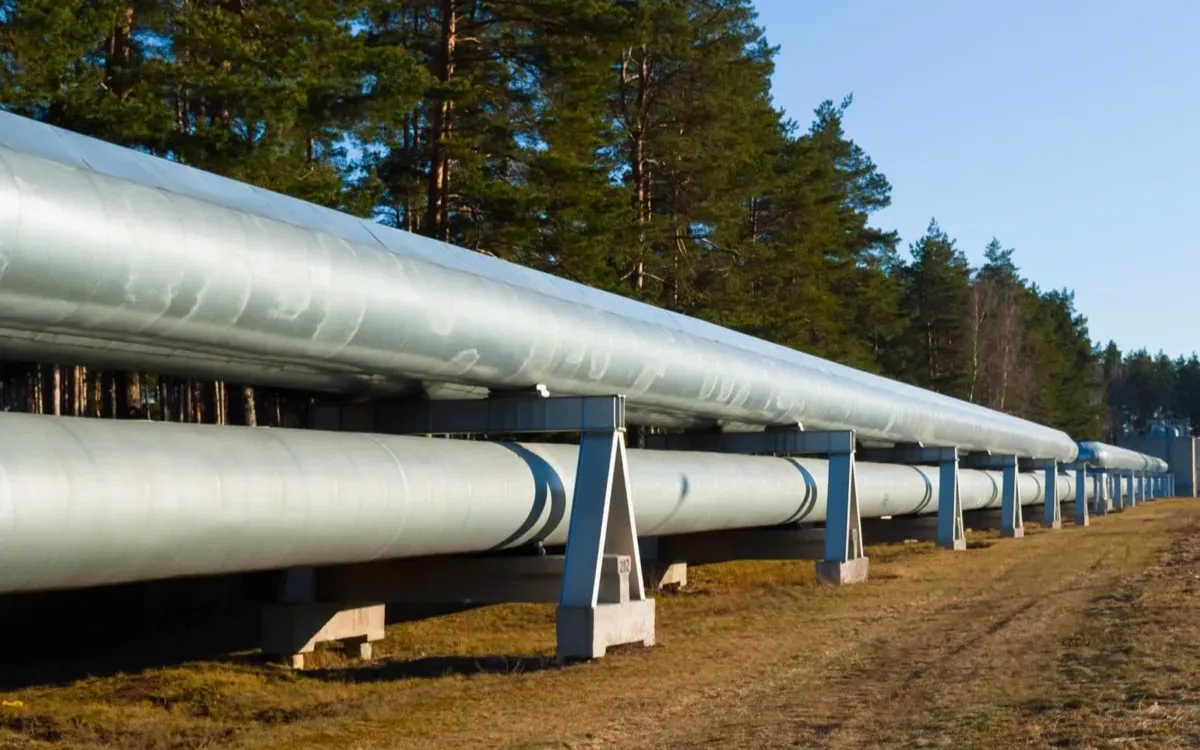
The Nigeria-Morocco gas pipeline is among the major projects financed by a substantial loan of 473.8 billion naira provided by the Nigerian National Petroleum Corporation (NNPC) to its gas subsidiary in 2025. This financial commitment was unveiled on October 5 and is expected to support not only the gas pipeline project but also two additional investments within Nigeria.
According to annual reports from the Nigerian oil company, this loan underscores its financial commitment to the infrastructure project. As reported by Punch, the loan has been allocated to the NNPC Gas Infrastructure Company, a wholly-owned subsidiary, to fulfill the demands of various infrastructures.
Strategic Gas Corridor Linking Nigeria, Morocco, and Europe
The 473.8 billion naira loan is earmarked for three main initiatives: funding for the Nigeria-Morocco gas pipeline, financing for the Ajaokuta-Kaduna-Kano (AKK) pipeline, and capital support for Anoh Gas Processing Company. However, the specific allocation for each project remains undisclosed in the reports. As of December 31, 2025, 14.4 billion naira of the loan had yet to be drawn, with reports also indicating 25.7 billion naira in interest still owed, reflecting the overall financial arrangement with the subsidiary.
The Nigeria-Morocco gas pipeline project aims to create a different network compared to the domestic AKK pipeline, which is designed to supply northern Nigeria's power plants and industries. In contrast, the Atlantic corridor is intended to serve the coastal countries of West Africa, ultimately connecting to Europe.
On July 19, a significant legal milestone was achieved in Freetown, where ECOWAS member states signed an intergovernmental agreement regarding the Atlantic African Gas Pipeline, as confirmed by the ONHYM, which is managing the project alongside NNPC. This collaboration is expected to facilitate a gradual development of the infrastructure, with plans presented by Amina Benkhadra indicating sections that could operate independently, beginning with initial links between Morocco and the gas resources of Mauritania and Senegal.
A joint Moroccan-Nigerian enterprise is set to oversee the execution, financing, and construction of the project. On the Moroccan side, the quest for financial partners has led Rabat to engage in discussions with the American Exim Bank and the World Bank. Moroccan Ambassador to the United States, Youssef Amrani, confirmed these talks in July, with Exim Bank acknowledging the existence of preliminary exchanges.
Overall investment in the Nigeria-Morocco gas pipeline is estimated at approximately $26 billion. The proposed route will span around 6,800 kilometers along the Atlantic coast, eventually connecting to Morocco's Maghreb-Europe pipeline, which is linked to Spain.
As reported by bladi.net.