
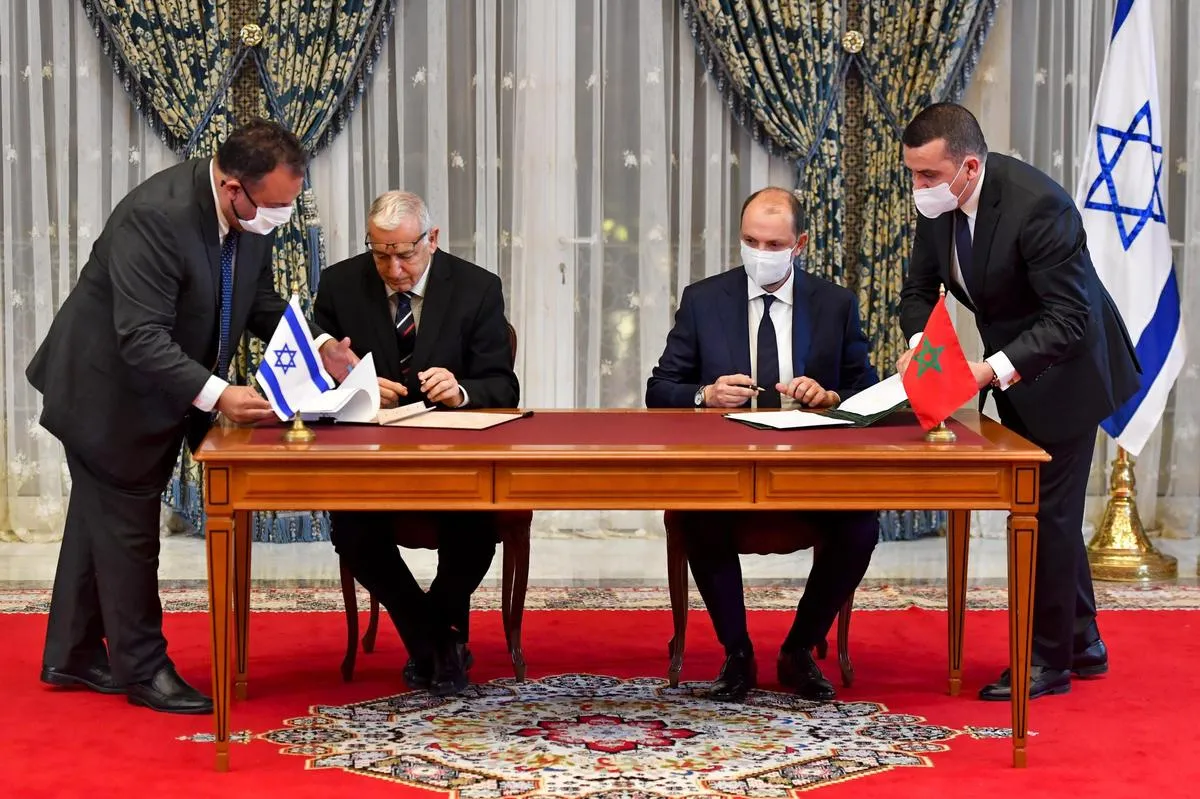

Morocco's Acceleration Towards Normalization with Israel Amidst Humanitarian Crisis
As the Gaza Strip endures the devastating ramifications of Israeli aggression, Morocco is rapidly advancing its normalization efforts with Israel. The recent visit of Israeli Transport Minister Miri Regev, a member of Benjamin Netanyahu's government, coupled with the resumption of direct flights between Tel Aviv and Marrakech, marks a significant milestone in this ongoing normalization process. The inaugural flight operated by Arkia landed in Marrakech on August 19, after a nearly three-year hiatus, with plans to operate two weekly flights. This resumption is not merely a logistical development; it symbolizes a deeper integration between the two nations, occurring at a time when the Palestinian question remains at the heart of an unprecedented humanitarian disaster.
The spokesperson for Minister Regev framed the resumption of air travel as a step towards a 'return to normal life' and an enhancement of relations under the Abraham Accords. This notion of 'normality' is particularly poignant given the ongoing suffering of the Palestinian people. Morocco's decision to normalize ties with Netanyahu's government comes as Palestine continues to bear an appalling humanitarian toll, raising questions about the ethical implications of such diplomatic moves.
Political Implications of Regev's Visit and Flight Resumption
Furthermore, Miri Regev is not just a technical representative marking the inauguration of a flight route; she is a significant political figure within the Israeli government and has made multiple visits to Morocco prior to this trip. Her presence underscores the gradual transformation of normalization into a sustainable institutional relationship. The return of direct flights is not an isolated action; it follows the scheduled resumption of direct air links starting November 2025, resulting from discussions between Regev and her Moroccan counterpart, along with coordination between the civil aviation authorities of both countries.
The underlying mechanism is now evident: temporarily suspending certain exchanges when public pressure mounts and then gradually restoring them as the political climate allows. Normalization has never truly been abandoned; rather, it has been strategically adjusted to endure the outrage triggered by the situation in Gaza. This strategic approach is what imparts significant political weight to Regev's visit. Morocco is no longer merely maintaining diplomatic relations with Israel; it is actively contributing to the normalization of these relations through transportation, tourism, economic exchanges, and institutional contacts.
Agreements signed during Regev's previous visits have already expanded cooperation in various sectors, including the recognition of driving licenses, maritime transport, road safety, and innovation. Thus, the resumption of flights is a further piece in a much larger puzzle. The contradiction is stark, especially considering that Regev ignited substantial controversy during her last visit to Morocco. In February 2025, Moroccan lawyers filed a lawsuit against her, accusing her of complicity in crimes against the Palestinian people. A Moroccan court rejected the request to prevent her entry into the country, leading to protests in Rabat where activists condemned the presence of a Netanyahu official on Moroccan soil and labeled the ongoing normalization as a betrayal of the Palestinian cause.
The juxtaposition between the public outcry and Regev's recent visit is striking. Moroccan street anger has not deterred Rabat from pursuing closer ties with Israel. While protests are tolerated, normalization efforts persist unabated. Since Morocco re-established relations with Israel as part of the Abraham Accords in December 2020, cooperation has continually expanded. However, the official Moroccan narrative continues to emphasize commitment to the Palestinian cause, creating a dissonance between rhetoric and action.
As Gaza faces bombardment and devastation, and as Netanyahu's successive governments continue their policies of occupation and colonization, the Moroccan government is working to restore a relationship that the Gaza conflict had temporarily disrupted. The resumption of direct flights transcends commercial operations; it is a political act that normalizes betrayal and cowardice. Allowing an airplane from Tel Aviv to land in Marrakech, reopening tourist routes, increasing ministerial visits, and maintaining bilateral cooperation gradually embeds the idea that relations with Israel can function normally despite the ongoing Palestinian tragedy. This normalization is precisely what Moroccan movements opposed to such policies identify as the essence of betrayal.
Morocco's strategy is becoming increasingly clear: to maintain traditional discourse on Palestine while deepening practical relations with Israel. The resumption of direct flights and Miri Regev's visit are the latest illustrations of this dual approach. Morocco is no longer content with merely acknowledging a diplomatic relationship; it is actively contributing to its consolidation and normalization in everyday life. As Palestinians are buried under the rubble of Gaza, Marrakech welcomes representatives of Netanyahu's government and reopens its air routes to Tel Aviv. This image encapsulates the chasm between proclaimed, yet hypocritical solidarity and the political choices genuinely embraced by Rabat.
As reported by lapatrienews.dz.

