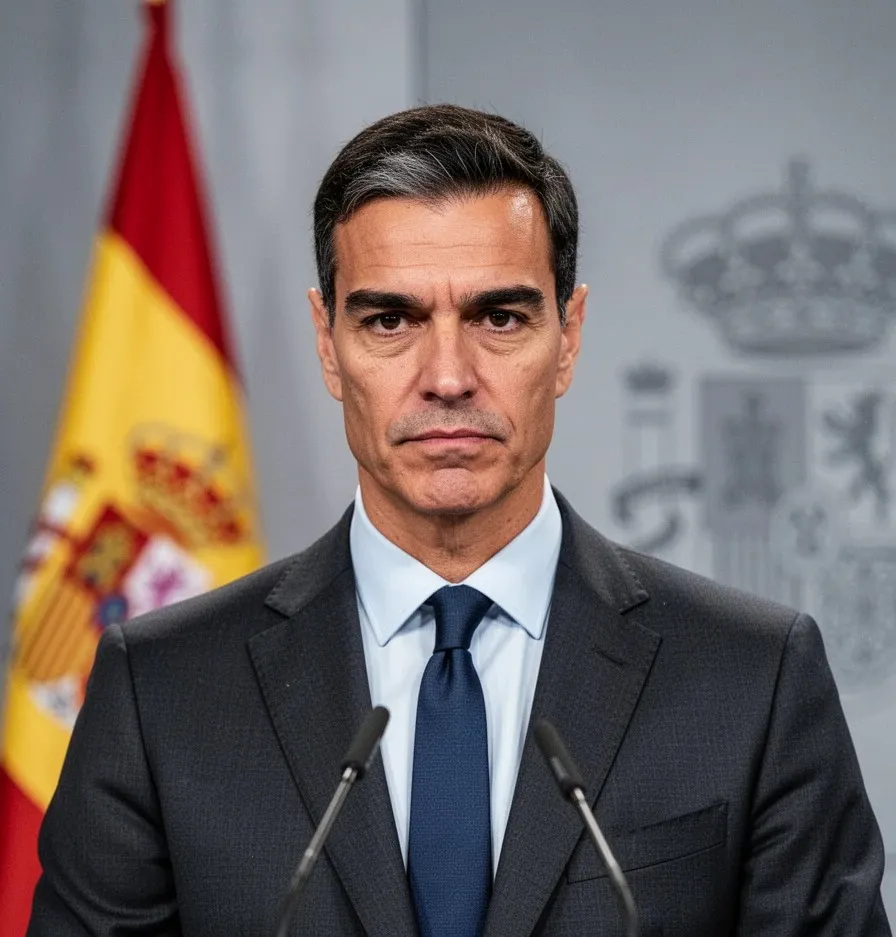
Spanish Prime Minister Pedro Sánchez Addresses Ceuta Migration Crisis
In a recent interview with Cadena SER, Spanish Prime Minister Pedro Sánchez firmly rejected any claims of Morocco's involvement in the severe migration crisis that unfolded in Ceuta at the end of July. Instead, he attributed the turmoil to disinformation propagated by networks connected to Russia, Israel, and the international far-right. Sánchez acknowledged that while the Spanish intelligence service, CNI, provided situational reports, it failed to adequately warn of the crisis's true scale.
The political discourse surrounding the migration crisis has taken a new direction as Sánchez cleared the Moroccan government of any responsibility for the mass migration that saw approximately 70,000 individuals attempting to cross from Morocco to the Spanish enclave of Ceuta. He stated that there were no indications from Spain's intelligence services or security forces suggesting Moroccan authorities played a role in the migration surge. Sánchez underscored the importance of collaboration with Morocco in managing the crisis, noting that the Moroccan government cooperated immediately following the outbreak of the situation.
Disinformation and International Relations at the Forefront
The extraordinary influx of migrants in late July triggered significant humanitarian and political crises, leading to reports of over 100 fatalities. The Spanish government has faced intense scrutiny for allegedly underestimating the situation and being ill-prepared for the unprecedented number of arrivals. Critics, particularly from the conservative opposition, question how such a large movement could occur without Moroccan authorities being aware. They accuse Sánchez of shielding Morocco while pointing fingers at other nations for the crisis's causes.
In defending his stance, Sánchez highlighted the role of misinformation circulating on social media platforms such as TikTok and Instagram, claiming that false narratives enticed migrants to embark on perilous journeys to Ceuta. He specifically mentioned the misrepresentation of a ruling by the Spanish Supreme Court, which led many to believe that individuals arriving in Ceuta by swimming could not be returned to Morocco. Sánchez argued that criminal organizations exploited this misinformation to facilitate dangerous crossings.
Of particular concern is Sánchez's assertion that elements of these disinformation campaigns may be linked to networks associated with Russia and Israel, as well as international far-right groups. He referenced investigations by European entities indicating that this disinformation campaign aimed to destabilize Spain and Europe politically by focusing on migration issues. However, it's crucial to note that Sánchez did not provide evidence of direct involvement from the Russian or Israeli governments in organizing the migration to Ceuta; rather, he discussed the potential influences of alleged networks.
The Israeli government swiftly denied Sánchez's claims, labeling them as unfounded, which threatens to exacerbate the already tense political relations between Madrid and Jerusalem. Spain has maintained a critical stance towards Israel and supports Palestinian statehood, making Sánchez's comments politically significant and potentially further complicating diplomatic relations.
Sánchez also acknowledged that the CNI had provided situational updates prior to the migration crisis but admitted that these did not forecast the enormity of the impending situation. This admission seeks to quell internal government disputes regarding the adequacy of warnings from security agencies. Currently, about 5,000 individuals remain in Ceuta, with the majority having left the enclave. The conditions in Ceuta are still strained, and the Spanish government plans to increase support for the city, announcing a financial aid package of approximately 165 million euros to assist local businesses, self-employed individuals, and public services.
Furthermore, Sánchez announced that King Felipe VI would visit Ceuta, although no specific date has been set. This visit is expected to carry significant symbolic weight given Ceuta's geographical and political context, as it is located directly across from Morocco, which claims sovereignty over the territory.
As the opposition continues to challenge Sánchez's portrayal of the crisis, demanding accountability from Morocco and more effective migrant distribution across mainland Spain, the situation remains unresolved. Questions persist about the origins of the migration movements, the spread of misinformation, and the extent of foreign network involvement. Sánchez's statements have set a clear political direction regarding the Ceuta crisis, emphasizing non-responsibility for Morocco while spotlighting disinformation and alleged international influences.
As reported by spanienpress.com.