
Canary Islands Brace for Increased Migrant Arrivals
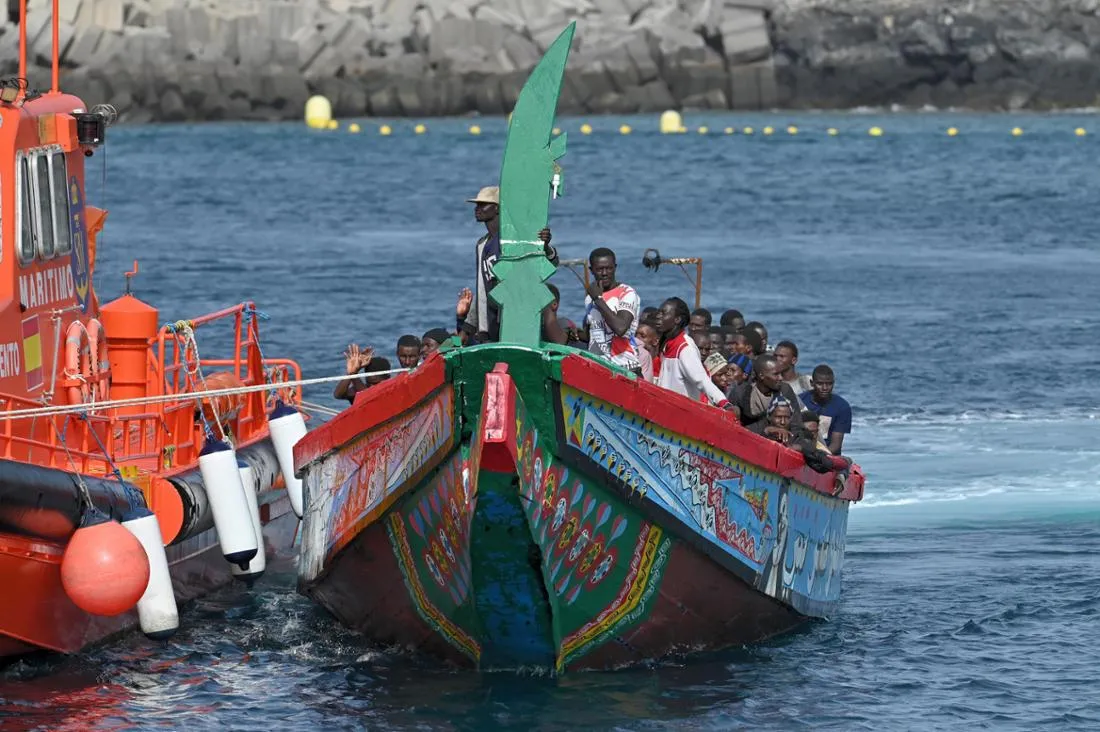
The Canary Islands are facing a looming migration crisis, as indicated by an internal report from Spanish authorities. The report suggests that the previously established escape route to this Spanish archipelago, located off the coast of West Africa, could see a resurgence. On the night of August 20, 2026, three inflatable boats carrying 245 migrants made their way to Lanzarote, reigniting concerns that had been brewing for weeks yet seemingly overlooked by the local government.
This perilous route through the Atlantic is recognized as one of the deadliest in the world, yet many individuals view it as their only viable option for escape. An internal police report addressing the mass influx into Ceuta at the end of July 2026 reveals that the Spanish border protection agency, CENIF, issued an initial alert on July 31, amid chaos in Ceuta. The warning highlighted the "possible reactivation of migration flows from Morocco towards the Canary Islands." A subsequent alert was sent on August 4, this time also addressing Ceuta, Melilla, and Andalusia. Unfortunately, reports indicate that these crucial warnings never reached the executive cabinet of the Canary Islands government, as noted by the broadcaster _Canarias7_.
West Sahara Corridor: Migration Threat to the Canary Islands
The police report identifies a specific escape corridor originating from Tantan in the Western Sahara, utilizing simple, low-powered wooden or rubber boats. In stark contrast to Ceuta, where migrants typically arrived by swimming or walking across a land bridge, the profile of those arriving on the Canary Islands is markedly different. While young men from Morocco were primarily crossing into Ceuta without the assistance of smugglers, the Canary Islands are seeing an influx primarily from individuals hailing from the Sahel region and the Gulf of Guinea. According to the report, this migration is largely orchestrated through criminal networks, raising alarms among local officials.
In response to these developments, Cristina Valido, a member of the Coalición Canaria in the Spanish Parliament, criticized the central government for its lack of awareness regarding the escalating situation. "We are facing a very concerning situation where the state is oblivious to what is happening at its southern border," she stated during a congressional speech, just before a public appearance by Prime Minister Pedro Sánchez.
Despite the warnings, the current situation in the Canary Islands has not yet escalated dramatically. According to figures from the International Organization for Migration (IOM), arrivals in 2026 have decreased by 78% compared to the previous year, while arrivals via the Mediterranean route have surged by 66%. However, concerns remain that some of the pressure from Ceuta could eventually shift towards the Atlantic route, which already poses significant dangers for migrants. In 2024, the Canary Islands recorded a staggering 46,000 arrivals, marking a record high compared to 14,500 in 2023, largely attributed to heightened monitoring of the heavily trafficked Mediterranean route.
As reported by merkur.de.