
Morocco's Stadium Preparations for the 2030 World Cup: An Overview
As the countdown to the 2030 World Cup begins, which will be co-hosted by Morocco, Spain, and Portugal, significant developments are underway regarding the six Moroccan stadiums selected for this prestigious event. With less than four years until kickoff, the construction and renovation of these venues are progressing at varying speeds, ranging from completed facilities to those undergoing extensive transformations and new constructions. This article provides an update on the state of these sports infrastructures that are set to welcome global audiences.
Following the conclusion of the 2026 World Cup, Morocco is now channeling its efforts toward the upcoming tournament, which is expected to see substantial crowds and media attention. The Moroccan stadiums earmarked for the World Cup are undergoing diverse preparations, showcasing a mix of completed renovations and ongoing construction work.
Stadium Developments: From Construction to Renovations
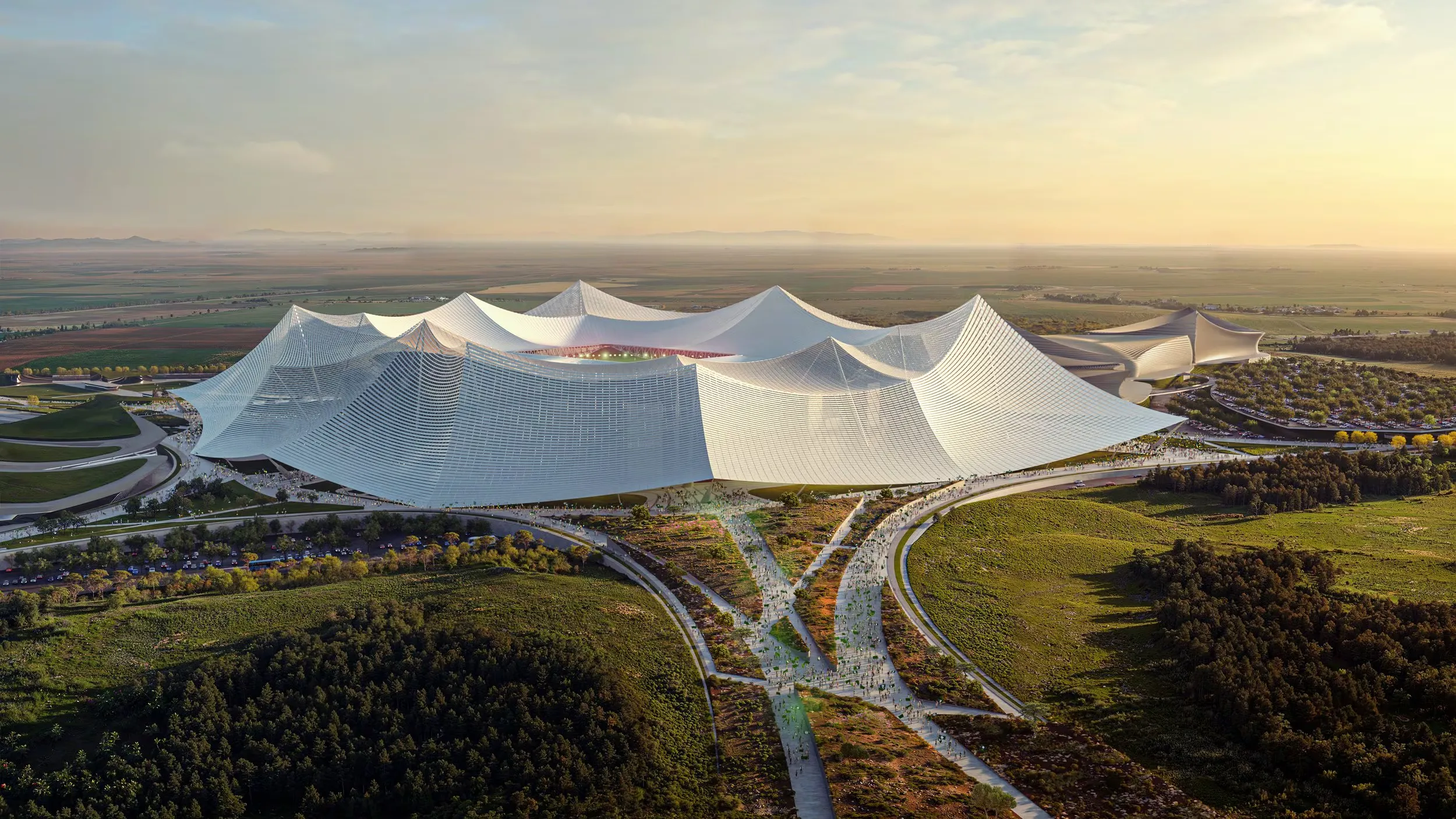
The Hassan II Stadium in Benslimane is currently the focal point of rapid construction progress. Designed to hold approximately 115,000 spectators, it is anticipated to become the largest football stadium globally upon completion, potentially serving as the main venue for the 2030 World Cup. The initial groundwork has been completed, and the main structure is taking shape, with foundational work and the first tiers of seating already visible. The stadium's design draws inspiration from traditional Moroccan tents, ensuring a unique cultural representation within its architecture. As of May, the project was reported to be 40% complete, with a scheduled completion date set for December 2027.
In parallel, significant renovations are underway at the Agadir, Marrakech, and Fez stadiums, which are undergoing extensive second-phase upgrades following initial enhancements for the 2025 Africa Cup of Nations. These renovations aim to align the stadiums with FIFA's standards for the World Cup. The Agadir Stadium, which saw an investment of around 450 million dirhams in its first phase, is experiencing a complete transformation, including the demolition of its athletics track to bring new seating closer to the pitch, thereby increasing its capacity to approximately 46,000.
Similarly, the Marrakech Stadium is following suit, with approximately 400 million dirhams invested in its first renovation phase. The track will be removed, and the pitch level will be lowered to facilitate new seating arrangements. The Fez Stadium has allocated around 600 million dirhams for its first renovation phase, enhancing various facilities and updating media, VIP, and security features. Further extensive renovations, estimated at 2.816 billion dirhams, are planned to elevate the stadium to modern standards suitable for the World Cup.
Notably, the Prince Moulay Abdellah Complex in Rabat has been fully reconstructed and is ready to host events, having already welcomed numerous matches, including significant fixtures from the Africa Cup of Nations. The complex boasts a seating capacity of 68,700, designed exclusively for football, eliminating the athletics track to enhance the spectator experience.
This impressive infrastructure development aims not only to prepare for the World Cup but also to enhance Morocco's ability to host international sporting events in the future, fostering a lasting legacy for Moroccan sports and tourism.
As reported by ar.le360.ma.