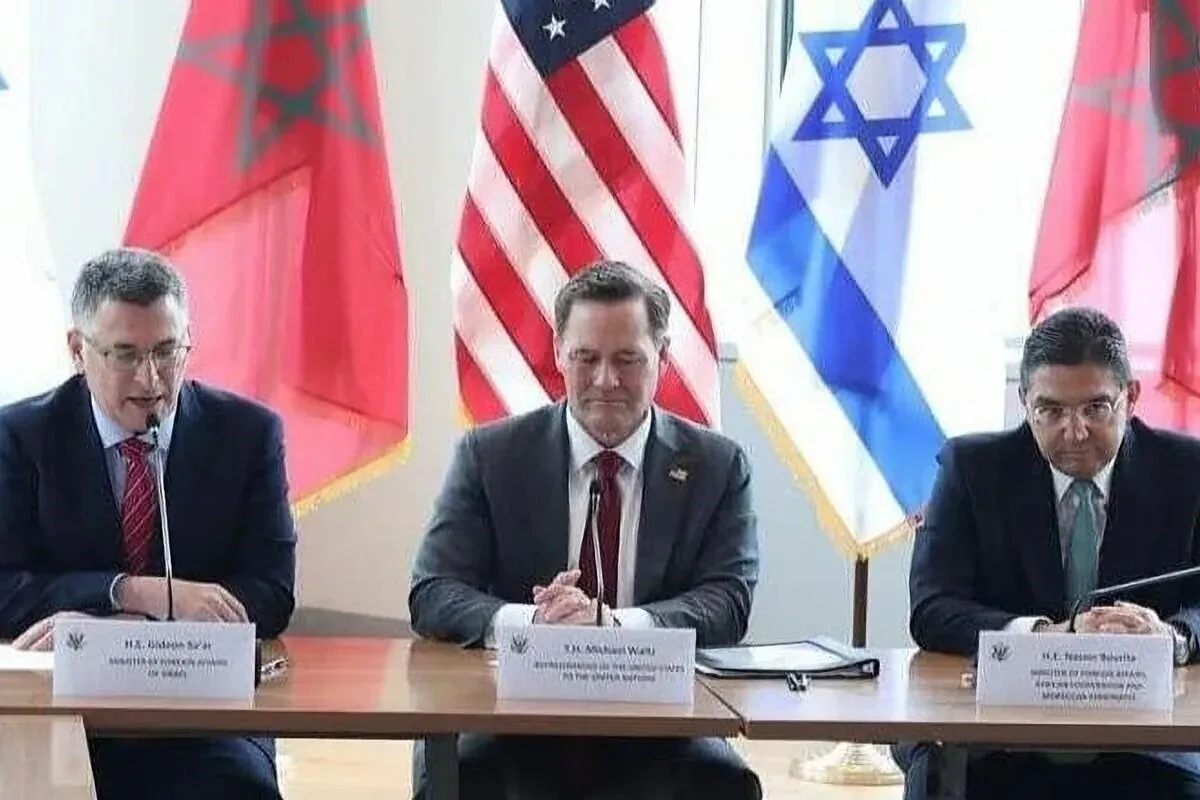

Understanding the Implications of Morocco's Political Moves
In a recent appearance on the television program Más Vale Tarde, renowned Spanish musician Ramón Márquez, popularly known as Ramoncín, provided a critical analysis of the evolving dynamics between Morocco, Israel, and the United States, emphasizing the potential repercussions for Spain. His remarks come in the wake of a significant influx of migrants into Ceuta, a Spanish autonomous city bordering Morocco, raising concerns about the political and humanitarian implications of this situation.
Ramoncín highlighted the troubling reality that thousands of migrants have been living under dire conditions in Ceuta, struggling to find shelter and basic necessities. He criticized political figures like Elías Bendodo, the vice-secretary of the People's Party, who recently stated that the Ministry of Interior deployed an extensive police force for an eclipse but only had a mere 60 officers available during the migrant crisis. "The issue is not merely about truth or lies; it is about losing the ability to discern reality," he asserted, pointing out the political maneuvering surrounding the situation.
The conversation shifted to the complex relationship between Spain and Morocco, particularly the strategic significance of the borders at Ceuta and Melilla. Ramoncín contended that the current migration pressures cannot simply be viewed as a spontaneous movement of young individuals seeking better lives. He elaborated that Morocco's actions are underpinned by a more profound diplomatic backing than ever before, notably referencing the support from Donald Trump during his presidency, which emboldened Morocco to recognize Israel—a move that defied the expectations of many Arab nations.
Expressing his concerns, Ramoncín stated, "What worries me is that this Moroccan government has found protectors it never imagined it would have against Spain." He pointed out that Spain, under the leadership of Pedro Sánchez, is openly confronting leaders like Benjamin Netanyahu and Trump, creating a precarious situation. "They know how to inflict damage where it hurts the most, particularly at the borders of Ceuta and Melilla," he warned, highlighting the tragic loss of lives among migrants attempting to cross these borders.
In his poignant commentary, Ramoncín underlined the humanitarian crisis at play, mentioning the heartbreaking stories of families searching for their lost children, who disappeared during attempts to migrate. He criticized political leaders who manipulate statistics to serve their agendas, stressing the seriousness of the situation and the urgent need for genuine policy responses.
As reported by lasexta.com.