
Accusations Against the Moroccan Monarchy and International Implications
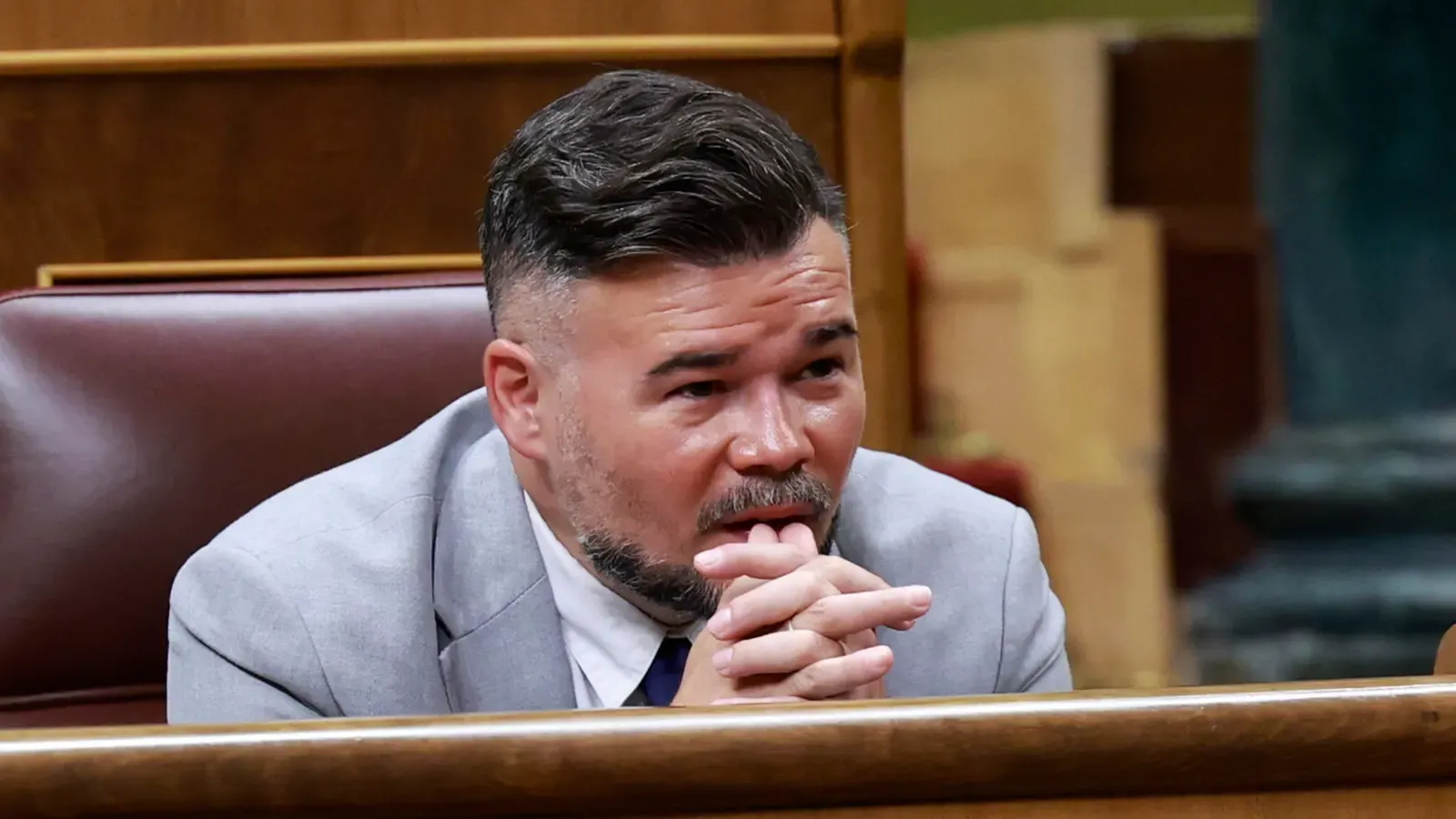
In a heated session of the Spanish Congress, Gabriel Rufián, the spokesperson for the Republican Left of Catalonia (ERC), leveled serious accusations against the Moroccan King, Mohamed VI, labeling him an "assassin" during discussions surrounding the ongoing humanitarian crisis in Ceuta. Rufián's remarks not only targeted the Moroccan monarchy but also implicated former U.S. President Donald Trump and Israeli Prime Minister Benjamin Netanyahu, suggesting that they are influential players in the recent tensions observed in Ceuta. He criticized the Spanish government for its perceived timidity in confronting Morocco, hinting that political pressures or threats could be at play.
Rufián's rhetoric was sharp as he warned both the People's Party (PP) and Vox about potential betrayals in the future, urging a stronger stance against Morocco to prevent further aggressive actions. He stated, "Heard that the King of Morocco cannot show a negative image on his coronation day—he lives in a luxury penthouse in Paris year-round. What does he care about the image of his country? He might lose elections!" This comment underscores Rufián's belief that the Moroccan king's actions disregard the welfare of ordinary Moroccans.
Moreover, Rufián asserted that the Moroccan monarchy exploits people as mere tools in a larger geopolitical game, stating, "They have used people as cannon fodder." He further warned that Morocco could send an additional 80,000 individuals to Ceuta whenever it chooses, especially at the behest of Washington or Tel Aviv. The ERC spokesperson emphasized that King Mohamed VI operates under the watchful eye of the U.S. and Israel, claiming, "He neither dresses, eats, nor breathes without Trump's knowledge." This assertion reflects Rufián's perspective on the intricate relationship between Morocco and Western powers, particularly in terms of controlling vital maritime routes and trade.
Rufián's comments are a part of a broader discourse regarding the intersection of international relations and domestic politics, especially concerning how foreign influence shapes the actions of sovereign nations. As the situation in Ceuta remains precarious, the implications of Rufián's statements resonate with those concerned about national security and humanitarian issues in the region.
As reported by lasexta.com.