
Regional Disparities in Morocco's Economic Growth Rates Uncovered
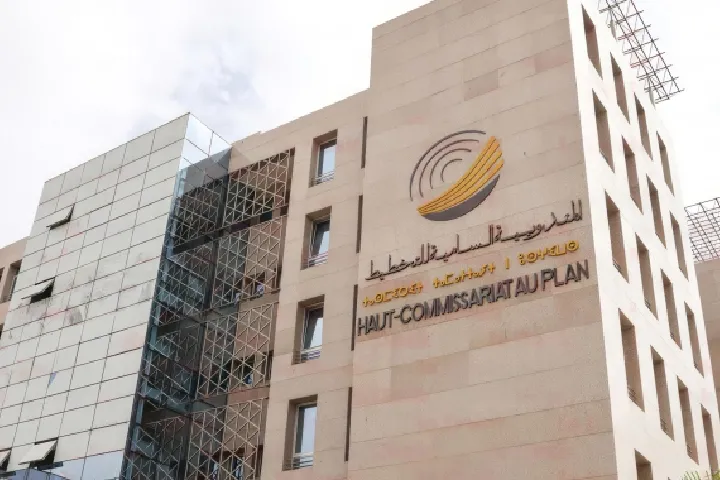
The High Commission for Planning in Morocco has unveiled stark disparities in the growth rates of the Gross Domestic Product (GDP) across various regions for the year 2024. While the national growth rate stood at 4.4%, regional growth rates varied significantly, with some regions experiencing growth well above the national average, while others reflected more moderate or weak advancements. This revelation is based on the Commission's report detailing the "Regional Accounts for 2024/ Regional GDP and Household Final Consumption Expenditure." Eight regions demonstrated a dynamism that surpassed the overall national economy, with two-thirds of the regions achieving GDP growth rates that exceeded the national average.
Among these, the Laayoune-Sakia El Hamra region led with a remarkable growth rate of 7.6%, primarily driven by commercial services and fishing. Following closely was the Dakhla-Oued Ed Dahab region, which recorded a 7% growth, largely attributable to the ongoing development of the fishing and construction sectors. The Souss-Massa region also showed a robust performance with a 6.8% increase, thanks to its agricultural and service sectors. Additionally, the Drâa-Tafilalet region experienced a growth rate of 6.2% due to a strong rebound in construction activities, while the Oriental region achieved 5.9% growth, aided by the resumption of industrial and service activities after a downturn in 2023. Marrakech-Safi recorded a 5.1% growth, with contributions from the hospitality and restaurant sectors, and the Tangier-Tetouan-Al Hoceima region reported a 4.9% growth, driven by thriving manufacturing and service industries. Finally, Guelmim-Oued Noun rounded out the list with a growth rate of 4.6%, supported by primary activities and services.
Wealth Distribution and Economic Contributions
Other regions also posted positive growth rates, albeit below the national average, ranging from 1.6% to 4.3%. Casablanca-Settat, for instance, registered a growth rate of 4.3%, bolstered by the performance of its manufacturing and financial services sectors. Rabat-Salé-Kénitra reflected a stable growth of 3.5%, indicative of steady public and administrative service activities. Meanwhile, Béni Mellal-Khénifra recorded a modest growth of 2.1%, following a contraction witnessed in 2023, and Fès-Meknès lagged behind with a growth rate of just 1.6%, a significant drop from the impressive growth of 8.8% achieved the previous year, attributed to a decline in agricultural sector performance.
In 2024, the distribution of national wealth continued to display a pronounced concentration in certain regions, emphasizing the critical role of a few economic centers. Collectively, three regions produced a significant share of the national wealth, accounting for 58.4% of the national GDP. This concentration is explained by the levels of manufacturing, trade, and services, coupled with the presence of essential infrastructure. The Casablanca-Settat region alone contributed 32.3% to the national GDP, nearly a third of the total, followed by Rabat-Salé-Kénitra with a 15.5% share and Tangier-Tetouan-Al Hoceima representing 10.7% of the national output.
Additionally, five other regions collectively contributed 33.8% to the national GDP, playing a significant but less dominant role. These included Marrakech-Safi at 8.7%, Fès-Meknès at 8.2%, Souss-Massa at 6.6%, Béni Mellal-Khénifra at 5.3%, and the Oriental region at 5.1%. The Drâa-Tafilalet region and the three southern regions (Guelmim-Oued Noun, Laayoune-Sakia El Hamra, and Dakhla-Oued Ed Dahab) contributed a mere 7.8% to the national GDP formation (3% for Drâa-Tafilalet and 4.8% for the southern regions).
The regional accounts data further indicated an increase in the disparities in wealth formation, with the average absolute gap between the GDP of various regions and the regional GDP average rising from 83.6 billion dirhams in 2023 to 90.9 billion dirhams in 2024. Nationally, primary activities (agriculture and fishing) constituted 10.7% of the GDP in 2024, with the most significant contributions coming from Fès-Meknès at 24.6%, Drâa-Tafilalet at 19.3%, Dakhla-Oued Ed Dahab at 17.3%, Souss-Massa at 17.1%, Béni Mellal-Khénifra at 14.4%, the Oriental region at 13.5%, and Rabat-Salé-Kénitra at 12.3%. In stark contrast, the Casablanca-Settat region recorded the lowest share at just 3.7%.
As reported by alalam.ma.