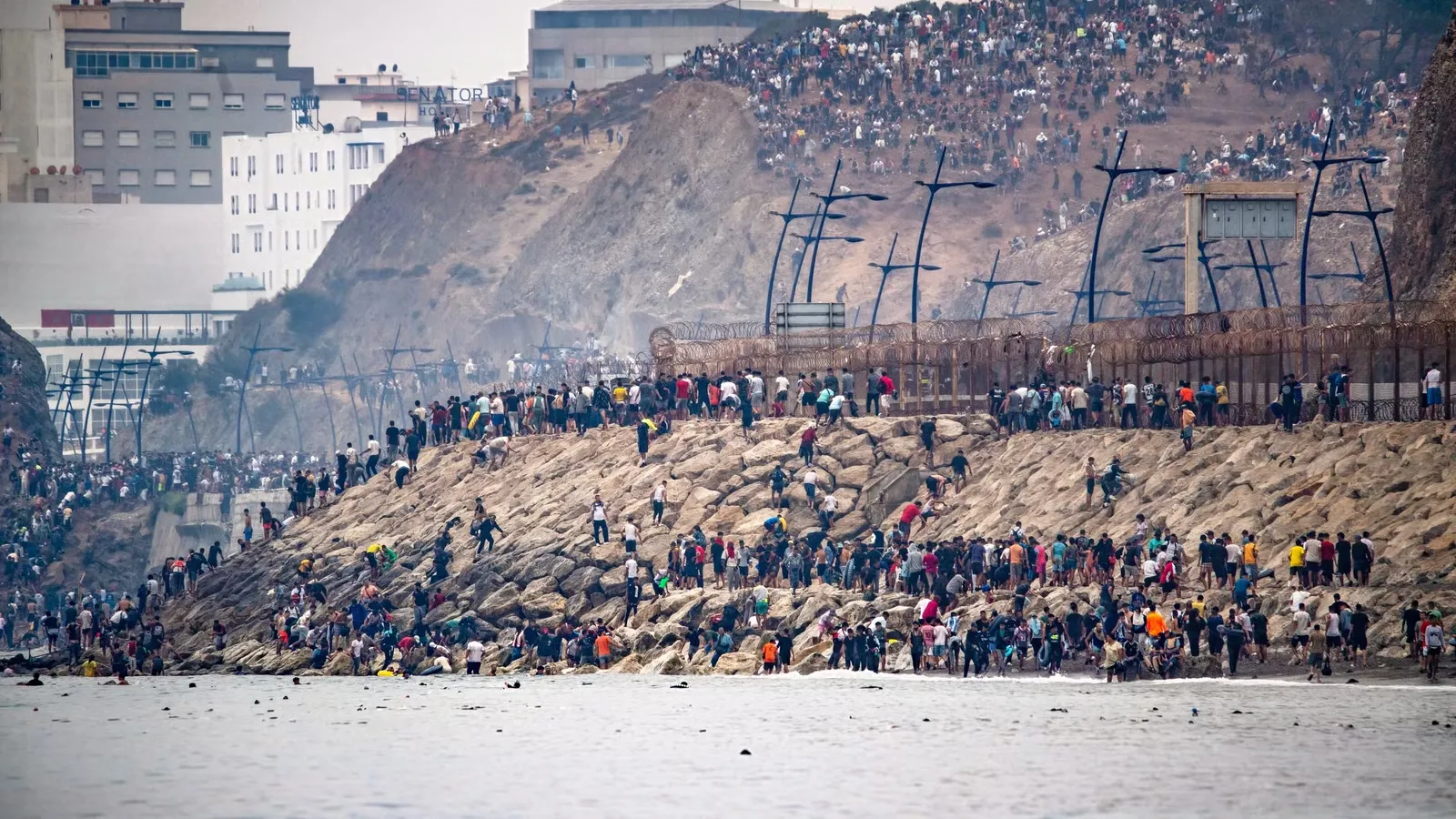

On July 30, 2026, Spain's Ceuta experienced an unprecedented influx of migrants, with approximately 60,000 individuals crossing from Morocco into the Spanish enclave within a mere 24 hours. This situation has escalated into a significant migrant and humanitarian crisis, capturing global attention and prompting the Spanish government to deploy additional troops and police forces to manage the chaos. Ceuta, which typically houses around 85,000 residents, saw its population surge dramatically, with the influx representing nearly 70% of its usual inhabitants. Tragically, reports indicate that at least 72 migrants have lost their lives during the perilous crossing, with causes ranging from drowning to stampedes. By July 31, Spain's Interior Ministry announced that approximately 37,500 migrants had been returned to Morocco, yet the situation remains precarious and fluid.
The disorder was not limited to the borders; reports from JUCIL, an association representing members of Spain's Civil Guard, highlighted incidents of looting in residential areas and raised alarms about potential break-ins in supermarkets should food supplies dwindle. Residents began sharing alarming videos that suggested groups of migrants were trespassing onto private properties, leading to many local businesses, including bars and restaurants, temporarily closing their doors due to safety concerns. Juan Jesús Vivas, the President of Ceuta, characterized the situation as a humanitarian and social emergency and urged the Madrid government to declare a national emergency. However, this request was denied, as Spain's civil protection laws do not encompass migration emergencies, although military reinforcements were dispatched to the region.
Prime Minister Pedro Sánchez condemned the mass crossings as a violation of Spain's territorial integrity amidst growing political pressure from opposition figures demanding his resignation. The crisis has rapidly extended beyond Ceuta's borders, prompting Italy to temporarily suspend Schengen free movement with Spain, instituting closures for air and sea travel to protect national security. Italian officials later clarified that this measure would involve targeted checks on non-EU nationals arriving from Spain, reflecting the growing concern over the migrant situation.
This sudden surge in migration has raised numerous questions regarding the security and control of borders, especially given the backdrop of complex international relations. Authorities have attributed the crisis to smuggling networks taking advantage of a Supreme Court ruling that prevents the immediate return of migrants intercepted at sea. Meanwhile, Moroccan sources have blamed criminal organizations for the crossings while insisting that their cooperation with Spain remains robust. However, a widely circulated video showing a dump truck unloading migrants near the Ceuta border, with a Moroccan gendarme present but inactive, has fueled skepticism about the official narrative and raised further questions about how such a large number of people managed to reach the border so swiftly.
This migrant crisis follows a series of tensions between Spain, Israel, and the United States, particularly after Israeli Prime Minister Benjamin Netanyahu issued stern warnings regarding Spain's diplomatic stance against Israel. In April 2026, Netanyahu accused Sánchez's government of waging a "diplomatic war" and declared that countries opposing Israel would face repercussions. This rhetoric aligns with previous Israeli political discourse suggesting that displaced populations should be directed toward Spain, raising alarms about the potential geopolitical ramifications of the current situation.
Amidst this turmoil, Spain has also made significant diplomatic overtures, including a recent visit by Sánchez to Algeria to discuss energy and security cooperation, intensifying the already complex dynamics with Morocco. The Moroccan government maintains strong ties with both Israel and the U.S., having received recognition for its sovereignty over Western Sahara—a central territorial issue for Rabat—further complicating the narrative surrounding the migrant crisis.
As the situation in Ceuta continues to evolve, it remains critical to analyze the implications of Spain's actions and the broader geopolitical context that may have contributed to this humanitarian emergency. The unfolding crisis not only highlights the immediate challenges of migration management but also serves as a reminder of the intricate web of international relations that can influence such events.
As reported by military.com.