Spain's participation in the organization of the 2030 World Cup may be threatened if FIFA decides to award the final match to Morocco. This alarming possibility has been highlighted by the Spanish press, particularly as Rafael Louzán, the president of the Royal Spanish Football Federation (RFEF), has been vocally advocating for Spain to host the prestigious finale.
The competition for the 2030 World Cup final is taking an unexpected turn, as Morocco is aggressively promoting its bid centered around the upcoming Grand Stade Hassan II in Casablanca. In light of this development, Spain is reportedly contemplating a drastic response should the FIFA committee choose not to host the final in either Madrid or Barcelona. While this potential withdrawal has not yet been officially announced by the RFEF, it coincides with Louzán's increasingly assertive rhetoric regarding Spain's rightful claim to the final match.
"It would be incomprehensible for us not to host the World Cup final," Louzán stated emphatically during a recent press conference. He emphasized that Spain is poised to host approximately 55% of the total matches in the tournament, thereby demonstrating its capacity and experience in handling such a significant event. Earlier, at a UEFA conference in Madrid, Louzán reiterated that "Spain must host the final," underscoring the country's solid security measures and organizational capabilities.
Morocco, on the other hand, has significantly bolstered its position in this competitive landscape. The centerpiece of its argument is the construction of the Grand Stade Hassan II near Casablanca, which is projected to accommodate 115,000 spectators. This ambitious infrastructure project is a key factor in Morocco's bid for hosting the final match.
FIFA's Decision Still Uncertain
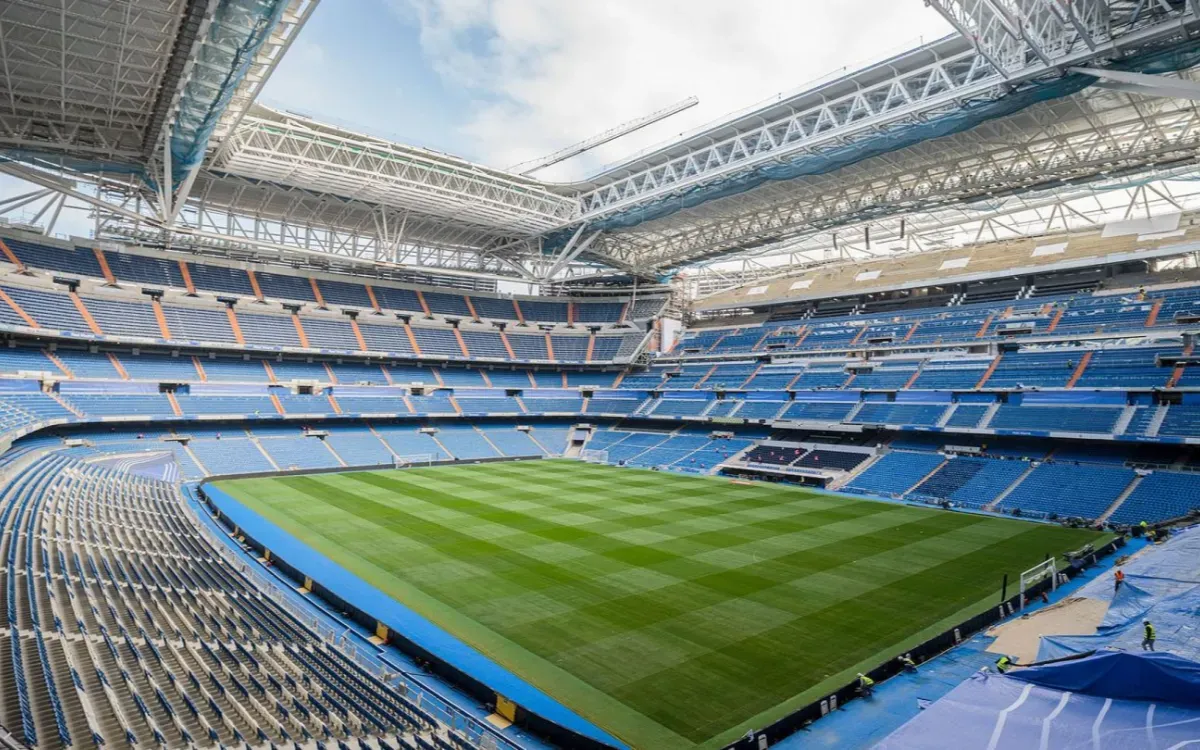
For a long time, it seemed almost certain that Madrid's Santiago Bernabéu Stadium would host the final match. Even at the beginning of the year, the Spanish press regarded Madrid as the obvious choice. However, the dynamics have shifted in favor of Morocco, largely due to significant investments made by Rabat, the remarkable capacity of the future Casablanca stadium, and the growing influence of Moroccan football in international institutions. This evolution has transformed what was once a foregone conclusion into a genuine competition.
The situation became even more delicate in early August when reports suggested that FIFA President Gianni Infantino might support awarding the final to Morocco, amidst tensions with various European federations. FIFA quickly refuted these claims, labeling them as "false and misleading" and clarifying that a decision would be made at a later date. As it stands, both Casablanca and Madrid remain in contention for hosting duties.
This uncertainty has led to a flurry of statements from Spanish officials. In July, Louzán asserted there was no reason for Spain to be overlooked for the final, and his tone has since grown even more resolute. If Spain were to withdraw, it would create a significant upheaval. The 2030 World Cup has been jointly awarded to Morocco, Spain, and Portugal, with three matches scheduled to take place in Uruguay, Argentina, and Paraguay to celebrate the centennial of the tournament. Spain is expected to host the majority of the matches and provide several key stadiums for the event.
The mere discussion of such a scenario highlights the level of concern within Madrid regarding Morocco's bid. With only four years until the tournament, the competition is evolving beyond just a race between the Bernabéu and the Grand Stade Hassan II; it has escalated into a full-fledged showdown between the two primary host nations for the 2030 World Cup.
As reported by bladi.net.