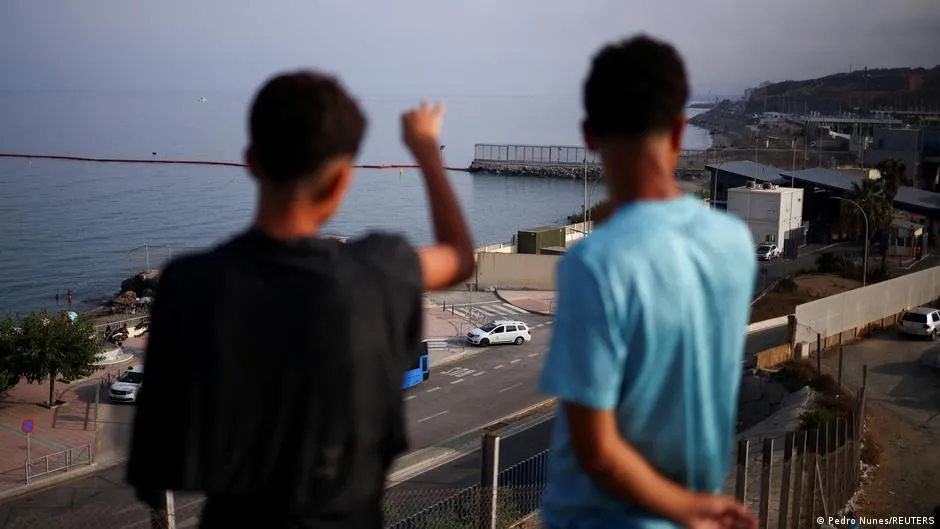
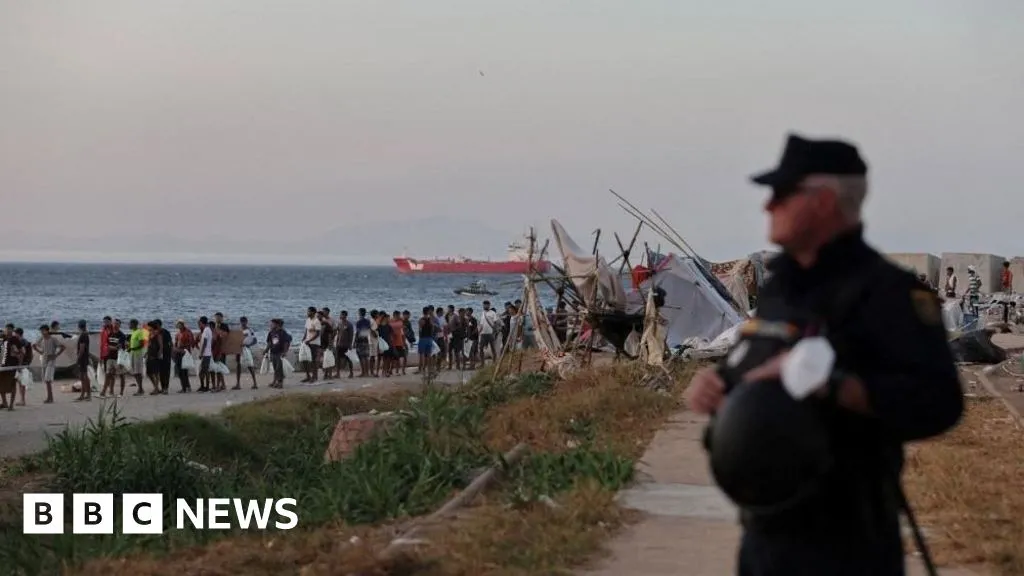
In a significant revelation, Spain's national intelligence agency, the National Intelligence Center (CNI), issued multiple alerts ahead of the border crisis in Ceuta, where a staggering influx of migrants from Morocco occurred in late July 2026. Declassified government documents, made public this week, shed light on the warnings that were provided to Spanish authorities, casting doubt on the assertions made by Prime Minister Pedro Sánchez regarding the government's awareness of the situation prior to the event.
The released documents consist of 40 items, including intelligence reports, charts, alerts, and communications from various law enforcement and intelligence entities. These documents suggest that the government had more information about the potential crisis than previously acknowledged, leading to significant public outcry and protests against Sánchez's administration. Critics have accused the government of mismanaging the crisis, while political adversaries have claimed that Sánchez is overly accommodating to Morocco's interests.
The Social Media Warnings
On July 29, just a day before the mass crossing where over 72,000 individuals attempted to enter Ceuta, the CNI alerted the government via WhatsApp about social media calls for an assault on the border fence and a sea crossing scheduled for 8 p.m. the following day. The message highlighted the extensive reach of these groups, indicating that they had a collective following of approximately 180,000 people. Furthermore, the intelligence reports warned Moroccan authorities of plans circulating online for migrants to breach the border fence or swim around it, taking advantage of Morocco's national Throne Day celebrated on July 30.
On the same day, further warnings from the CNI were directed to Spain's Civil Guard, indicating that several groups on social media were actively promoting these attempts to cross the border. As the situation escalated on July 30 and thousands surged across the border, a report from the Defense Ministry noted that Moroccan forces were passive in their response, raising concerns that Morocco could leverage the chaos in Ceuta to fulfill its strategic interests.
Government Responses and Ongoing Humanitarian Crisis
In light of the declassified documents, Prime Minister Sánchez has dismissed claims that they indicated forewarning of a crisis of such magnitude. He stated that while the existence of the planned campaign was known and monitored, it did not reflect the actual scale or nature of the events that transpired on July 30 and 31. Sánchez has maintained that there is no evidence suggesting the Moroccan government orchestrated the border incident, despite a leaked police report hinting at possible involvement by Moroccan authorities.
In the aftermath, Ceuta is grappling with a humanitarian crisis, with reports estimating that between 5,000 and 10,000 migrants remain in the city. The situation has prompted Sánchez to promise the release of further documents related to Spain's deadliest mass crossing, where NGOs reported over 140 migrant fatalities. In the days leading up to the crisis, hundreds had already made the perilous swim from Morocco to Ceuta, a situation acknowledged by Spain's Interior Minister, Fernando Grande-Marlaska, who described the unfolding events as extraordinary and exceptional. The series of documents released highlights the increasing migrant arrivals that overwhelmed Spanish authorities starting July 30, 2026.
As reported by seattlepi.com.