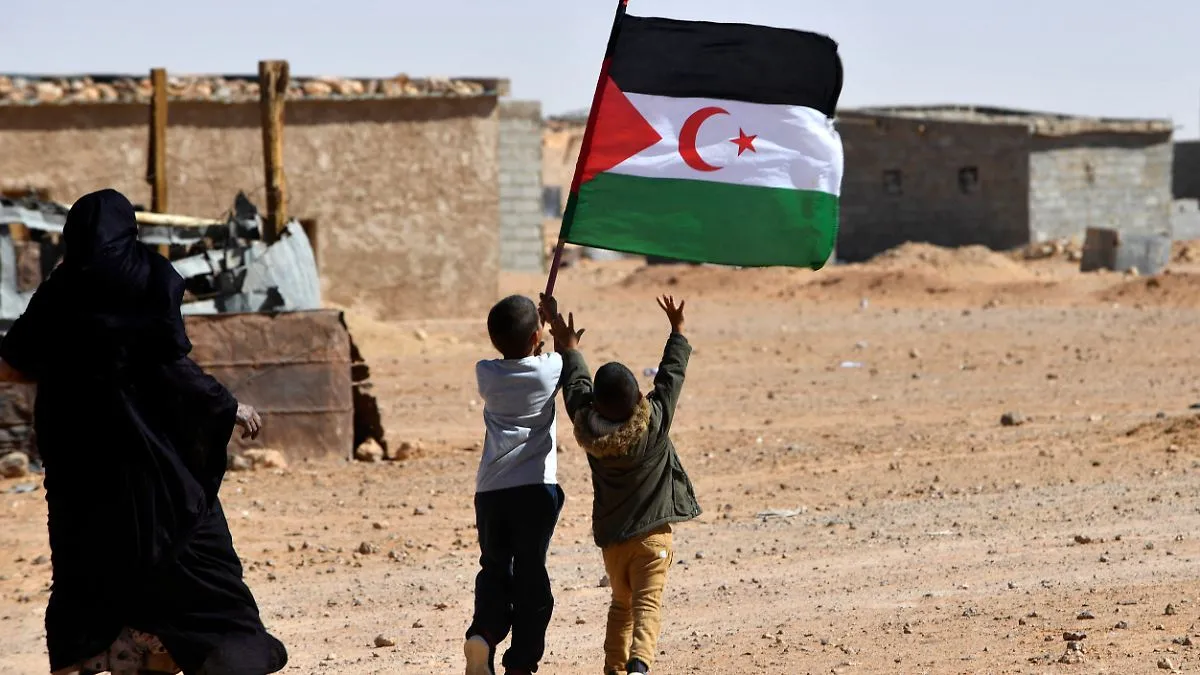

For decades, the Western Sahara has been a contentious region, home to approximately 610,000 individuals. Recent developments suggest that nearly one-third of these residents could soon acquire Spanish citizenship. This potential shift could significantly alter the dynamics of the long-standing conflict, as Spain, the former colonial power, appears poised to redefine its role.
The Spanish Congress has passed a bill allowing for the naturalization of tens of thousands of people from the Western Sahara, which Morocco claims as its territory. According to the proposal from Prime Minister Pedro Sánchez's government, individuals born in the Spanish former colony before September 29, 1977, along with their descendants, will have the opportunity to apply for Spanish nationality. However, this legislation still requires approval from the Senate in Madrid before it can take effect.
The Western Sahara, located on the northwest coast of Africa, has been largely under Moroccan control since Spain's withdrawal. The independence movement known as Frente Polisario, which governs the remaining areas, receives support from neighboring Algeria. The United Nations officially recognizes the Western Sahara as a non-self-governing territory. In a notable shift, Spain abandoned its long-standing neutrality on the issue in 2022, siding with Morocco in the ongoing dispute.
The new law aims to grant Spanish nationality to all individuals born under Spanish administration in the Western Sahara, along with their descendants, with estimates of eligible individuals ranging from 80,000 to nearly 200,000. The conservative and far-right opposition in Spain has vehemently opposed this legislation, while the Moroccan government has yet to comment officially on the proposal.
Relations between Spain and Morocco have been strained recently, particularly following a mass influx of migrants from Morocco into the Spanish enclave of Ceuta in late July. On July 30 and 31, over 70,000 people crossed into Ceuta, either on foot or by swimming. Most returned shortly thereafter or were sent back, yet thousands remain stranded in Ceuta. Spanish authorities reported dozens of fatalities during this crisis.
Speculation arose that Morocco might have intentionally allowed these individuals to cross into Ceuta, possibly in retaliation for Sánchez's visit to Algeria in July. Sánchez has repeatedly denied any responsibility on Morocco's part. The Spanish opposition has been vocal in its criticism of his stance.
On Thursday, the Moroccan government also stated that there is no evidence implicating Moroccan authorities in the Ceuta incidents. Morocco expressed its desire not to be used as a
As reported by n-tv.de.