
Within the corridors of FIFA, a storm brews as Gianni Infantino's controversial attempts to sell the World Cup to investors linked to Donald Trump come to light. It is particularly surprising to witness the Spanish government's lack of explicit support for the Santiago Bernabéu Stadium as a venue for the 2030 World Cup final. Observers note that this marks a historic moment where a nation fails to advocate for its own bid for the prestigious final. Such inaction reflects poorly on the Spanish government, especially considering that Prime Minister Pedro Sánchez was compelled to include the Camp Nou in the bid, a requirement pushed by regional Catalan parties that sustain his administration. This political dependency has hindered a strong commitment to champion the Bernabéu as Spain's flagship venue.
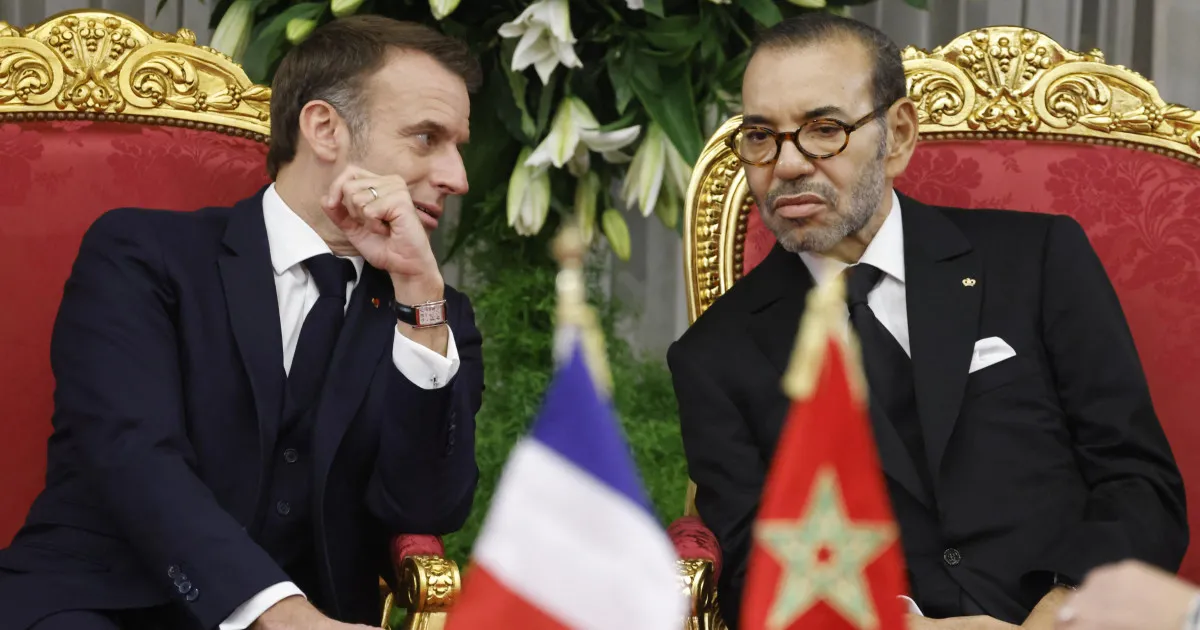
Throughout this process, Sánchez has displayed a pattern of indecisiveness in front of FIFA, a situation made all the more stark when compared to the diplomatic efforts of other nations. Morocco and France appear to have a distinct upper hand in the diplomatic arena, with French President Emmanuel Macron endorsing King Mohammed VI's request to host the final in the new Casablanca stadium, which boasts a capacity of 115,000 and has been constructed through a collaboration of French and Moroccan firms. While they pursue their objectives with strategic intent, the Spanish government seems adrift, lacking a clear direction.
Fortunately, the Real Madrid club has stepped in to undertake the diplomatic efforts that the Spanish government seems unable or unwilling to manage. Historically, the club has been regarded as a significant diplomatic entity for Spain, a sentiment echoed by the late King Juan, who praised Real Madrid for its diplomatic prowess over decades. In this ongoing scenario, Florentino Pérez, the club's president, has been tirelessly working to position the Bernabéu as the preferred venue for the World Cup final, a critical event that Spain spearheads as the main organizer.
FIFA officials have acknowledged that the Madrid venue is the top choice, asserting that no other stadium in the world can compare to the iconic Chamartín arena. However, the presidential elections within FIFA pose a challenge that both King Mohammed VI and Macron are keen to exploit to further their own aims, while the Spanish government remains passive.
The African Backing for Infantino
As the Spanish government remains inactive, Infantino has convened a FIFA meeting in Morocco to secure the necessary support for his presidential re-election campaign, which faces significant challenges. Instead of hosting this crucial summit in Spain, the country leading the 2030 World Cup, Infantino and his close associates gathered in Morocco under the auspices of King Mohammed VI. This meeting effectively garnered the backing of the entire African continent for Infantino’s upcoming candidacy, marking a strategic win for the Moroccan monarch.
In the face of internal dissent from his key associates within FIFA, who have expressed strong criticism of his leadership, Infantino has managed to unify his team to retain control. Notably, figures such as Arsène Wenger and FIFA's CEO, Mattias Grafström, who previously distanced themselves from Infantino’s controversial decisions, are now rallying together, asserting that past mistakes will not be repeated, all under the Moroccan banner.
Spain Lags Behind in the World Cup Race
The power struggles unfolding within FIFA are critical because they directly influence the 2030 World Cup, and Spain finds itself on the sidelines, failing to engage or assert its interests directly. It is crucial to highlight that Spain is the leading nation for the upcoming World Cup. The inclusion of Portugal and Morocco in the organizational structure was intended to elevate the profile of Portuguese football and recognize an African nation, which will be the second on the continent to host the World Cup, following the unforgettable South African event.
Despite holding a leading role in this tournament, Spain has not firmly advocated for the Bernabéu as the final venue, possibly to avoid conflict with Catalan political interests. In stark contrast, Macron and Mohammed VI are openly supporting a specific stadium. Meanwhile, the Spanish Football Federation, entrusted with the responsibility of organizing the World Cup, claims to have no knowledge regarding the Casablanca stadium potentially being designated as the final venue.
Miracles Tolón, Spain's Minister of Education, Vocational Training, and Sports, echoes this sentiment, stating that she is unaware of any plans regarding Casablanca as a potential final venue. However, she does not mention any proactive measures being taken, leaving many to question the government's commitment. The Madrid Community Government has publicly urged the national administration to take action and defend Madrid as the World Cup final location. In this critical moment, Real Madrid is actively working to ensure that the Bernabéu is recognized as the rightful host for this prestigious event.
As reported by eldebate.com.