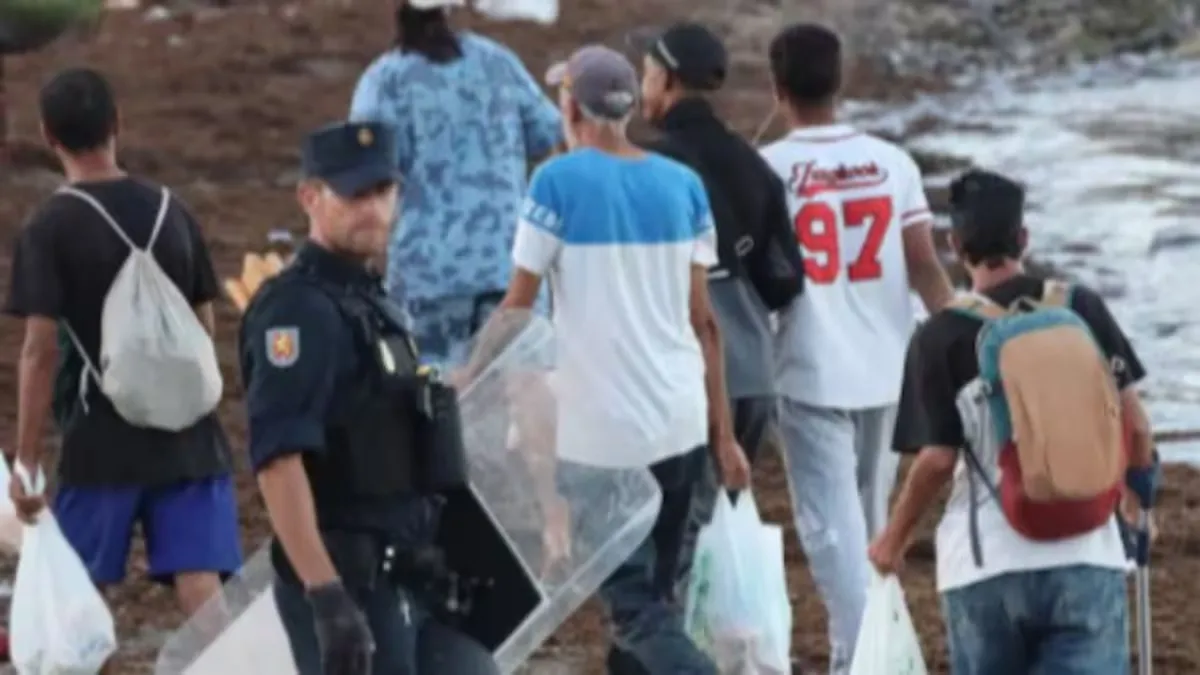
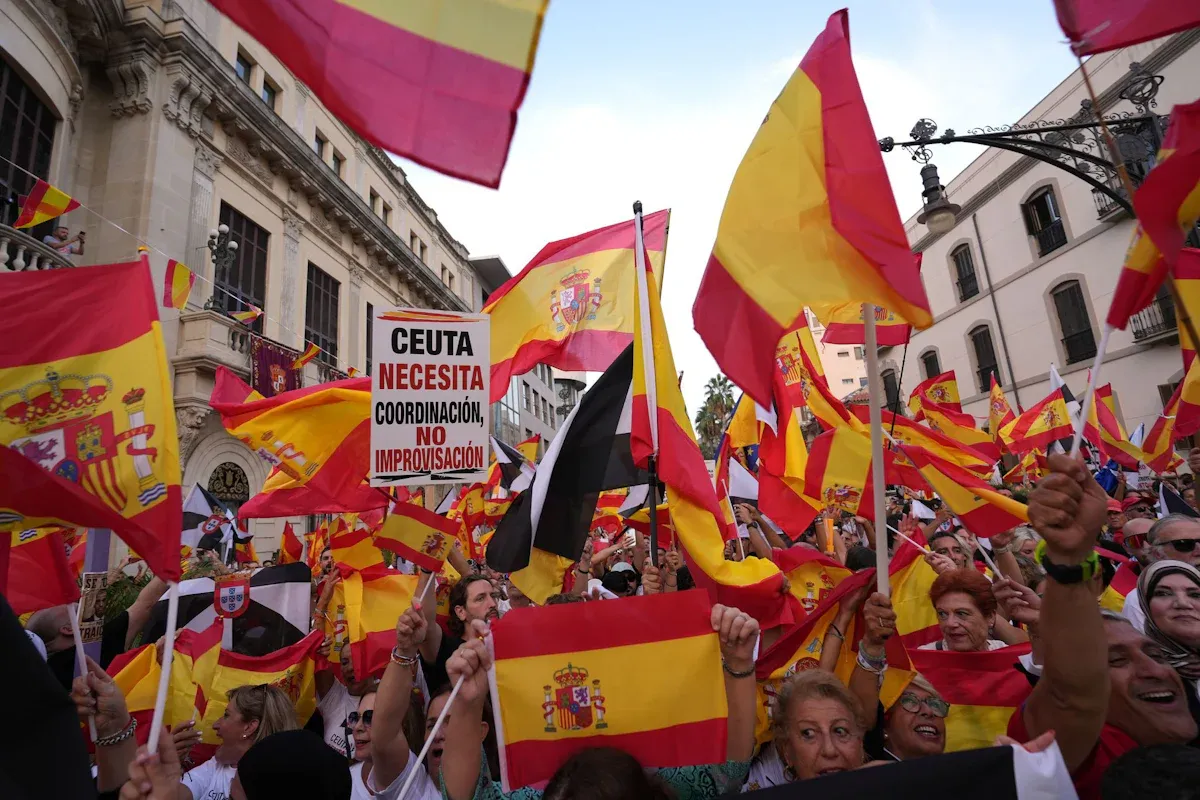
A recent police report has raised significant questions regarding the Spanish government's handling of the unprecedented influx of migrants into Ceuta, a small Spanish enclave in North Africa. The report suggests a notably reduced police deployment and highlights alleged 'permissiveness' of Moroccan security forces during the arrival of approximately 72,000 migrants on August 30. This development threatens to embarrass the Spanish administration, which has consistently absolved Morocco of any responsibility for the sudden surge of migrants that occurred at the end of July, a stance that has faced criticism from various opposition members.
According to the report, which was reviewed by AFP, the Spanish Ministry of the Interior has repeatedly defended its position, asserting that there have been no findings attributing responsibility for the mass migration to any specific government or individual. Notably, investigators from the National Centre for Immigration and Borders (CENIF) indicated that the police presence at the Moroccan-Ceuta border was significantly lower than usual during the period in question. They stated, "The police response in Morocco to the massive influx of migrants was, at a minimum, one of total permissiveness, with no serious attempts recorded to reduce, disperse, or deter the mass of individuals at the border on July 30." This assertion contradicts the official narrative that has been maintained by the Spanish government.
The report further elaborates that the geographical proximity of security resources, due to the celebration of the Throne Day on July 30, should have enabled a more stringent control mechanism at the border. Instead, the police response was described as progressively slower than what the situation warranted. The testimonies of migrants and video footage circulating on media and social networks indicate a pattern that aligns with facilitating irregular immigration, suggesting that some police officers may have actively guided migrants to cross through specific areas, such as the El Tarajal pier. This raises serious concerns about the role of law enforcement in managing the migration crisis.
As the situation unfolds, the official stance of Prime Minister Pedro Sanchez's government seems increasingly precarious. Despite Sanchez’s insistence that no intelligence service had suggested Moroccan authorities' involvement in the events, the emergence of this report complicates the narrative. On the morning of the report's disclosure, Spanish Interior Minister Fernando Grande-Marlaska requested an update from police on the findings, which allegedly implicated Moroccan security forces in the border breach. However, by afternoon, the Spanish police chief denied the existence of any report linking Moroccan law enforcement to the migrant crisis, a denial that was reiterated later in the evening by the Ministry of the Interior.
Some analysts speculate that this migrant crisis may serve as a message from Morocco to Spain regarding the contentious issue of Western Sahara, an area claimed by the Sahrawi Arab Democratic Republic but largely controlled by Morocco. This speculation follows a visit by Sanchez to Algeria in July, which may have prompted Morocco to reassert its position. The complexities surrounding this situation not only highlight the fraught relationships between neighboring nations but also cast a long shadow over the European Union's collective response to migration challenges.
As reported by lesoir.be.