
Interior Minister Addresses Ceuta Crisis and Intelligence Reports
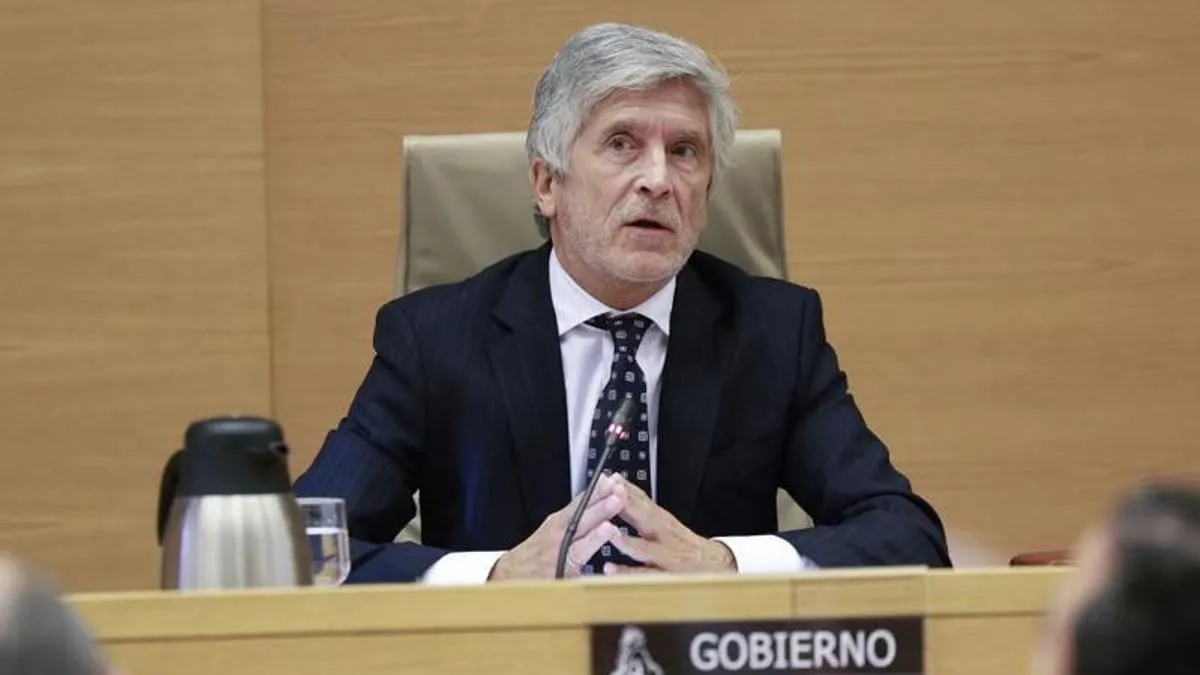
Fernando Grande-Marlaska, the Spanish Interior Minister, sought to clarify the ongoing controversy regarding whether the state had adequate prior information about the impending situation in Ceuta. This issue arose after Marlaska stated that he did not receive prior reports concerning the scale of the migration surge, which has put him at odds with his cabinet colleague, Defense Minister Margarita Robles, who has reiterated that the National Intelligence Center provided timely and relevant information. During his testimony before the Interior Commission of Congress, Marlaska adopted a conciliatory tone, emphasizing that he has never blamed any intelligence service, including the CNI, CIFAS, or the Police and Civil Guard, for the situation at hand. He indicated that the intelligence services always functioned adequately, although he acknowledged that not all information necessarily predicted the events as they unfolded.
In his initial remarks regarding the handling of the Ceuta crisis, Marlaska refrained from asserting that he lacked reports that would have allowed him to anticipate the migration surge that occurred on July 30 and 31. However, opposition parties have confronted him directly, with some, like the Popular Party (PP) and Bildu, referencing data previously disclosed by EL PERIÓDICO. Marlaska urged that his words be accurately contextualized, stating, "Let’s not say that someone predicted the events of the 30th because that is not true," while also clarifying that he did not intend to imply that any intelligence service was not functioning properly.
According to the minister, while there was prior information, it did not specifically forecast the exact circumstances that transpired. He explained that reports discussed structural elements of migration in Ceuta and Melilla, such as economic disparities, social media influences, and the activities of trafficking networks. He noted that similar discussions had occurred in previous years, suggesting that the situation was not entirely unexpected.
Defending Morocco's Role and Addressing Domestic Tensions
Grande-Marlaska reaffirmed Morocco's role during the crisis, asserting that the collaboration with the neighboring country has been both sustained and effective over the years. He emphasized that there was close cooperation with Moroccan authorities to facilitate the return of migrants, a partnership he described as that of a "loyal partner." Furthermore, he argued that what occurred constituted an attack on Spain's territorial integrity, which could not be equated with irregular migration flows. He acknowledged that the cooperative context with Morocco was pivotal in resolving the situation within 24 hours. This assertion, however, has faced significant criticism from various political factions, including PP, Vox, Sumar, and Esquerra Republicana. Concerns were raised about Morocco's intentions, with some representatives arguing that it has leveraged the situation to test Spain's resilience and questioning the effectiveness of the cooperation.
The backdrop of these discussions is marked by rising tensions in Ceuta, highlighted by recent violence when Spanish protesters broke through police lines at Benítez Beach and destroyed a migrant encampment. In his first appearance before Congress since the crisis escalated, Marlaska called for calm and denounced any form of violence, stating that the rhetoric surrounding migrants as "invaders" or "criminals" is incompatible with human dignity. He stressed the importance of treating all individuals, including vulnerable children and adolescents, with humanity and respect.
As the debate unfolded, various political figures criticized the government's response to the crisis. Sumar’s Enrique Santiago condemned the recent violence and called for a humane approach to migrant processing. Additionally, accusations of negligence were levied against Marlaska regarding his management of the crisis, particularly concerning the delayed installation of a maritime barrier, which some argued was a necessary precaution that was not implemented in a timely manner. The session concluded with heightened scrutiny over the government's strategy to prevent further escalation of tensions in Ceuta, leaving many questions unanswered regarding the future handling of the situation.
As reported by elperiodico.com.