In a significant political address, Spanish Prime Minister Pedro Sánchez emphasized that there is no "solid proof" to suggest that Morocco orchestrated the unprecedented influx of migrants into Ceuta that occurred on July 30 and 31. This surge saw over 70,000 individuals cross the border from Morocco, resulting in tragic fatalities, primarily due to drowning as many attempted to navigate around a breakwater. Despite a police report indicating failings in the Moroccan security response, Sánchez maintained a cautious stance, avoiding direct blame on Morocco, as his government has historically sought to mend fraught diplomatic relations with the North African nation.
The police report, which was made available to AFP, criticized Moroccan authorities for a "total permissiveness" that allegedly facilitated the migrant rush. It pointed out that the number of Moroccan police present at the border was significantly lower than usual, and officers reportedly made little effort to control the situation, with some guiding migrants toward the water. Nevertheless, Sánchez defended his administration, stating that neither domestic nor international entities had provided evidence to support claims of a premeditated plan by Morocco to execute this crisis. He asserted, "If this solid proof existed, we would act accordingly," underscoring that the Spanish government had received no advance notice regarding the scale of the incident.
In a notable instance of public criticism, Sánchez condemned recent remarks from Moroccan officials regarding Ceuta and Melilla, Spain's other North African enclave. He labeled these comments as "unacceptable" and revealed that Spain had summoned Morocco’s ambassador for discussions. Tensions have been heightened further by statements from Moroccan Justice Minister Abdellatif Ouahbi, who claimed that Rabat holds "historic" and "geographical" rights over the territories, advocating for a "final solution" to reclaim them. In response, Sánchez firmly stated that Ceuta and Melilla will remain under Spanish sovereignty "until the end of time." This ongoing dispute illustrates the complexities entwined in Spain-Morocco relations, particularly as the opposition in Spain, primarily from the conservative Popular Party, questions Sánchez's approach and his perceived subservience to Moroccan interests.
Some analysts speculate that Morocco may have utilized the migrant crisis as a means of political leverage following Sánchez's visit to Algeria, a historical rival, in July. The contentious issue of Western Sahara further complicates the diplomatic landscape, as Morocco asserts control over the area, which is also claimed by the Algeria-backed Polisario Front. In light of the crisis, Sánchez has suggested that King Felipe VI visit Ceuta and Melilla in the near future—a move that could provoke further diplomatic strain with Morocco, recalling that the last royal visit in 2007 led to significant tensions.
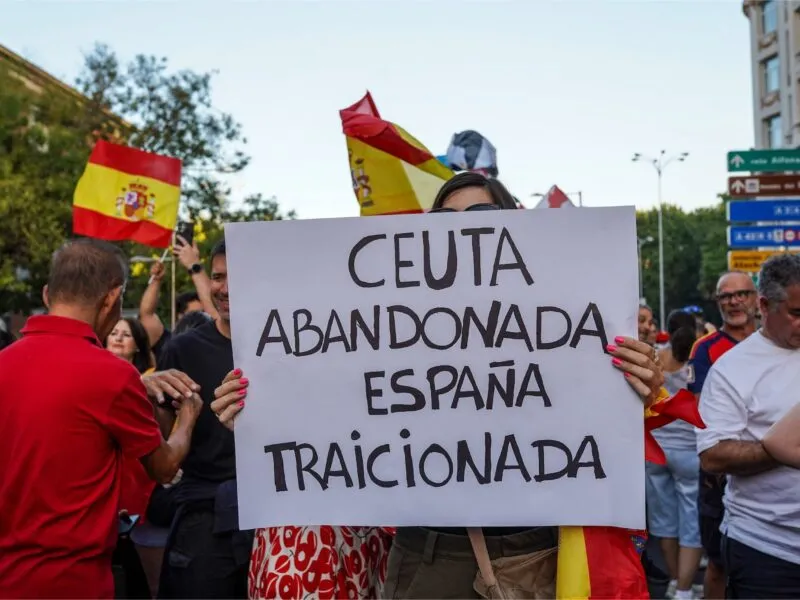
Despite the majority of migrants returning to Morocco after the crisis, many remain in Ceuta, leading to increased local tensions as residents express feelings of neglect. This situation has sparked widespread protests across Spain, with demonstrators demanding more robust governmental support for Ceuta. Sánchez echoed this sentiment, asserting the need for state support during these challenging times, while clarifying that he does not intend to escalate diplomatic conflicts with Morocco.
As reported by courthousenews.com.