
Ceuta's Migrant Crisis: A Desperate Situation
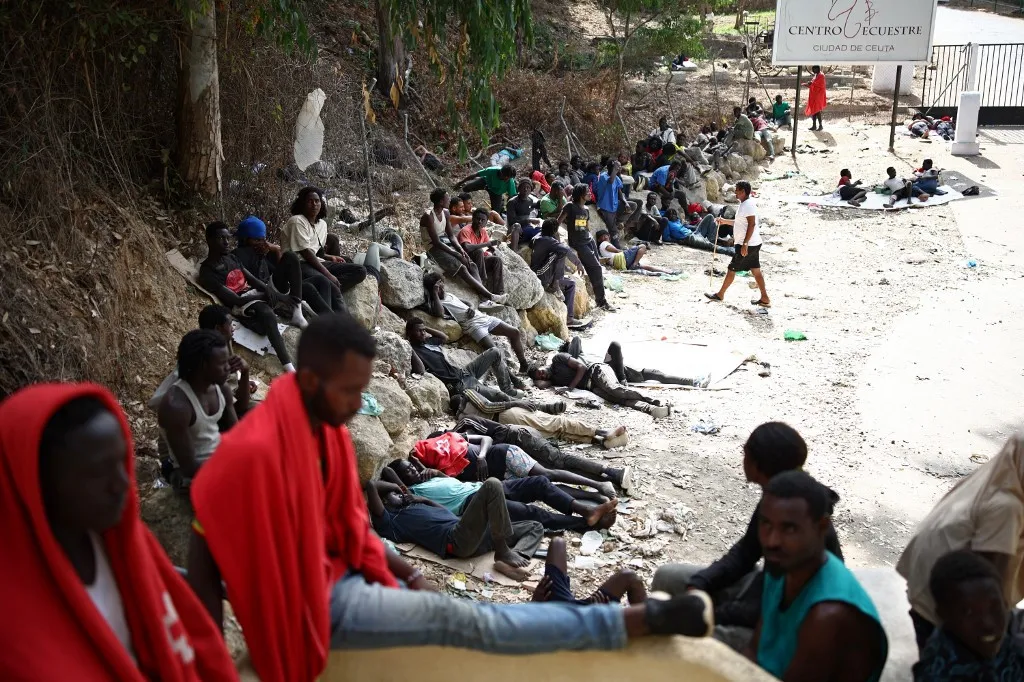
At the end of July, tens of thousands of people made their way from Morocco to Ceuta, a Spanish enclave located at the northern tip of Africa. Even now, several thousand individuals remain in limbo, seeking hope and a better future. These migrants have been enduring harsh conditions, sheltering on a beach far from the city center, sleeping on cardboard boxes, and guarding their few belongings stored in tattered plastic bags. As of Thursday morning, however, they were no longer on the beach, having been taken under police escort to temporary accommodations. The question of what lies ahead for them remains uncertain.
Nearly a month ago, approximately 72,000 migrants flooded into the small Spanish territory. While many have since returned across the border, a significant number, estimated between 9,000 and 10,000 according to local authorities, still remain in Ceuta. This includes around 2,000 minors, though the Spanish Interior Ministry estimates the number of those still present to be closer to 5,000. The government has pledged to provide housing for those who have stayed, aiming to restore normalcy in Ceuta. Recently, they announced plans to accommodate 1,800 individuals, with efforts to find additional housing continuing.
Some migrants have found refuge in makeshift shelters set up by local residents, while others continue to roam the streets, scavenging through the abandoned belongings on the now-empty beach in search of items that could still be of use—a mattress, a sheet, a tarp, or a plastic chair. One such migrant, Khadija Rifai from Morocco, expressed her uncertainty about the future. "They help the minors and the youth," the 20-year-old lamented, "but they have yet to find solutions for us." Khadija described her life in Morocco as 'normal' until the end of July when, in pursuit of better opportunities, she swam to Ceuta with her husband.
Unfortunately, her husband was sent back to Morocco, leaving Khadija to hide and remain in Ceuta on her own. Despite the challenges, she has not lost hope that one day she and her husband will be able to reunite and reach the Spanish mainland together. Dreaming of a family, a house, and a car, she longs for a better life.
As reported by tagesanzeiger.ch.