

Strained Relations Amidst Migrant Control Measures
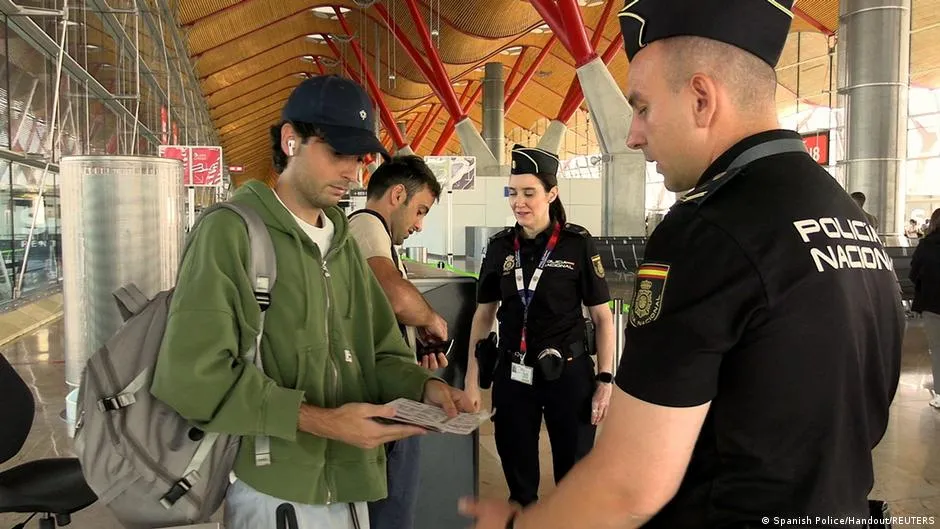
The ongoing conflict surrounding migrant management has seen the EU nations of Italy and Spain adopting a firm stance against each other, at least for the moment. The recent reintroduction of border checks by the Italian government has led to Spain denying entry to ten individuals arriving from Italy, as confirmed by the Interior Ministry in Madrid. A total of 199 travelers were subjected to checks at various airports. Under the directive of the left-leaning government led by Prime Minister Pedro Sánchez, officials have actively been inspecting arrivals from Italy since Saturday at airports and seaports. Authorities have indicated that this measure will remain in place until at least September 7.
Spain's response is directly linked to Italy's actions in the ongoing dispute regarding illegal immigration. Italian Prime Minister Giorgia Meloni had suspended the Schengen Agreement regulations permitting borderless travel between Italy and Spain as of August 1, with plans to maintain these checks at least until August 15. The Schengen Area allows for travel without border checks among 29 European countries, although member states have the authority to temporarily reinstate border controls for security or public order reasons.
Impact on Travelers and Tourism
At Madrid Airport, an Italian traveler reported to the Spanish broadcaster RTVE that passengers were informed on the flight that they could only disembark with identification. Upon landing, Spanish officials were present by the aircraft. "The officer saw that we had a passport but did not conduct a thorough check, only confirmed that we possessed one," she recounted. The Italian tourism association FIAVET has expressed significant concern over the situation, citing extensive delays, disruptions to services, and issues with rental car companies. Travel agencies are already facing challenges with their clients due to these new restrictions.
Every year, millions of tourists travel between these two countries, with approximately 5.4 million Italians visiting Spain and over 3.2 million Spaniards visiting Italy. The Italian government clarified that the new measures do not affect Spanish or other EU citizens but are targeted at non-EU nationals arriving by air or sea from Spain. Notably, Spain and Italy do not share a land border.
Meloni has cited the influx of 72,000 migrants from Morocco into Spain’s North African exclave of Ceuta on July 30 as a reason for the border controls. The Spanish government has denounced Italy's initial border checks as unfair, counterproductive to EU interests, and discriminatory. Foreign Minister José Manuel Albares characterized Italy's actions as a "torpedo below the waterline of European unity." So far, there is no evidence that any of the migrants from Ceuta have attempted to travel to Italy, and most returned to Morocco shortly after the incident.
Meloni was elected in 2022 with a pledge to take a tough stance against unwanted migration, with a new parliamentary election set to take place in Italy next year. EU Commissioner for Home Affairs Magnus Brunner stated on Saturday evening via social media platform X that both Spain and Italy have assured that their border checks are only temporary. He emphasized the progress made in combating illegal migration and that trust among member states is our most valuable asset. Spanish authorities have reassured that the events in Ceuta will not have lasting impacts on the Schengen Area.
As reported by amp.dw.com.
