
The Escalating Migration Crisis at the Ceuta Border
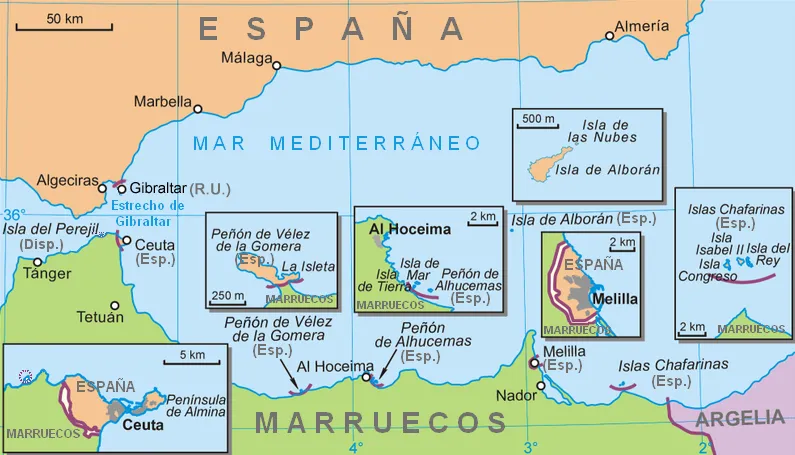
The 2026 border incident, which has been characterized as both an invasion and a humanitarian crisis, erupted in late July 2026, triggered by a massive influx of migrants from Morocco seeking to enter Spanish territory. Within the first 24 hours of this crisis, it is estimated that thousands of African immigrants illegally crossed into Ceuta, a Spanish enclave located on the northern coast of Africa. Many of these migrants managed to access Spanish soil by swimming from nearby Moroccan beaches or navigating around the border barriers at El Tarajal, leading to a collapse of the local reception systems and a significant mobilization of police and humanitarian resources. The situation rapidly devolved into a humanitarian emergency, as described by Juan Jesús Vivas, the President of the autonomous city of Ceuta, who urged the Spanish government to implement extraordinary measures to address this unprecedented crisis.
Historical Context and Legal Implications
This incident marks the most significant migratory pressure on Ceuta since the May 2021 border crisis, during which approximately 8,000 individuals entered Ceuta over just two days amid a diplomatic standoff between Spain and Morocco. The legal framework governing maritime entries underwent a substantial change just weeks prior to this crisis. On July 8, 2026, Spain's Supreme Court issued a ruling clarifying that the legal concept known as "hot return"—a summary expulsion process—applies only to individuals attempting to breach physical border barriers such as fences. Consequently, those intercepted at sea while trying to swim to Ceuta must be processed through standard immigration procedures, ensuring due process rights. As a result, the Supreme Court's interpretation may have inadvertently encouraged increased attempts to enter by sea, as migrant flows surged due to a combination of factors, including Morocco's socioeconomic conditions, the activities of people trafficking networks, and the ongoing migratory routes to Europe.
By the third week of July 2026, irregular maritime entries into Ceuta began to rise significantly, with migrants exploiting favorable sea conditions to swim around the border points at El Tarajal and Benzú. In the initial ten days of the crisis, between 1,500 and 2,000 individuals, predominantly Moroccan nationals, arrived in the city, including a considerable number of unaccompanied foreign minors, which quickly overwhelmed the local child protection system. The influx of migrants led to a collapse of the available reception facilities, with emergency shelters being set up to accommodate hundreds of individuals who were left outdoors while awaiting humanitarian assistance. In response, the Civil Guard, National Police, Maritime Rescue, and Red Cross mobilized to provide support to those intercepted at sea or upon reaching the Ceuta coastline, while Moroccan authorities intensified surveillance on beaches to curb further departures.
The crisis continued to escalate, with daily attempts to cross into Ceuta becoming commonplace. President Vivas warned that the rate of arrivals, which reached nearly 300 individuals per day at times, could lead to a situation reminiscent of the 2021 migration crisis unless extraordinary measures were taken. Reports also emerged of numerous bodies being discovered along the coasts of Ceuta and northern Morocco in the weeks leading up to the crisis, a grim reminder of the dangers associated with these maritime crossings. On July 30, 2026, following attempts by illegal immigrants to enter, authorities in Melilla closed the border at Beni Enzar. In the face of this humanitarian crisis, President Vivas called for a national emergency declaration and immediate reinforcement of police, military, and humanitarian resources. However, the Spanish government declined to formally declare a national emergency, citing that current legislation does not recognize migration crises as a valid cause for such a declaration, although it did announce increased security measures and inter-ministerial coordination efforts.
As reported by es.wikipedia.org.