Unraveling the Textile Waste Trafficking Operations in Algeciras
On May 29, 2026, it was revealed that Algeciras has become a major hub for illicit textile waste trafficking, with operations rooted deep within the logistics of international shipping. Containers arriving from Tangier were falsely declared as 'second-hand clothing' or 'reusable materials,' but inside them lay a troubling reality: useless post-industrial scraps, upholstery remnants, foam rubber, and synthetic waste that no one in Europe wanted to handle legally due to the associated costs of proper disposal. This practice allowed traffickers to exploit legal loopholes and avoid the financial burdens that come with responsible waste management.
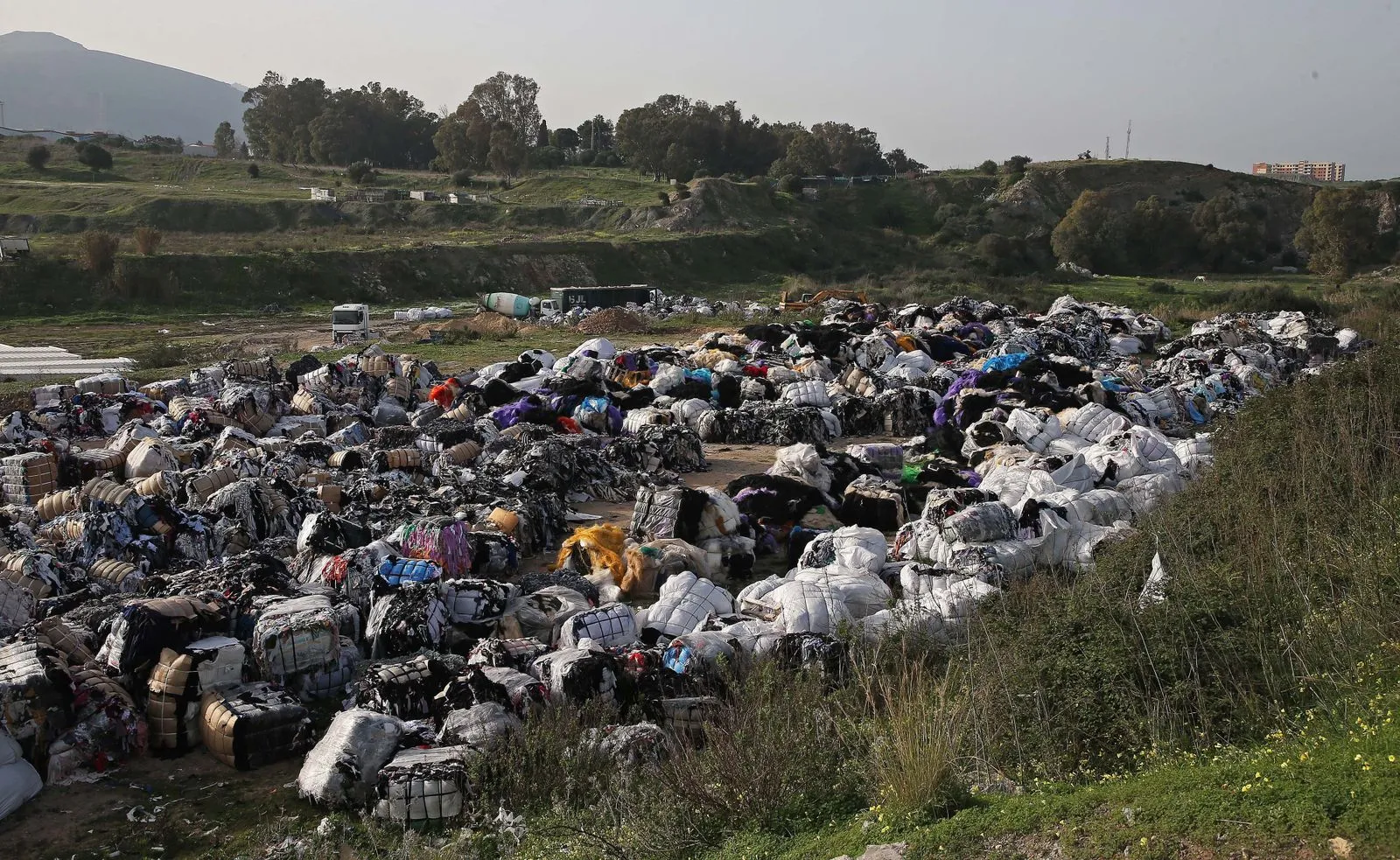
According to investigations led by the Civil Guard's environmental crimes unit, Seprona, Algeciras has turned into one of Spain's busiest entry points for this illegal trade. What was once viewed as a sporadic issue has now been identified as a systematic business model. The operation, dubbed the 'smoke bomb' by investigators, involves companies that rent industrial warehouses under the guise of legality, filling them to the brim with industrial sacks—commonly known as big bags—stuffed with textile waste, only to abandon the premises. The waste is left unmanaged, leaking contaminants into the soil and posing a constant fire risk, while those responsible vanish behind a web of shell companies.
Seprona clarifies that the individuals orchestrating these operations do not fit the mold of typical criminals. They possess a deep understanding of the logistics sector, waste regulations, and the international second-hand clothing market. They know precisely which customs codes to use, how to forge documentation, and how to exploit legal gaps across borders. The largest investigation to date, which began in August 2024 and concluded in February 2026, led to the arrest of four executives accused of serious environmental crimes. This massive operation uncovered over 2,000 tons of textile waste linked to 97 illegal transfers, primarily sourced from Morocco and systematically entering Spain through the Port of Algeciras.
The Broader Implications of Textile Waste Trafficking
The environmental impact of this scandal extends beyond Algeciras, with identified dumping sites across several municipalities. In areas such as Taraguilla and Campamento, investigators uncovered industrial warehouses overflowing with waste, lacking any municipal licenses or authorization from the Ministry for Ecological Transition. In La Línea de la Concepción, some of the materials were found abandoned in outdoor parcels near the former municipal landfill. This massive case is not an isolated incident; ongoing police and environmental monitoring revealed at least three additional dumping sites in the region, each with its unique characteristics but sharing a common thread of illegal waste disposal.
For instance, in the El Zabal Industrial Park in La Línea, investigators documented uncontrolled piles of industrial sacks containing fabric scraps and upholstery materials. Environmentalists from the Verdemar group raised concerns regarding the leaching of hazardous substances into the local groundwater. In the rustic estate known as La Doctora in San Roque, illegal dumping of used clothing mixed with other waste was confirmed, with the decomposing materials directly contaminating the nearby Colmena creek. Similarly, the Cortijo Real Industrial Park in Algeciras served as a precursor site, where tons of textile remnants were found uncontained, marking a pattern of accumulation used by organizations before escalating to large-scale cross-border transportation.
The illicit trade of textile waste cannot simply be framed as a local issue; it has international ramifications as well. The Custos Viridis operation, conducted in 2025 with the participation of 71 countries, identified Spain as a key player in the illegal waste trafficking network, with critical ports like Algeciras, Barcelona, Valencia, and Santander serving as pivotal points, alongside border crossings such as Irún and La Junquera. Sources from Seprona indicate that the conditions are ripe for this phenomenon to grow, primarily due to structural issues. As European legislation increasingly raises the costs of legal waste management, the financial incentive for individuals to bypass these regulations continues to grow.
The situation in the Campo de Gibraltar region not only violates Spanish legislation but also breaches a comprehensive set of European regulations. The EU Regulation on the Transfer of Waste prohibits the importation of industrial waste from third countries—such as Morocco—without prior notification and explicit consent from the respective authorities. By disguising waste under the label of 'used clothing suitable for reuse,' these companies also committed customs document forgery. Furthermore, the warehouses used for storing this material lacked the Integrated Environmental Authorization required under European law for establishing a landfill or waste transfer station, failing to implement necessary spill containment systems or fire safety measures for the storage of flammable synthetic polymers and fibers.
With the new EU Waste Framework Directive, approved in 2025, aimed squarely at dismantling the business model that makes this trafficking profitable, the responsibility for the end-of-life management of textile products is shifting from municipalities to manufacturers and fashion brands. This shift will further increase the costs associated with legal management and, if enforced rigorously, could reduce the margins for those operating in illegal circuits. Nevertheless, the Civil Guard expresses doubts about whether new regulations will resolve the issue independently. They warn that as obligations for separate collection and traceability increase, so too do the costs of legal management, which may tempt some to evade these obligations through fraudulent means. The 'smoke bomb' operation remains active, posing a persistent threat to environmental integrity.
As reported by europasur.es.