
Understanding Morocco's Role in Spain's Economy
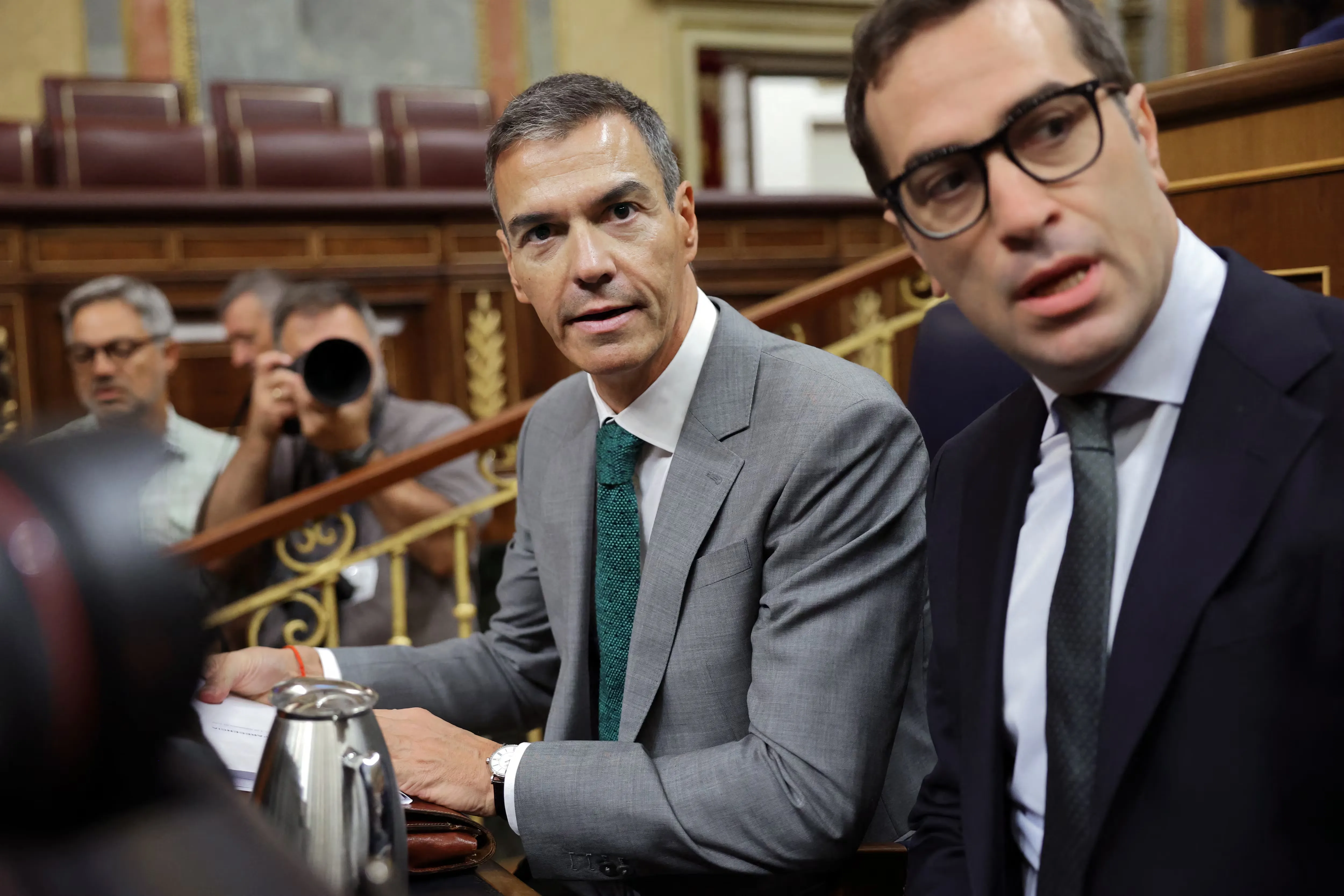
Morocco is far from being a secondary economic partner for Spain, as evidenced by Carlos Cuerpo, the First Vice President of the Spanish government and Minister of Economy, Trade, and Business. He highlighted during a recent edition of _Los Desayunos_ on RTVE and EFE that Spanish exports to Morocco exceeded €12 billion, compared to around €16 billion directed towards the United States. This comparison underscores the growing importance of the Moroccan market for Spanish companies, as exports to a country with approximately 38 million inhabitants are now nearing levels similar to those aimed at the world's largest economy.
The latest available data further confirms the vitality of trade between the two nations. In the first half of 2026, Spain exported goods worth about €6.42 billion to Morocco while importing nearly €5.8 billion. Spanish exports saw a year-on-year increase of 3.5%, while imports of Moroccan products rose by 4.1%, once again favoring Spain's bilateral trade balance. Today, Morocco accounts for nearly half of Spain's exports to the African continent and stands as one of Spain’s key markets beyond the European Union. The relationship has evolved beyond mere commercial exchanges; sectors such as automotive, electrical equipment, textiles, industrial machinery, and energy have forged increasingly integrated production chains on both sides of the Strait of Gibraltar.
Political Context and Economic Ties
The economic weight of Morocco emerged prominently in a discussion dominated by political news. When asked about Morocco's potential role in the recent events in Ceuta, Carlos Cuerpo dismissed any implication of Rabat, citing the lack of evidence to establish responsibility at this stage. He emphasized the need for "extreme caution" before drawing any conclusions, stating that there is no "irrefutable proof" of Morocco's involvement, although this absence of evidence should not halt ongoing investigations.
This stance aligns with the position recently adopted by Pedro Sánchez's government, which seeks to continue investigations without jumping to conclusions based on unverified indicators or interpretations. The political pressure on Morocco has intensified, particularly from the Popular Party, which is pushing to hold Rabat accountable for the events in Ceuta. Juan Jesús Vivas, a prominent member of the party, expressed his conviction that Morocco was behind the incidents in late July, receiving support from PP leaders across various regions. In contrast, the government maintains that it lacks any proof to substantiate these claims.
In this context, the reminder by the Economy Minister of the extensive ties between the two countries is significant. Over 350 Spanish companies operate in Morocco, making it the leading destination for Spanish investment in Africa, with a stock approaching €2 billion. The geographical proximity has also facilitated deep industrial integration, with components and goods crossing the Strait in both directions before being assembled into finished products.
Recently, the government approved a budget of €309 million aimed at addressing the economic and social repercussions of the situation in Ceuta, alongside new investments in security and migration management. Cuerpo's remarks conveyed two key messages: one directed towards Ceuta, acknowledging that normalcy has yet to be restored, and the other concerning relations with Rabat, emphasizing the necessity of thorough investigations without transforming allegations against Morocco into established facts. This message also highlighted an often overlooked aspect in the Spanish political debate: the relationship with Morocco is measured in billions of euros, businesses, investments, and shared industrial chains.
As reported by fr.le360.ma.