
The Rise of Combative Rhetoric in Moroccan Politics
The recent resurgence of aggressive political discourse in Morocco has sparked a crucial debate that transcends mere disagreement, delving into the ethical dimensions of political engagement. In an era that demands responsible dialogue, intense rivalry should not serve as a justification for personal attacks or character assassinations. Instead, political discourse should be a platform for the exchange of competing ideas and programs, rather than an arena for insults and disrespect.
The Justice and Development Party (PJD) has made a notable return to the Moroccan parliament following the elections on September 23, marking not just an increase in seats from 13 in 2021 to 54 but also the re-emergence of Abdelilah Benkirane as a prominent figure in political discussions. However, Benkirane's approach appears to be more confrontational than what is typically expected from a party aiming to redefine its role in the political landscape. His decision to challenge the Authenticity and Modernity Party (PAM) and its leadership during a critical moment, when the party that led the election results is working to form a new government, raises important questions about the nature of political rivalry.
Implications of Personal Attacks in Political Discourse
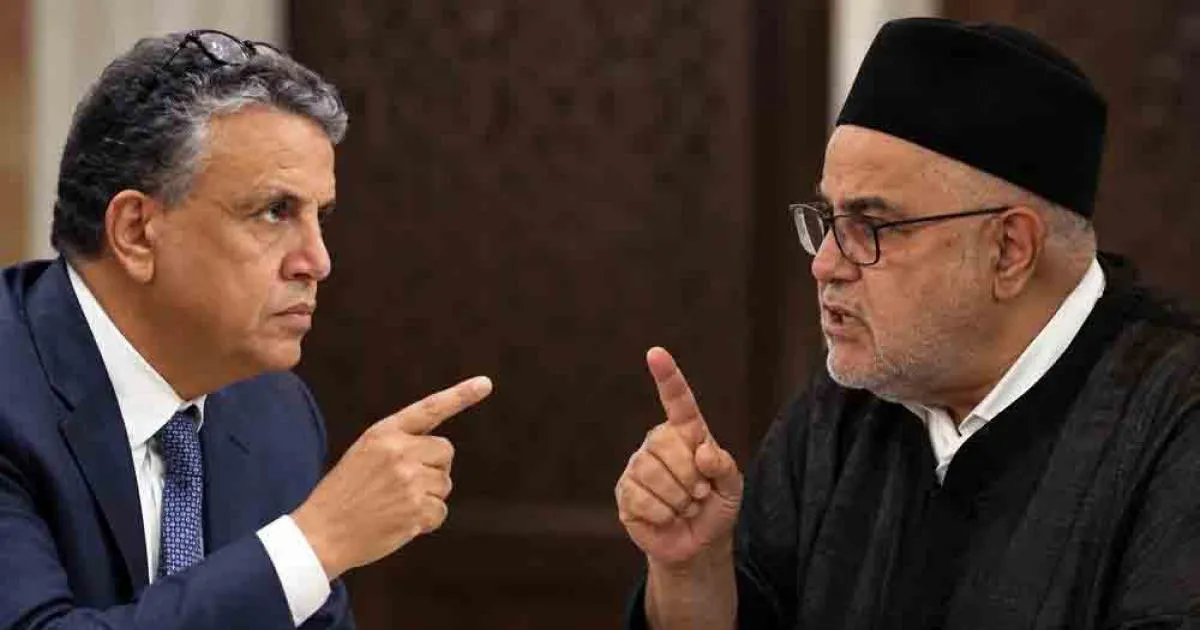
Benkirane’s recent remarks directed at Abdellatif Ouahbi, the former Secretary-General of PAM, exemplify this troubling trend. By labeling Ouahbi with terms like "liar" and "puppet," Benkirane shifted the focus from political ideologies and policies to personal grievances, which not only undermines the political discourse but also raises concerns about the ethical boundaries of political practice. This situation is not merely a personal squabble but rather reflects a significant shift in the Moroccan political arena. The PAM, which emerged as the leading party with 97 seats, now faces the challenge of forming a government coalition, while the PJD, despite its improved standing, remains in a position of having to redefine its role as a credible opposition force.
While Benkirane’s aggressive rhetoric has kept his party relevant in public debate, it also poses a paradox. His choice to engage in personal attacks detracts from the substantive issues at hand and transforms political discussions into personal confrontations. It is crucial for opposition parties to hold the government accountable without resorting to personal disputes that could overshadow their political messages. The political landscape in Morocco is evolving, and the ability of the PJD to navigate this landscape effectively will determine its future viability as an opposition party.
The challenges faced by the PAM as the leading party, responsible for forming the government, add another layer of complexity to this situation. The PJD, while having regained some parliamentary presence, must now focus on translating its electoral gains into a meaningful and influential role within parliament. The real test lies not in the volume of rhetoric but in the party's capacity to transform criticism into constructive opposition that prioritizes policy discussion over personal attacks.
Ultimately, the current political climate calls for a reassessment of discourse methods across the Moroccan political spectrum. As economic and social challenges intensify, the need for politicians who can engage in reasoned debate without devolving into personal animosities becomes all the more pressing. The return of the PJD to parliament, coupled with the PAM's leadership role, presents an opportunity to foster a more measured and responsible political debate—one where the strength of arguments prevails over the sharpness of language.
As reported by middle-east-online.com.