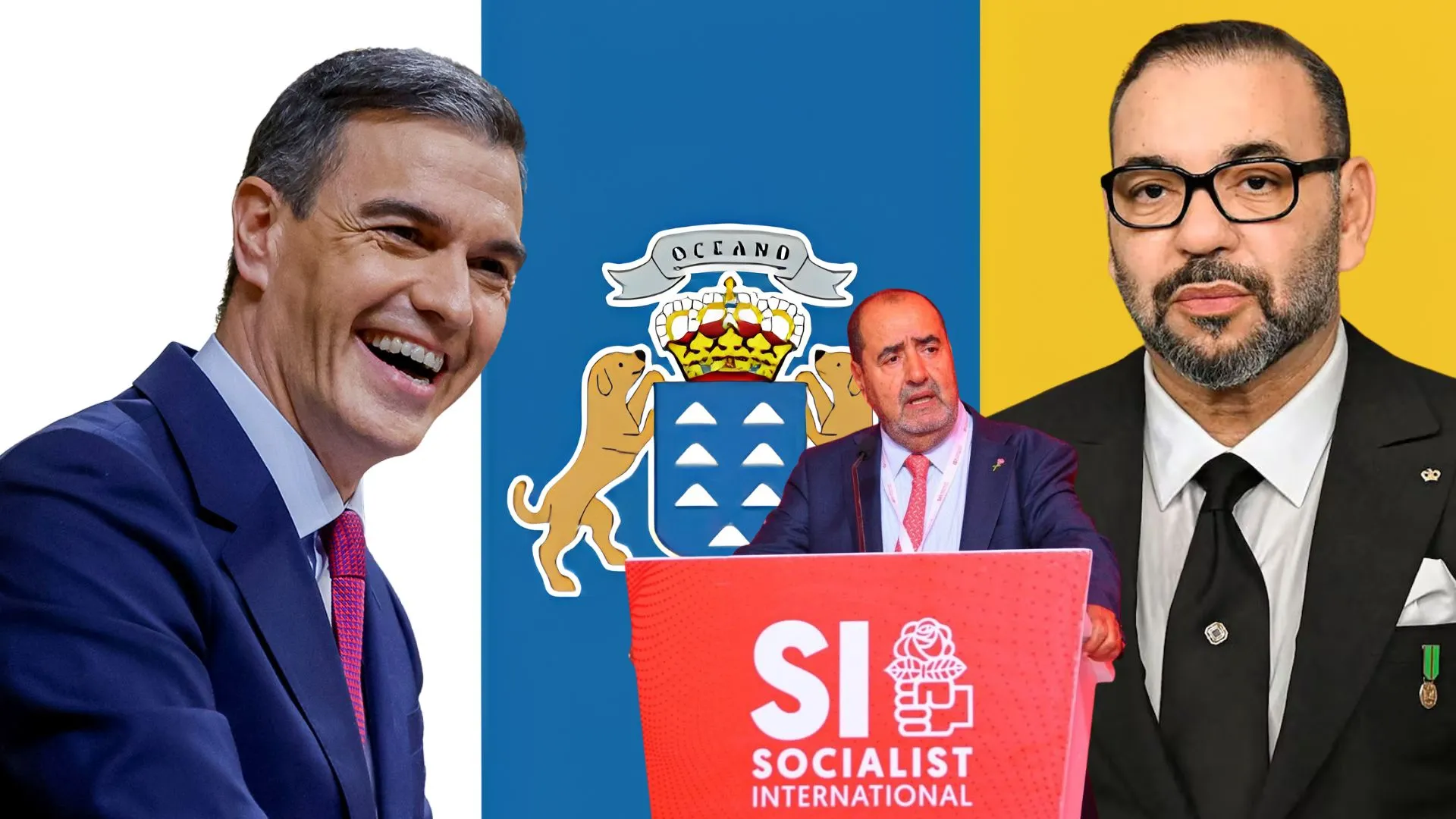

The taxpayer is confronted with a challenging paradox regarding the **Popular Socialist Union (USFP)**, a Moroccan political party closely associated with the national government. This party continues to assert its claim over the Canary Islands, labeling them as an **occupied territory that must be liberated to enhance Morocco's territorial integrity**. What is striking is not merely the demand itself—an ongoing theme from the neighboring country—but rather the funding channels supporting forums that promote these expansionist narratives.
Public Funds vs. Territorial Integrity
During the recent USFP congress held in Bouznika, the event received financial backing from the **Ministry of Foreign Affairs**. Under the auspices of the **Pablo Iglesias Foundation**, this ministry, led by José Manuel Albares, orchestrated a symposium that was part of the party's agenda. Documentation from the Spanish foundation illustrates the institutional support and the injection of state funds into these activities. In essence, taxpayer money—funds that include contributions from residents of the islands—is being allocated to support an organization that directly undermines their sovereignty and political status.
The Institutional Silence That Erodes Trust
The participation of national political figures in these summits adds another layer of uncertainty. Deputy Luz Martínez Seijo attended discussions in Morocco without any indication of objection to the host's territorial ambitions concerning Spanish land. This silence fosters a palpable sense of abandonment among the Canarians and Spaniards, who watch as their public representatives prioritize international party alliances over the defense of constitutional frameworks. The lack of institutional firmness in economic policy comes at a steep price. Furthermore, the underlying agenda extends beyond mere rhetoric; it is rooted in tangible economic interests, particularly concerning maritime boundaries.
Morocco is pursuing an expansive strategy along the Atlantic front, a maneuver that directly impacts the Exclusive Economic Zone of the Canary Islands. **This includes valuable seabed mineral deposits, the exploitation of trade routes, the imminent development of wind energy, and the control of fishing grounds**. The demand for sovereignty over the Canary Islands by the governing party's counterpart serves as a warning regarding these critical resources. **The absence of a diplomatic response places productive sectors in a vulnerable position**. Businesses require a state that fortifies their commercial borders rather than sponsors those who seek to dismantle them.
The analysis of this situation reveals an unprecedented institutional degradation. **The current administration has turned foreign policy into a marketplace of favors where national integrity is devalued**. There is no coherent state strategy in place—only the survival of party interests. Sacrificing the nation's prestige and the financial resources of Spaniards to appease a regime that challenges us epitomizes surrender. The line between diplomacy and submission has become blurred, as has the distinction between the general interest and the personal agenda of the individual currently occupying the Moncloa Palace.
As reported by libertaddigital.com.