
Art, in all its manifestations, has the profound ability to uplift our darker emotions, providing our minds with an opportunity to escape from bleak realities. My constant invitation has always been to flee from the somber aspects of life into the expansive realms of art, which offers wings for the imagination to soar. This leads us to ponder a significant question: What does art do to us?
The Interplay of Photography and Narrative
We exist in an era dominated by imagery. Recently, I attended a lecture by the talented photographer Eissa Ibrahim, titled "Narrative in Photographic Imagery: The Memory of the Eye," which took place at the Storytelling Forum in Kuwait City, part of the activities organized by the National Council for Culture, Arts, and Letters. During this event, Eissa showcased a variety of striking and artistically impressive photographs, each rich in themes and meanings.
Throughout the presentation, a stimulating dialogue emerged between the visual and the narrative, facilitated by the audience's engagement. The esteemed novelist Taleb Al-Rifai was seated next to me, and I posed a question that required responses from both Eissa and Al-Rifai: If there exists a compelling image, can a novelist craft a story from it, and conversely, can a photographer illustrate a narrative that encapsulates the written details of a story by Al-Rifai?
This question stretches as far as a plastic carpet, and while I was aware of the potential for such a creative exchange, the flurry of inquiries and the constraints of the lecture time prevented us from hearing the perspectives of both the writer and the photographer. I was eager to recount a story inspired by an image, particularly the character of the elderly woman Ms. Mas'ada from the novel "The Clay." Her essence and narrative were deeply embedded within me, yet her image remained hazy in my mind until I stumbled upon a photograph in a magazine featuring an elderly woman, her features ravaged by time, yet still hinting at a beauty that lingered behind the wrinkles etched upon her face. This photograph served to deepen the narrator's imagination, compelling them to reflect on the profound changes wrought by the passage of years and to delve into the story behind her existence.
The image of this elderly woman lingered before me, her face radiating a subtle yet enigmatic smile, framed by narrow eyes and a faint smile. Her headscarf revealed strands of white hair, reminiscent of unharvested cotton, while her collarbones jutted out like a mast that had endured many blows. Each time I wrote about Ms. Mas'ada, I felt as though the photograph was laughing at my attempts to capture the essence of a fictional woman who, in truth, was very much present in her image.
Reflecting on this as I observed Eissa's photographs of numerous women in various states, I noted that while he had captured their images, he did not delve into their inner feelings, human histories, daily struggles, or living conditions—what brings them joy or sorrow. The photos he presented were abundant, yet it is the observer who breathes life into the narratives woven into each image. So, who truly crafts the narrative of an image—the photographer or the viewer?
The Essence of Narrative in Life and Art
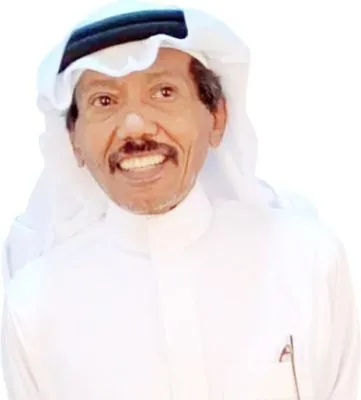
I felt compelled to touch upon Taleb Al-Rifai's novel "Dukhi... The Melodies of Youth," which features a cover adorned with the image of the great Kuwaiti artist Awad Dukhi. This raises the question: Is the image itself the narrative, or is it what Al-Rifai has penned about the subject of the photograph that constitutes the narrative and the life experiences of the storyteller rather than the image?
I firmly believe that everything around us, within us, and among us represents an extended narrative condition. Who, then, is the creator of that condition? Is it the image, the words we articulate, or the imagination we conjure when we gaze upon what we see? The cave of narrative resembles a black hole, consuming all our stories yet failing to reveal the hidden depths within us as they are devoured in haste or through the passage of our fleeting lives. Narrative is a reciprocal state between death and life.
As reported by okaz.com.sa.