
While fashion often begins with attire, the setting can dramatically alter the narrative. The vibrant light of Cairo, the rich colors of Marrakech, the unique rock formations in AlUla, and the architecture that reflects various historical epochs are all elements that transcend mere background to actively participate in crafting the image. On this International Photography Day, observed on August 19, we shine a light on the presence of the Middle East and North Africa in numerous visuals and campaigns where the cities, landscapes, and architectural marvels serve as profound sources of inspiration. Among the latest is the Casablanca Fall/Winter 2026 campaign, which took place in Cairo, showcasing diverse perspectives photographers have adopted towards the region, from documenting the city’s pulse to transforming desert landscapes and architecture into essential elements of visual storytelling.
Casablanca in Cairo: A City Through the Lens of a Traveler
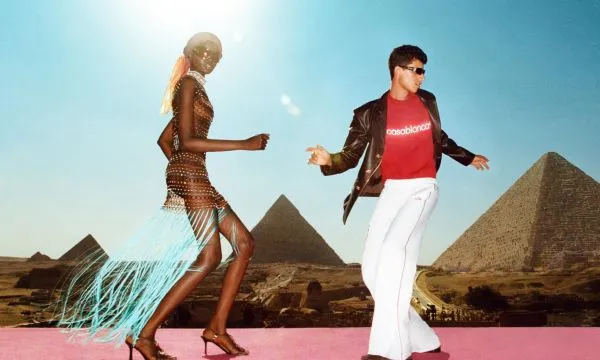
In its most recent visual chapter, Casablanca chose Cairo as the backdrop for its Fall/Winter 2026 campaign titled "Carnet de Voyage: A Journey Through Cairo," captured through the lens of photographer Theo Liu. The campaign is rooted in the idea of exploring Cairo through the eyes of a young traveler, juxtaposing ancient landmarks with the spontaneity of everyday life. In these images, the vibrant colors of local homes and bold stories intertwine with cafes, decor, and the personalities of local inhabitants, while the campaign team comprises talents from Egyptian cinema. Cairo complements the world of Casablanca, which has long been associated with travel, escape, and color; however, the city adds an additional layer. Rather than presenting a mere imagined view of Egypt or easily recognizable symbols, the lens focuses on the energy of the place, its residents, and the nuances of daily life, transforming the city into a character within the campaign.
From Marrakech to AlUla: Place as an Integral Component of the Image
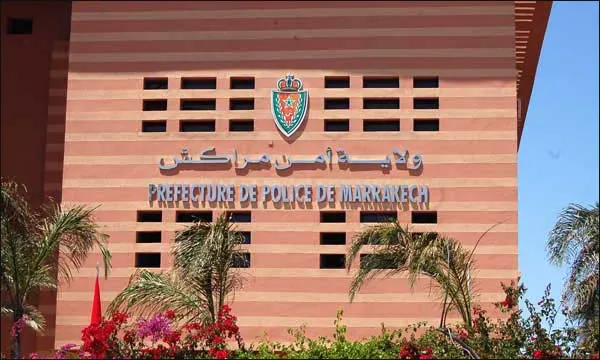
The Casablanca campaign is not an isolated instance. In recent years, the region has appeared in fashion imagery from diverse angles, with the location itself becoming a tool in creative direction. In Marrakech, Saint Laurent returned to Villa Oasis for its Winter 2025 campaign, the residence once inhabited by Yves Saint Laurent and Pierre Bergé. Photographer Drew Vickers utilized the villa's colorful ambience—its warm-hued walls, zellij tiles, lush gardens, and deep blues—to create a narrative where the photograph holds a distinct relationship with the place. Marrakech becomes an intrinsic part of the personal and visual history of Yves Saint Laurent, making the return to it an extension of the house’s own memory. Additionally, in Marrakech, Moroccan photographer Hicham Benohoud presented a fashion story for Another Man magazine in 2025, featuring a fully local crew. These images, blending global fashion with the city’s characters, provide a perspective from a photographer who belongs to the very environment he captures, challenging the conventional notion of a location as merely a shooting destination.
Over in AlUla, the area has carved out a distinct visual presence in the fashion world over recent years. In a session dedicated to Dolce & Gabbana Alta Moda, Saudi photographer Rayan Nawawi captured the designs amidst the oasis, mud architecture, and palm trees of AlUla. The opulence of Italian craftsmanship and embroidery juxtaposes with local materials and architecture, creating a dialogue between the two worlds that enriches the imagery. Meanwhile, Rami Kadi’s Spring/Summer 2024 collection, "Les Miroirs," drew visual connections to AlUla, specifically to the Mirrored Building. The concept of reflective surfaces resonated in the materials and textures used in the designs, while the campaign images positioned the fashion against the backdrop of the desert's monumental rock formations, intertwining nature, architecture, and fashion into a cohesive creative idea.
What unites these images is not a singular aesthetic of the Middle East. On the contrary, their differences reveal the vast visual lexicon the region offers. In Cairo, there is movement, accumulation, memory, and daily life. Marrakech showcases color, ornamentation, gardens, and a historical relationship with fashion and art. AlUla presents a different visual scale, where the desert, natural formations, and both ancient and contemporary architecture place people and fashion in a seemingly cinematic space. Here, the role of the photographer and creative director becomes essential. The choice of angle, the characters, the light, and the arrangement of fashion within the space determine whether the location remains simply a beautiful scene or transforms into a genuine element of the narrative.
Moreover, the work of local photographers like Rayan Nawawi and Hicham Benohoud reveals another dimension of this relationship; their images emerge from lenses that possess their own cultural and visual connections to the environments they depict. On this International Photography Day, these campaigns provide an opportunity to view fashion imagery as more than just a means to showcase clothing. A photographer has the ability to transform a location into memory, mood, movement, and color, while creative direction can forge a dialogue between brand identity and the essence of the place. From Cairo, traversed by Casablanca as a traveler, to Marrakech, which retains part of Saint Laurent’s memory, and on to AlUla through diverse lenses and experiences, the Middle East continues to offer visual landscapes that defy reduction to a single image. Ultimately, the most impactful photographs are those that allow the location to present its true character; where fashion intersects with architecture, culture, and people, and the lens becomes a tool for rediscovery.
As reported by hiamag.com.