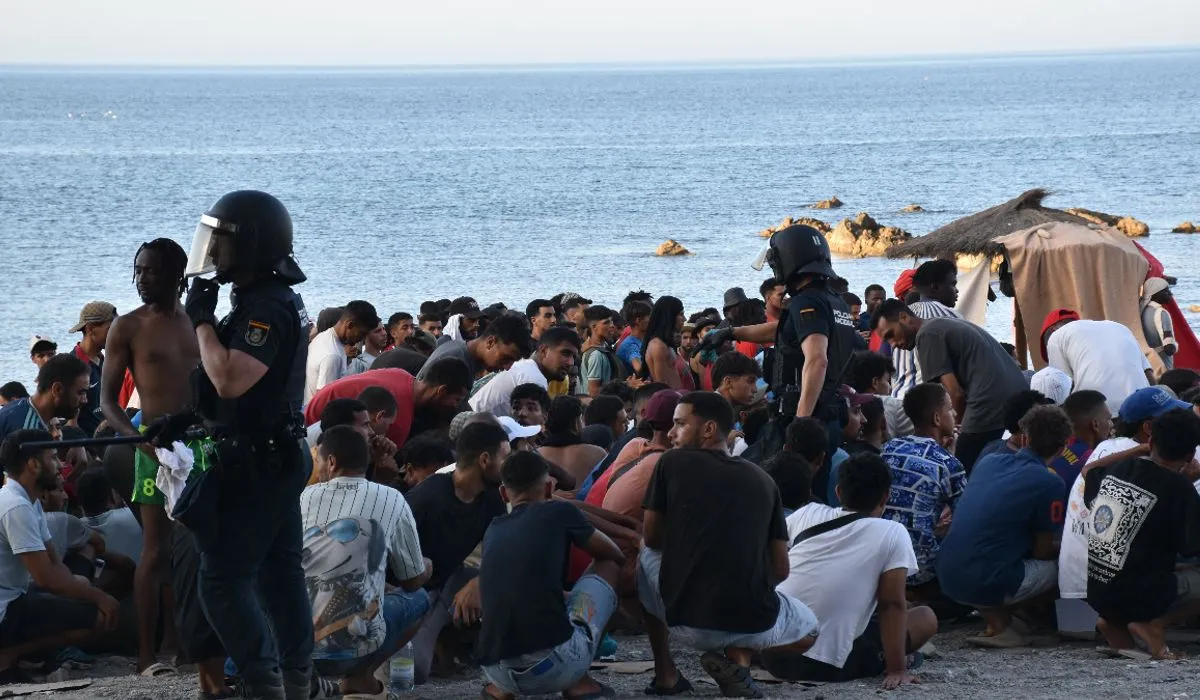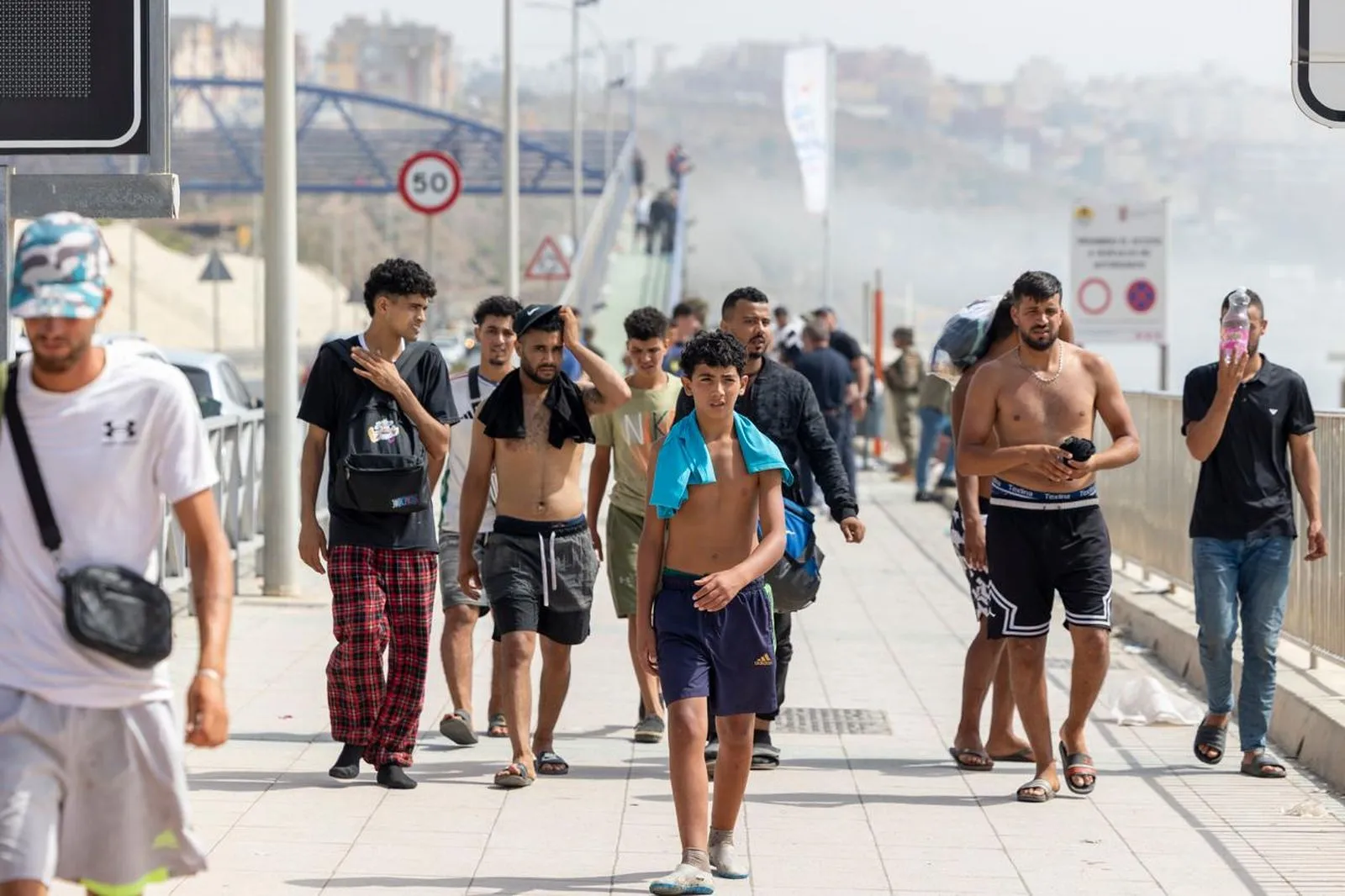

The wealth of Morocco's four richest individuals, trailing only behind **King Mohammed VI**, the undisputed billionaire of the nation, is staggering. To amass their combined fortune, one would need to gather the annual income of approximately 1.3 million Moroccans. This figure starkly contrasts with the more than one million impoverished citizens who recently risked their lives crossing into Ceuta, reflecting the immense economic disparity that exists across the border. These four men are not just extraordinarily wealthy; they represent significant pillars of support for a monarchy often perceived as distant from the daily struggles of its people.
Understanding the Economic Divide
The recent 'storming' of Ceuta can only be understood in the context of the vast gulf that separates wealth from poverty in Morocco. Over three million citizens of this nation reside abroad, seeking better opportunities. In terms of human capital, which gauges future workforce productivity through education and health indicators, Morocco ranks a dismal 118th out of 130 countries. The per capita income barely exceeds 4,000 euros annually, and the average life expectancy is under 74 years—ten years less than that of Spain.
At the forefront of Moroccan wealth is **Othman Benjelloun**, often referred to as the banker of Morocco. Born in Casablanca, his family historically dominated the textile trade in Fez, forming alliances with English manufacturers throughout the 19th century. While he was honing his business acumen at a prestigious school in Lausanne, his father, Haj Abbas, emerged as a vital financial partner for King Mohammed V during the push for independence in 1957. The Benjelloun family later expanded their influence by controlling vehicle imports and establishing Morocco's premier insurance company, Royale Marocaine d’Assurance.
Benjelloun's strategic marriage to **Leila Mezian**, the daughter of a close ally of Franco, further cemented his ties to the Moroccan aristocracy. After returning from Switzerland, he took the helm of his father’s insurance company and began to engage in financial ventures. When King Hassan II privatized the Moroccan Bank for Foreign Trade in 1995, Benjelloun, now a formidable financial mogul, acquired it, transforming it into the Bank of Africa—now a crucial player in facilitating Moroccan lending across the continent, with a key presence in Madrid.
With a net worth exceeding $1.7 billion, Benjelloun indulges in various pursuits, including the construction of a striking skyscraper in Salé, Tower Mohammed VI, designed to resemble a rocket—an idea inspired by his visit to NASA during the Apollo 12 preparations.
Next on the list is **Aziz Ajanuch**, the current Prime Minister of Morocco and a significant political figure, having recently won elections under the Regrupación Nacional de Independientes (RNI) party established by Hassan II in 1978. Ajanuch's family holds a strong affinity with the royal family, and his father founded the Akwa Group, which includes the major gas station chain, Afriquia. Having studied business in Canada, Ajanuch inherited both the gas stations and his family’s connections to the monarchy, marrying into wealth through his wife Salwa Idrissi, who oversees Morocco Mall, Africa's second-largest shopping center.
While Ajanuch served as Minister of Agriculture and Fisheries, he skillfully negotiated fishing agreements with Europe, utilizing a diplomatic approach that sometimes hinted at migration pressures if demands were unmet. His prominence grew even further as he became Prime Minister in 2021 amidst changing dynamics in Spanish-Moroccan relations regarding the Sahara and energy agreements.
**Anas Sefrioui**, known as the builder of Morocco through Addoha Douha Promotions, represents the construction industry in this elite circle. He began his journey with a body and hair wash clay business before transitioning to paper, ultimately winning a major contract under Hassan II for social housing. His construction firm expanded beyond Morocco, and although he faced challenges in the Spanish market, he leveraged his connections to secure a foothold in numerous projects. Notably, he caters to the public housing sector, ensuring that any middle-class Moroccan seeking a home eventually encounters Sefrioui.
Lastly, **Moulay Hafid ElAlamy** rounds out this elite group, with a fortune nearing $700 million from Saham Group, the largest insurance provider in Morocco. Despite having fewer resources than his counterparts, ElAlamy's connections run deep, particularly with Spain, having negotiated numerous bilateral agreements to facilitate Spanish business interests in Morocco. His tenure as Minister of Industry saw the expansion of critical infrastructure projects, including the Tangier port and Africa's first high-speed train, further emphasizing the intricate relationship between politics and business in Morocco.
These four individuals exemplify how intertwined politics and business are in Morocco, with immigration policies also reflecting broader economic interests.
As reported by elconciso.es.