
UN Secretary-General's Report Challenges Morocco's Narrative
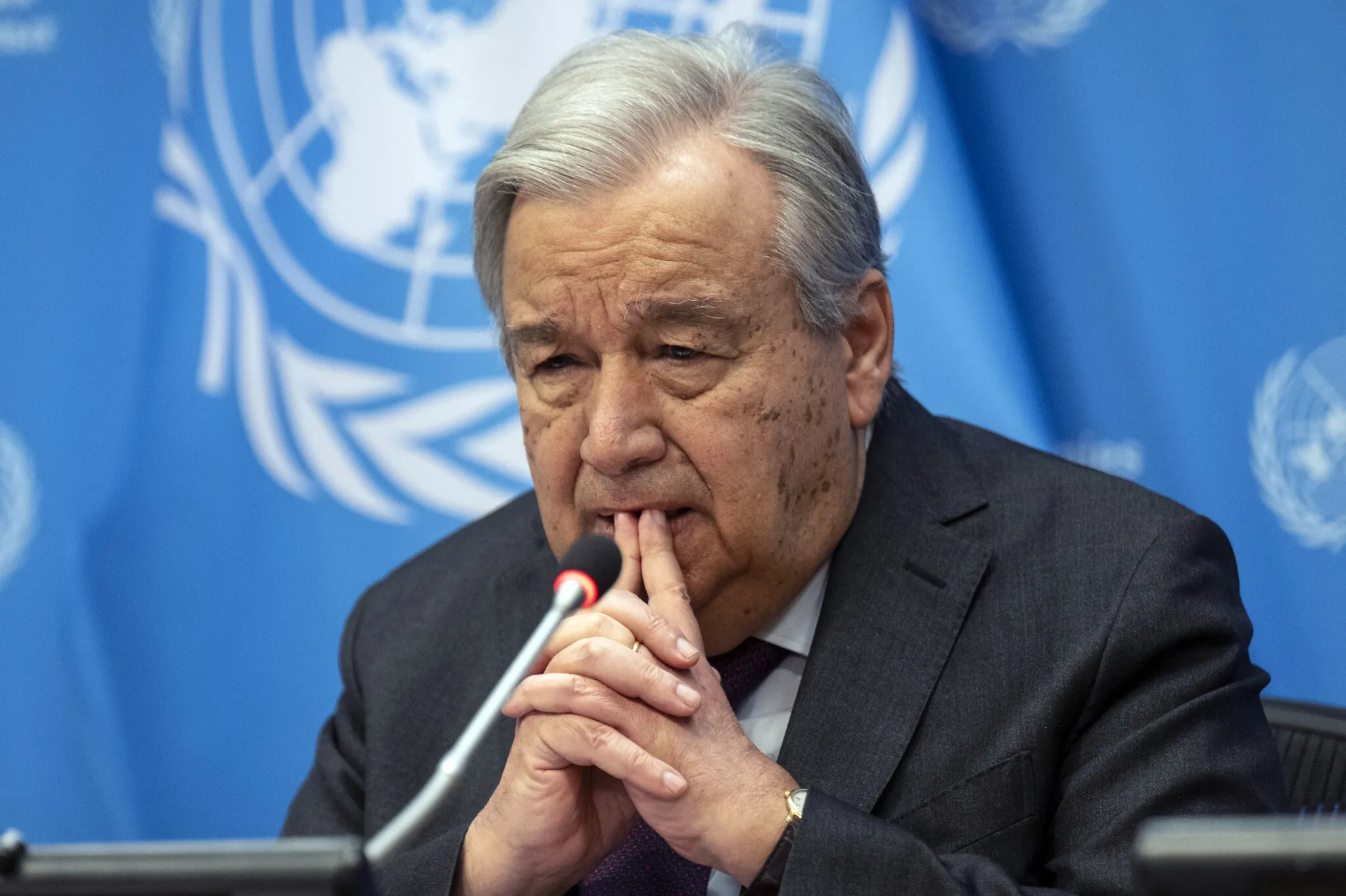
The recent revelations from the United Nations report by Secretary-General Antonio Guterres have significantly undermined Morocco's triumphant narrative regarding Western Sahara. According to EC Saharaoui, the latest UN report, dated October 1, 2026, alongside the related negotiation documents indicates a reality that starkly contrasts with the public portrayal by Rabat concerning the future of Western Sahara. Notably, the Moroccan proposal for autonomy has not been cemented as the sole solution, and the possibility of the Sahrawi people's right to self-determination remains open, contradicting the claims made by Morocco and its media affiliates.
Furthermore, Resolution 2797, adopted by the UN Security Council last year and heralded by Morocco as a definitive victory, is referenced in the UN text as merely "a basis" for future discussions, thereby leaving the door open for exploring additional ideas, proposals, and frameworks. The document sets forth the objective of achieving a mutually acceptable political solution, explicitly without excluding the self-determination of the Sahrawi people.
Morocco's Diplomatic Challenges and Recent Developments
Beyond its triumphant rhetoric, Morocco has exhibited a different stance during various negotiation rounds with the Polisario Front, facilitated by the United States and the United Nations, according to the report. The Moroccan delegation has shown a willingness to engage collaboratively with the Polisario to negotiate and implement a mutually agreeable solution, suggesting that the outcome should be developed and jointly accepted by both parties. This nuanced approach contrasts sharply with the portrayal of the 2007 autonomy initiative as a nearly closed discussion, indicating that its content remains negotiable on the diplomatic front.
Discussions have even included the potential for a transitional framework and other areas of common ground yet to be defined. Ongoing efforts by Washington and the United Nations aim to encourage both parties to agree on a framework that facilitates negotiations for a detailed autonomy model while simultaneously developing a consultation process with the Sahrawi population, in alignment with the principle of self-determination.
One of the major setbacks for Morocco lies in the fact that autonomy has not been designated as an imposed solution or a predetermined outcome, while the self-determination of the Sahrawi people remains expressly included in the objectives of any final agreement.
This latest setback for Morocco follows a series of recent blows regarding the Western Sahara issue. For instance, Massad Boulos, a senior advisor to Donald Trump for Africa and the Middle East, recently stated on France 24 that a resolution for Western Sahara is far from imminent, directly contradicting the victorious tone adopted by Morocco. The American diplomat commended Algeria for its positive role, countering Moroccan claims that it hinders any resolution in the Western Sahara affair, reiterating that Algeria cannot impose a solution on the Sahrawis while dismissing its involvement with the Polisario Front.
Additionally, a meeting between the U.S. Permanent Representative to the United Nations, Mike Waltz, and a delegation from the Polisario Front disrupted the Makhzen's propaganda efforts to demonize the legitimate representative of the Sahrawi people. The Moroccan claims have been systematically disproven, revealing the gap between the propaganda suggesting a definitive Moroccan victory in the Western Sahara issue and the reality that tells a different story. Ultimately, the autonomy plan has not been established as the exclusive solution, self-determination remains on the table, and the Polisario is not being demonized.
The critical issue now lies in the upcoming vote concerning the fate of the United Nations mission for organizing a self-determination referendum in Western Sahara, known as MINURSO. Morocco is advocating for the termination of this mission, which, as its name implies, is tasked with preparing for a self-determination referendum in Western Sahara. However, given the recent developments, it appears that the Makhzen may face yet another setback. The Security Council is expected to decide on October 31 whether to extend MINURSO's current mandate for another year or to opt for a shorter renewal that would allow for an earlier assessment of the negotiations' progress and the conclusions of a strategic review regarding the future of the mission, as noted by EC Saharaoui.
As reported by lalgerieaujourdhui.dz.