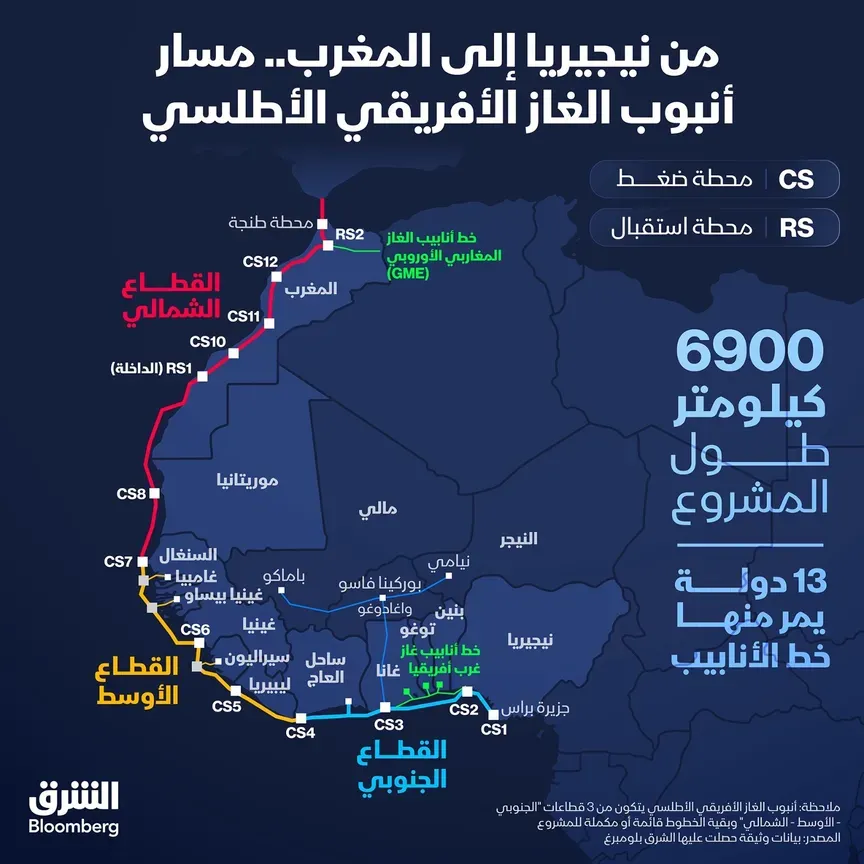

Overview of the African Atlantic Gas Pipeline
The African Atlantic Gas Pipeline is a significant infrastructure project aimed at enhancing energy connectivity between Nigeria and Morocco. This ambitious initiative is designed to transport natural gas from Nigeria, one of Africa's largest gas producers, across several countries before reaching Morocco. The project not only promises to bolster energy security in the region but also aims to facilitate economic growth and create job opportunities in the participating nations. As the demand for cleaner energy sources grows globally, this pipeline stands as a crucial step in addressing the energy needs of West Africa and beyond.
Strategic Importance and Economic Benefits
The pipeline holds immense strategic importance as it is expected to strengthen the energy supply chain in West Africa, providing a reliable source of natural gas to countries along the route. This includes nations like Benin, Togo, and Ghana, which will benefit from increased energy availability. Moreover, the project is anticipated to attract foreign investment, further stimulating economic development in these regions. By facilitating energy access, the pipeline could potentially transform the economic landscape, reducing dependency on other energy sources and promoting sustainable growth. The collaboration between Nigeria and Morocco exemplifies a commitment to regional integration and energy cooperation, paving the way for future projects that could enhance energy security across the African continent.
As reported by asharqbusiness.com.