Insights into the Police Report Linking Morocco to the Influx of Migrants in Ceuta
The recent police report revealing Morocco's alleged role in the influx of thousands of migrants into Ceuta has sparked significant debate and controversy in Spain. This document, produced by the National Center for Immigration and Borders (CENIF), claims that the so-called 'invasion' of Ceuta was orchestrated by Moroccan gendarmes under the direction of plainclothes agents with motives beyond migration. The report has raised questions about the Spanish government's previous assertions regarding cooperation with Morocco and its reluctance to assign blame to the Moroccan authorities.
On July 31, when the crisis erupted, National Court judge María Tardón asked the police for information to determine whether there were grounds to open criminal proceedings regarding the events in Ceuta. A month later, the police delivered their findings, indicating that the migration incident served as a mere cover for a coordinated operation led by Moroccan agents, both in uniform and civilian clothing. This operation reportedly involved Moroccan gendarmes directing migrants while others provided instructions to the Moroccan police, suggesting a complex counterintelligence operation aimed at undermining Spanish intelligence.
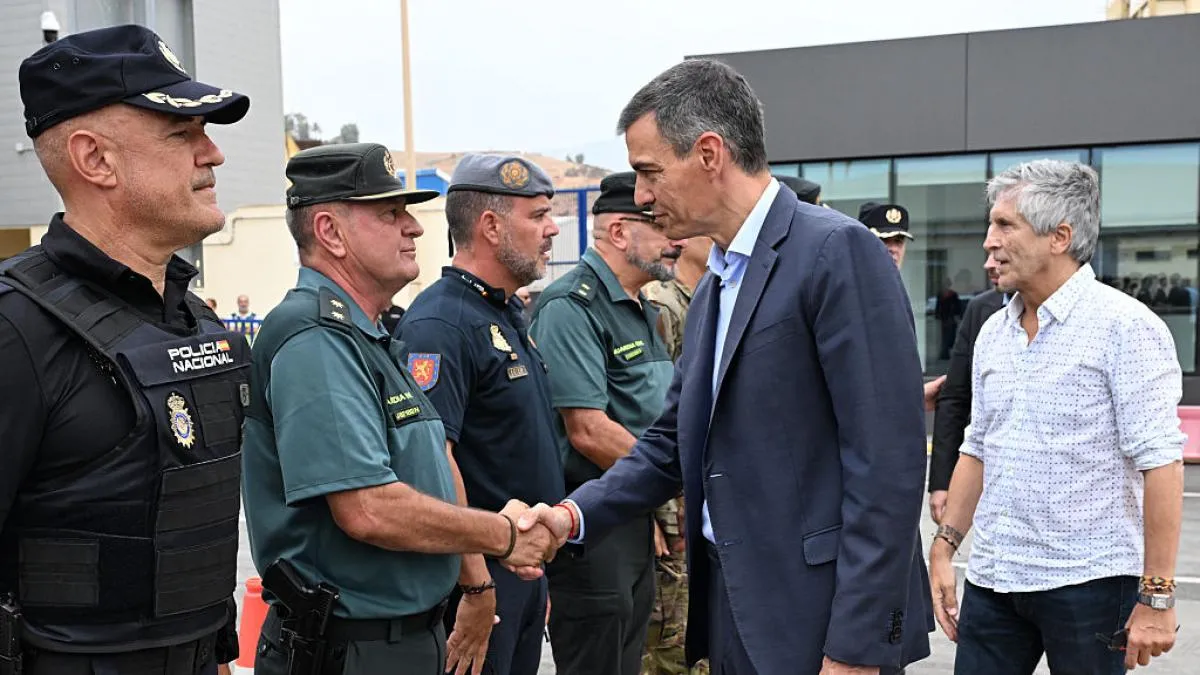
These revelations challenge the narrative maintained by the Spanish government, which has consistently downplayed Morocco's involvement. Prime Minister Pedro Sánchez and Minister of the Interior Fernando Grande-Marlaska have publicly denied any intelligence suggesting Moroccan complicity. Yet, the existence of the CENIF report contradicts their statements, raising crucial questions about the government's awareness of the report's findings and its subsequent public denial.
Following the report's publication, Minister Marlaska requested immediate clarification from the police regarding the existence and content of the report, indicating that there was a lack of communication within the government concerning such significant intelligence. The implications of the report are profound, particularly if validated, as they could undermine the government's established diplomatic narrative with Morocco and necessitate a reevaluation of Spain's immigration policy.
As the situation develops, key government officials, including Justice Minister Félix Bolaños, have stressed the need for caution and thorough analysis before drawing conclusions about the report's implications. Meanwhile, the Director General of the National Police, Francisco Pardo, has stated that no police report attributes the planning or execution of the events in Ceuta to Moroccan security forces, a claim that further complicates the narrative surrounding the crisis.
In the ongoing discourse, the Spanish government faces a significant challenge: addressing the discrepancies between intelligence reports and public statements while managing diplomatic relations with Morocco amid a sensitive migration crisis.
As reported by huffingtonpost.es.