Morocco's Diplomatic Efforts on the Western Sahara Issue
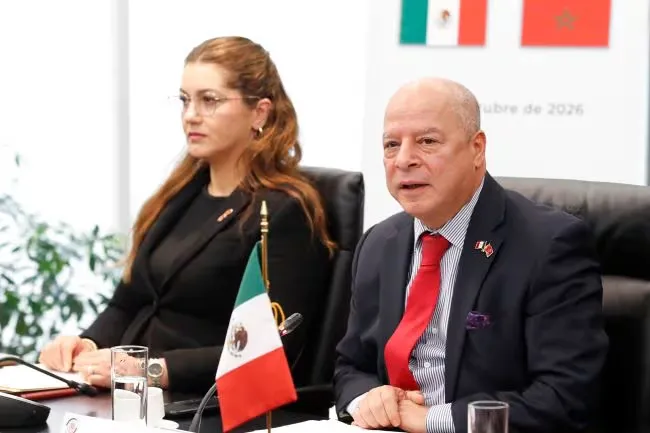
On October 19, 2026, the issue of Moroccan Sahara took center stage during a meeting between Morocco's Ambassador to Mexico, Abdelfattah Lebbar, and Mexican Senate President Higinio Martínez Miranda. This crucial dialogue not only highlighted the review of bilateral relations and cooperation prospects but also conveyed a clear political message from the Moroccan diplomat. Morocco aspires to see Mexico gradually evolve its stance in favor of supporting the Moroccan autonomy initiative, aligning with an increasing number of countries that have recognized Morocco's sovereignty over this territory.
Ambassador Lebbar expressed hope that Mexico would align its position with that of the growing number of nations endorsing Morocco's autonomy proposal, stating, "Morocco hopes that Mexico can progressively move its stance closer to that of an increasing number of countries supporting the Moroccan autonomy initiative." This measured yet unambiguous formulation emphasizes the potential for enhancing political trust between the two nations while capitalizing on their cooperative potential.
Strengthening Bilateral Relations and Cooperation
This outreach occurs as several Latin American governments have voiced their support for Morocco's autonomy plan or acknowledged the Kingdom's sovereignty over the Sahara. Countries like Chile and Paraguay have recently expressed their backing for Morocco's position, contrasting with Mexico's ongoing diplomatic relations with the self-proclaimed Sahrawi Arab Democratic Republic (SADR). The growing support for Morocco highlights the disparity between Mexico's position and the diplomatic evolution undertaken by various Latin American partners.
Ambassador Lebbar pointed out the significance of the United Nations Security Council Resolution 2797, adopted on October 31, 2025, which marked a significant advancement for Morocco's position on the Sahara. By endorsing the Moroccan autonomy initiative as the foundation for negotiations and presenting genuine autonomy as the most feasible outcome for the dispute, this resolution has reinvigorated the political process. According to the ambassador, this development, alongside increasing international support for Morocco's plan, provides Mexico with further reasons to reconsider its stance and align its relations with Morocco towards a more politically cooperative dynamic.
In discussing the future of Morocco-Mexico relations, Ambassador Lebbar highlighted the importance of parliamentary exchanges that have taken place over recent years. He commended Senate President Higinio Martínez Miranda for his election and thanked him for the meeting, viewing it as an opportunity to reaffirm the friendship and mutual respect between two geographically distant yet culturally rich nations. The ambassador also referenced previous visits by Mexican and Moroccan parliamentary delegations, which signify a shared commitment to bolstering parliamentary diplomacy.
Moreover, the ambassador emphasized the need for these diplomatic interactions to evolve into a more structured and results-oriented cooperation. He extended an invitation to Martínez Miranda to visit Morocco when his schedule permits, aiming to deepen political dialogue, share experiences, and explore new avenues for collaboration.
Focusing on economic cooperation, Ambassador Lebbar advocated for turning previous business missions into concrete projects. He outlined the potential for collaboration in various sectors, including renewable energy, automotive, agro-industry, infrastructure, logistics, and technological innovation. With Morocco being a major global producer and exporter of phosphate fertilizers, the ambassador pointed out that this position could open new avenues for cooperation with Mexico in agriculture, productivity enhancement, knowledge transfer, and tailored solutions for the agro-food sector.
On a cultural note, the ambassador underscored Morocco's participation as an honored guest in numerous events in Mexico, which have allowed the Mexican public to gain deeper insights into Morocco's rich heritage, literature, traditions, and artistic creations. He highlighted the importance of academic partnerships, particularly with the National Autonomous University of Mexico (UNAM), as a means to promote student and faculty exchanges as well as collaborative scientific projects.
In conclusion, the message delivered to the Mexican Senate was not only one of friendship and cooperation but also a clear diplomatic call for Mexico to reconsider its position on the Sahara issue. Morocco aims to strengthen its relations with Mexico, hoping to see the latter align its stance with the Moroccan autonomy initiative.
As reported by fr.le360.ma.