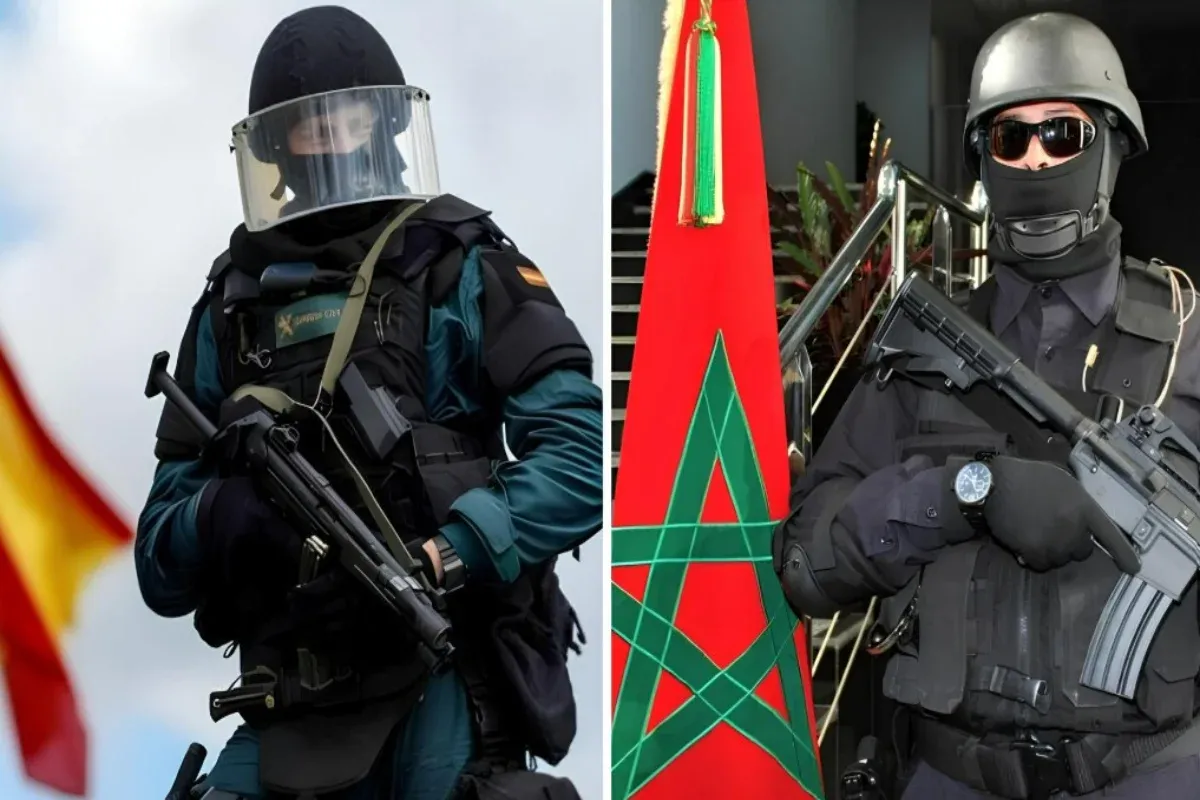
The Islamic State's (ISIS) increasing influence in the Sahel region of Africa poses a significant threat to European security, particularly for countries like Morocco and Spain. A recent report from the American website Lawfare, in collaboration with the Brookings Institution, highlights the alarming expansion of jihadist networks in this region. It warns of the emergence of a logistical corridor that could link ISIS strongholds in the Sahel to southern Europe, emphasizing the urgent need for enhanced security cooperation between Morocco and Spain to counter this growing menace.
As detailed in the report, treating security issues in the Sahel merely as an external problem could ultimately backfire on Europe. The authors urge European nations to bolster their defense mechanisms against potential jihadist operations that could originate from this volatile area. Historically, the Sahel branch of ISIS, known as the Islamic State – Sahel Province, was primarily focused on regional insurrection. However, it is now actively seeking to expand its operations beyond Africa, with Europe becoming a potential target for future attacks.
A striking example that illustrates this shift is the case of Abd Blout, a German jihadist of Lebanese descent. After attempting to travel to Mauritania to join ISIS in Mali, he redirected his efforts toward Lebanon, ultimately planning to reach Syria. In July, Blout executed a violent attack in Berlin during the Christopher Street Day parade, resulting in one death and 29 injuries before he was shot dead by the police. This incident underscores the existence of a support corridor connecting ISIS's operational zones in Mali, Niger, and Burkina Faso to Spain, facilitated by smuggling networks and extremist online circuits that allow for recruitment, funding, and preparation of operations on both sides of the Mediterranean.
Although the number of foreign fighters joining the Sahel Province remains significantly lower than those who flocked to the ISIS 'caliphate' at its peak, the group still poses an escalating threat. The report suggests that as intelligence and law enforcement agencies focus their resources on other threats, this branch could be responsible for an increase in attacks in the West. This developing scenario calls for heightened vigilance and proactive measures from Moroccan and Spanish authorities.
A Strategic Watch on the Morocco-Spain Axis
Lawfare highlights that Abd Blout's thwarted attempt to reach Mauritania is part of a broader pattern of foreign fighters moving towards the Sahel, a trend that has been closely monitored by Moroccan and Spanish intelligence services for several years. Since 2025, Moroccan authorities have dismantled multiple cells linked to the Sahel Province, one of which was based in Tangier, accused of financing fighters in the Sahel and Somalia while plotting attacks in Spain.
The report also notes that ISIS has explicitly called for attacks in Morocco, Tunisia, and Spain. The transnational links are not a new phenomenon; they have been evident since the early years of the Sahel branch's development under its first emir, Adnan Abou Walid al-Sahraoui, who died in 2021. Following his death, the organization reorganized its structure, integrating local and foreign members along with leaders from various ethnic and national backgrounds, including Peuls, Arabs, Tuareg, Daoussahak, Songhai, and Zarma. This diversification aligns with a strategy to strengthen the group's local presence, positioning itself as a protector of marginalized populations, particularly the Peuls, who have traditionally been pastoralists.
The United Nations monitoring reports indicate a strengthening of the organization's power and influence, particularly in Mali, partly due to this local anchoring strategy, which offers more sustainable recruitment and fundraising opportunities. The expansion of local support has also enabled the Sahel Province to allocate more resources to its external operations and support other branches of ISIS. The corridor connecting Morocco to Spain, especially the route between Tangier, the Strait of Gibraltar, and the Balearic Islands, has been identified as a critical operational corridor.
Security Implications for Europe
The report cites two significant operations conducted by Moroccan authorities last March. The first targeted the so-called "Tanger-Mallorca" cell, while the second resulted in the dismantling of a network of twelve individuals affiliated with the Sahel Province, known as the "Lions of the Caliphate in the Maghreb." Present in nine cities, this network was reportedly attempting to establish a cell of the Sahel branch of ISIS on Moroccan soil. The emergence of a corridor for foreign fighters between the Sahel and southern Europe poses a direct challenge to the continent's security. However, European counter-terrorism efforts have primarily focused on the ISIS-Khorasan Province and, to a lesser extent, on other components of the organization in the Middle East, while the threat from the Sahel has received comparatively less attention.
Moreover, the report raises concerns about the mobility of radicalized individuals, including minors, who manage to travel to conflict zones and return while evading intelligence surveillance. This mobility presents a persistent source of worry as the Sahel Province enhances its capacity to inspire, direct, and orchestrate attacks. The authors contend that this situation calls for increased vigilance and strengthened cooperation between countries situated along potential routes used by jihadist networks, foremost among them being Morocco and Spain.
As reported by fr.hespress.com.