Understanding the Historical Ties Between Morocco and Israel
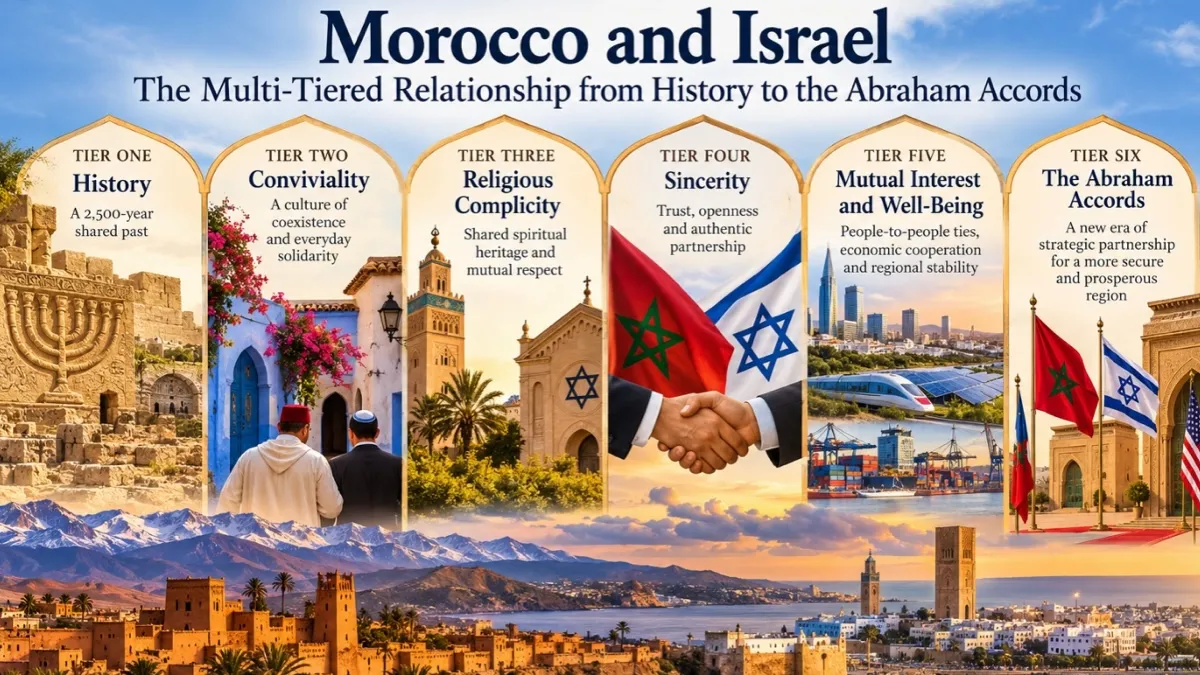
The intricate relationship between Morocco and Israel is characterized by a multi-faceted structure, comprising six distinct yet interlinked tiers: history, conviviality, religious complicity, sincerity, mutual interest, and the Abraham Accords. This analysis delves into these tiers to illustrate how the diplomatic normalization of relations, which was officially established in December 2020, is not merely a contemporary development but rather a culmination of a deep-rooted historical bond that spans over two millennia. The foundational tiers, which include a significant Jewish presence in Morocco and a shared cultural and social life, lend resilience to the relationship and allow it to withstand various crises, including geopolitical tensions and shifts in public opinion.
One of the key insights presented in this analysis is the recognition of a critical vulnerability within the relationship. The upper tiers, particularly the strategic frameworks established by the Abraham Accords and defense cooperation, tend to lack popular legitimacy, especially among the Arab populace in Morocco. Recent data from the Arab Barometer indicates a significant decline in public support for normalization, dropping to just 13 percent following events in October 2023. This discrepancy highlights the need for a balanced approach that not only fortifies the strategic partnerships at the upper tiers but also nurtures the socially embedded lower tiers that provide the relationship with its historical and cultural legitimacy.
The Historical Context and Its Implications
The assertion that Morocco and Israel share an unbroken relationship over the span of two and a half millennia encompasses a complex historical narrative that intertwines Jewish presence in Morocco with broader geopolitical dynamics. The historical backdrop includes archaeological evidence of Jewish communities dating back to Roman times, alongside the legacy of Jewish-Muslim interactions throughout history, characterized by periods of coexistence and tension. The Moroccan monarchy, Israeli diplomats, and the Moroccan Jewish diaspora have all leveraged this historical narrative to frame the recent normalization as a restoration rather than a new beginning.
Furthermore, the relationship is conceptualized as a layered framework, wherein the lower tiers—reflecting historical ties, social interactions, and religious connections—serve to stabilize and legitimize the upper tiers, which are more focused on contemporary political and strategic considerations. This layered resilience suggests that while diplomatic engagements between states may fluctuate, the underlying social and historical connections provide a foundation that can absorb shocks and challenges. As the analysis unfolds, it becomes evident that understanding the nuances of this relationship requires a disaggregated approach that acknowledges the differing types of legitimacy and the varying speeds at which these layers interact.
In conclusion, the relationship between Morocco and Israel is not merely a product of recent diplomatic initiatives but a complex tapestry woven over centuries of shared history, cultural exchanges, and mutual interests. The resilience of this relationship depends on maintaining the foundational tiers that reflect a long-standing Jewish presence and fostering a broader societal acceptance of the strategic benefits that come from cooperation. As Morocco navigates its role in the region, it must balance the demands of popular sentiment with the strategic imperatives of its partnerships.
As reported by eurasiareview.com.