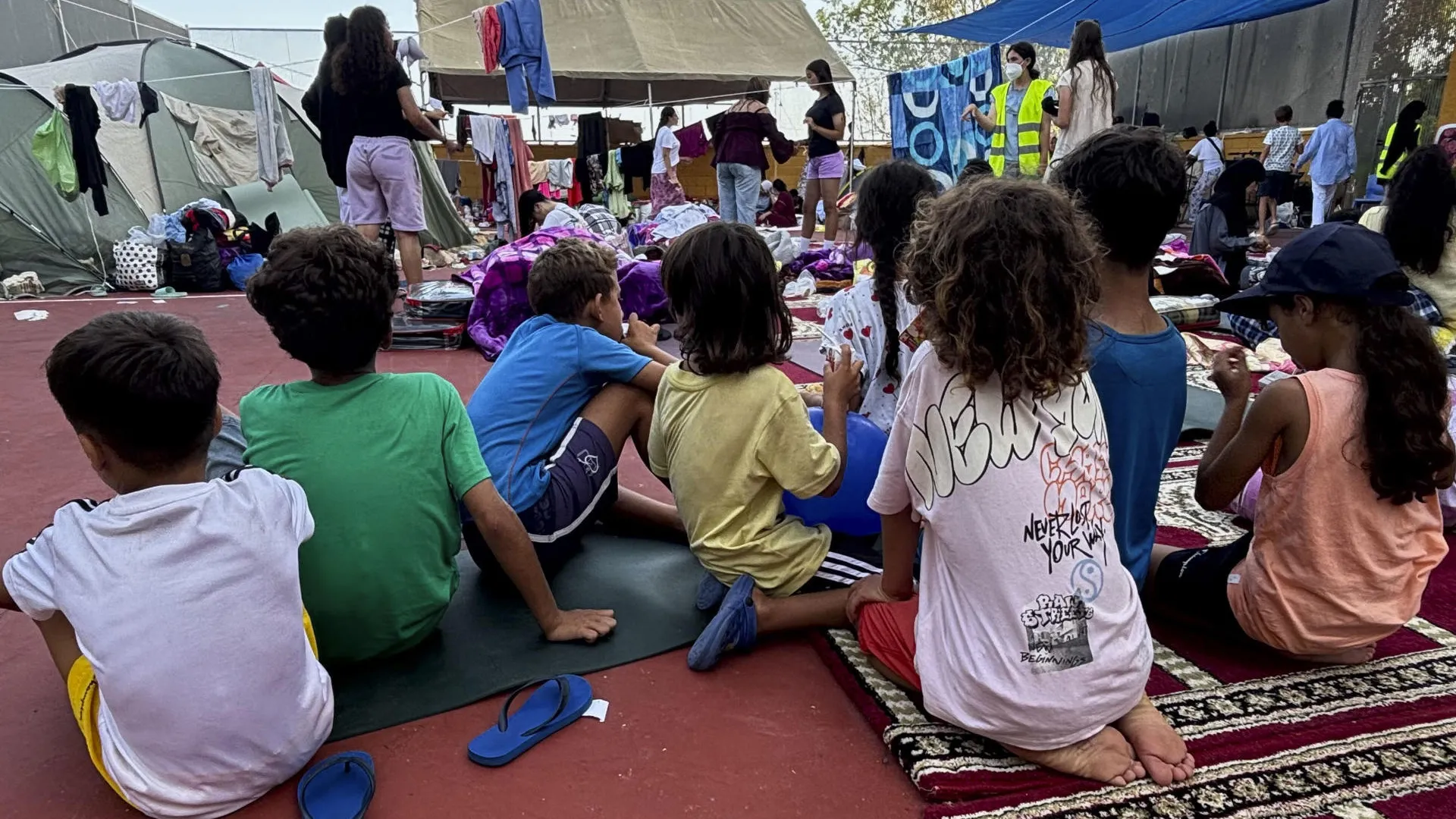
The humanitarian and migration crisis in Ceuta has unveiled alarming vulnerabilities among the young females who have accessed this autonomous city. In a segment of the program 'Herrera en COPE', journalist Jorge Bustos interviewed Malika Al Lal, the Director General for Equality and the Fight Against Gender Violence in Ceuta, who elaborated on the complex realities faced by young girls housed in emergency facilities.
During her discussion, Malika Al Lal shared the story of a minor who found herself in the center after crossing the border without fully understanding the implications of her choice. "I want to share an anecdote about one of the minors we had, a girl from Castillejo named Wasima. It saddened me greatly because she was from Nador and had come to Castillejo for a vacation with her grandmother. A group of friends decided to swim across, and she joined them," explained the regional official, recounting the suffering experienced by the young girl.
"She spent more than a week crying because she wanted to go back to her father to enroll in school and continue her education," Malika noted. She highlighted how the minor pleaded to return home after realizing the harsh realities of the crisis center. "I asked her why she had come, and she said she didn’t know what this was," she lamented, expressing frustration over the bureaucratic hurdles that prevented her immediate return, such as the need for affiliation procedures and family reunification.
Urgent Need for Legal Reforms
In light of these cases, Malika Al Lal strongly advocated for urgent changes to national regulations to facilitate the direct reunification of minors with their families in their country of origin. "It is crucial for these children, who are best cared for with their families, that the law is amended to allow them to be with their parents in Morocco, where they want to be," she asserted emphatically.
She argued that most of these young girls are not coming from conflict zones or experiencing extreme hunger. "There is no hunger in Morocco; what exists is deteriorated healthcare and a lower quality of life, but no famine or war. Those who have entered should be at the border to return to their families; the law needs to change in Parliament so they can go back," she asserted during her interview with COPE.
Concerns Over Sexual Assaults and Trafficking Networks
The situation for women and girls has raised alarms following reports of 23 sexual assaults against minors in the past month. Malika Al Lal described this figure as "outrageous," recalling that prior to the influx on July 30, there was only one reported incident every six or seven months in Ceuta. When allegations arise, the UFAM unit of the National Police and Local Police intervene, directing high-risk cases to crisis centers or shelters.
Additionally, the director warned of the constant threat posed by exploitation networks targeting newly arrived women and girls. "There was a case where the minors' director contacted me about a woman with her two daughters who were being targeted for trafficking. We referred them to the Cruz Blanca Foundation, which has housing resources to address such situations," Malika explained, firmly rejecting accusations of xenophobia against Ceuta's society.
In her dialogue with Jorge Bustos, Malika Al Lal criticized the stance of Minister of Equality Ana Redondo regarding the emergency phone number 016, stating, "She has a perspective that is too mainland-focused. The first thing she should have done is come to Ceuta and see the issues faced by these assaulted girls and women firsthand." She also pointed fingers at President Pedro Sánchez for not deploying enough personnel, asserting, "We need officials to expedite affiliations and military support to ensure safety." The crisis has also mobilized community networks in neighborhoods such as Príncipe and Loma Colmenar, where a community sports center led by neighborhood spokesperson Ahmed housed over 300 girls and dozens of mothers to protect them from potential abuses. In that space, a 17-year-old named Fátima stayed for a month after fleeing Morocco in search of a future in Europe, exemplifying the many facets of an emergency that keeps the entire city on edge.
As reported by cope.es.