Spain Faces Unprecedented Protests Amid Migration Crisis
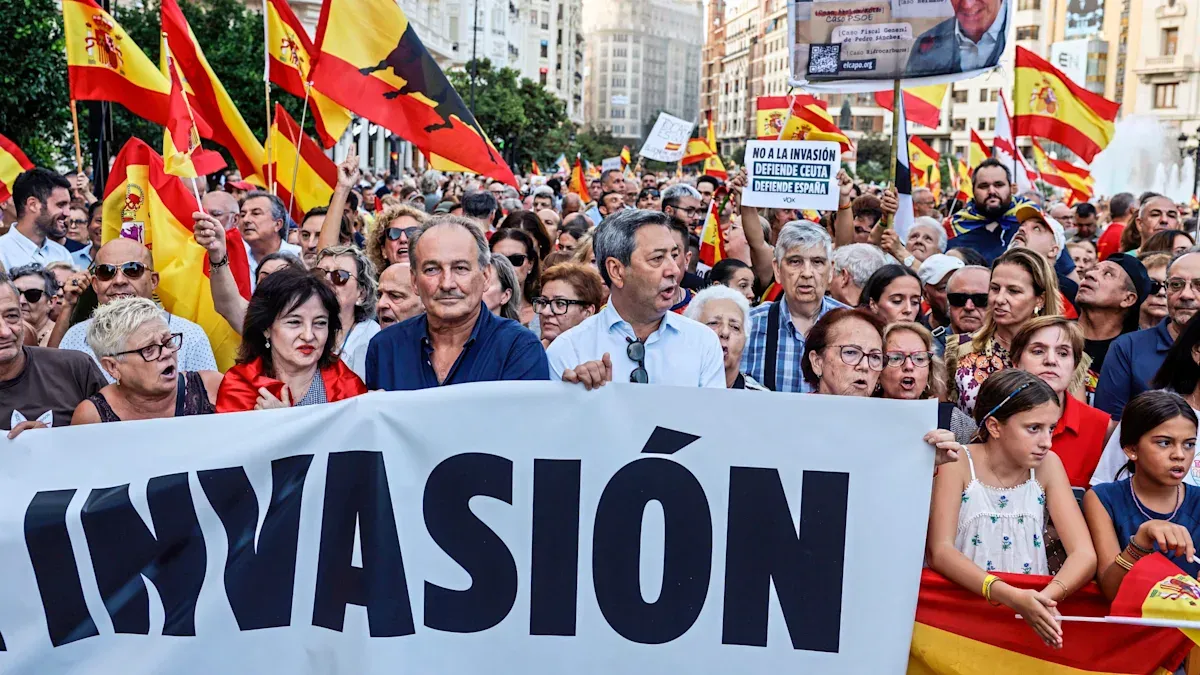
In a significant display of public sentiment, approximately 50,000 individuals gathered in Madrid, while thousands more in Ceuta rallied for a return to normalcy amidst a growing migration crisis. The demonstrators criticized the central government, led by Prime Minister Pedro Sánchez, accusing it of adopting a policy of appeasement toward Morocco and failing to provide adequate support for Ceuta, a Spanish exclave in North Africa. These protests reflect a rising tide of discontent regarding Spain's handling of immigration issues, particularly in light of the historical territorial claims Morocco has over Ceuta and Melilla.
Tensions Rise as Extremists Clash with Police
As the situation escalated, reports emerged of clashes between the national police and extremist groups near the Congress of Deputies in Madrid. Authorities employed tear gas and rubber bullets to disperse the crowds, resulting in the arrest of four protesters, including two minors, for public disorder and resisting law enforcement. Notably, four police officers sustained injuries during these confrontations, highlighting the volatile atmosphere surrounding the demonstrations.
Opposition leader Alberto Núñez Feijóo, representing the conservative Popular Party, characterized the influx of migrants as an "invasion" orchestrated by Morocco. He accused Sánchez's government of dishonesty, asserting that they had claimed no prior warning existed regarding the migration crisis and denied Moroccan involvement, both of which he vehemently refuted.
In Ceuta, demonstrators waved Spanish flags, proclaiming their determination that "Ceuta will not surrender" and calling for the territory to remain an integral part of Spain. Government figures indicated that over 72,000 migrants had arrived in Ceuta during the latter part of July, with around 5,000 still present a month later, some camping on streets and beaches, thereby straining the local community of 83,000 inhabitants. This has led to ongoing protests and, at times, violent incidents against migrants and humanitarian organizations.
Legally, Spain is unable to carry out collective deportations of migrants, necessitating individual assessments of asylum claims, a process that may extend for weeks or even months. Furthermore, the central government is reluctant to transfer migrants to the mainland due to Ceuta's exclusion from the Schengen Area, which could prompt other Schengen countries to impose border controls.
The protests, organized by the Spanish municipalities' federation (FEMP) led by the opposition Popular Party, also saw participation from the far-right Vox party. Madrid's Mayor José Luis Martínez-Almeida reaffirmed, "Ceuta is Spanish and will not be abandoned." Official estimates indicated that about 50,000 people took part in the Madrid demonstration, which was reported as the largest single event of the evening by national broadcaster RTVE. Additionally, PP Secretary General Miguel Tellado mentioned that around 2,000 protests occurred across Spain, reiterating calls for the resignation of the government and new elections.
Contrastingly, some cities like Barcelona and Bilbao witnessed counter-demonstrations advocating against racism, with slogans such as "No one is illegal" appearing on banners. These events reflect the complex and multifaceted nature of the migration debate in Spain, underscoring the urgent need for a comprehensive and humane approach to immigration policy.
As reported by welt.de.