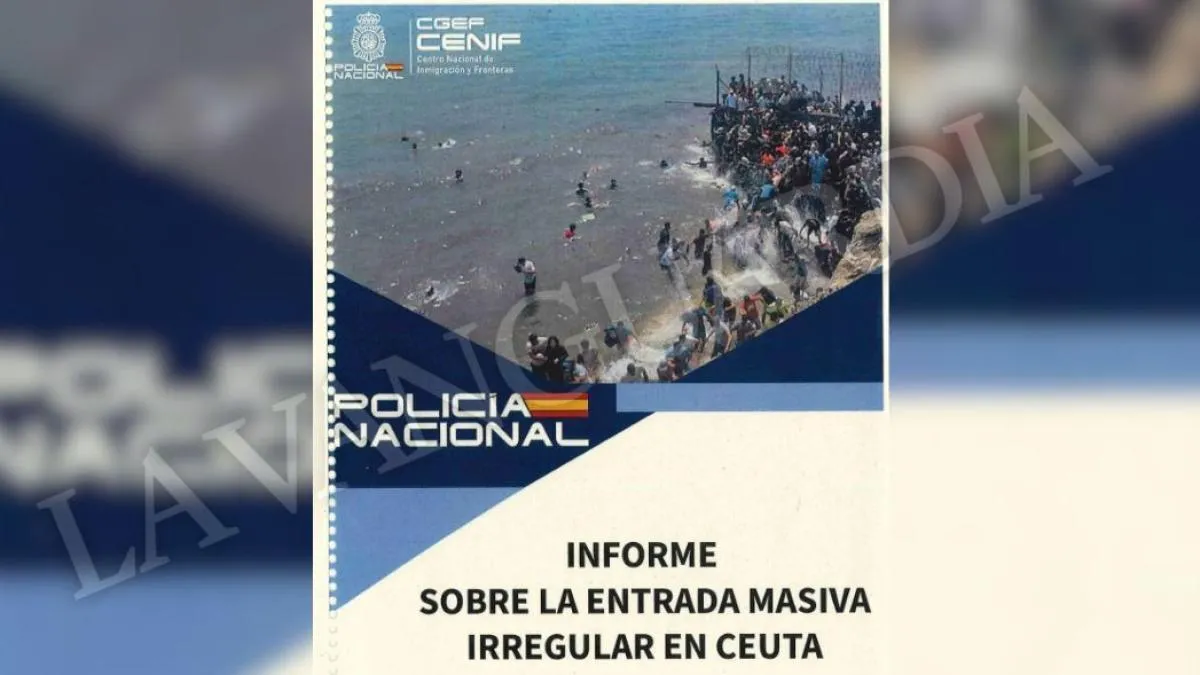
Understanding the Ceuta Migration Crisis
A recent report from the National Police, submitted to the National Court, has shed light on the circumstances surrounding the recent migration crisis at Ceuta, concluding that the migratory purpose was merely a "formal cover" designed to facilitate an overwhelming influx of individuals to the Ceuta border. According to the dossier obtained by La Vanguardia, the mass entry of over 80,000 migrants on July 30 and 31 was not a random occurrence but rather the result of a calculated tactical configuration aimed at overwhelming the border management system at the Tarajal jetty. This strategy included encouraging migrants to swim across the border, which subsequently led to the "opening of gates" due to Spain's inability to respond effectively. The report indicates that Moroccan gendarmes displayed "total permissiveness," failing to make any serious attempts to disperse or push back the crowds, with some even participating in guiding migrants through the water towards the beach.
The National Immigration and Border Center (CENIF) emphasized that this incident was not a spontaneous event but rather a well-orchestrated operation that could not be attributed to mere coincidence. Defense Minister Margarita Robles claimed in parliamentary sessions that military reports suggested the assault was based on a "self-management of individuals attracted spontaneously" to the border due to opportunistic factors. The police noted that comparisons with previous incidents, such as the one in May 2024, revealed concurrent elements indicating an "experience component" that led to a more complex and elaborative action plan.
Implications of the Report
The report elaborates that the migratory intent was ostensibly just a facade, as the majority of migrants did not seek to remain in Spain. Notably, around 90% of those who crossed into Ceuta left the area within 72 hours, further supporting the assertion that the migration was strategically orchestrated rather than a random event. Furthermore, a subsequent call for migration, much more explicit on August 15, showcased Morocco's control over the border, coupled with official messages regarding the Moroccan claim to sovereignty over Ceuta and Melilla. The CENIF posits that there was prior planning that involved both intellectual and material authorship, suggesting a level of coordination far beyond the immediately visible actions of the individuals crossing the border.
The role of social media in this situation cannot be overlooked, as the viral spread of messages and the activation of profiles reinforced the hypothesis of strategic and operational direction operating under clearly defined procedures. This included what the report terms "facilitating management" of the crossing, characterized by limited presence from Moroccan security forces and the active guidance of migrants toward areas controlled by Moroccan gendarmes. The preliminary findings submitted to Judge María Tardón indicate a potential breach of Spain's territorial sovereignty, implicating individuals connected to Moroccan security forces and others with the capability and experience necessary for orchestrating such a large-scale operation.
The report acknowledged limitations in determining the specific authorship of these actions but leaves the door open for further investigation if the judge decides to pursue it, as requested by Iustitia Europa in a formal complaint. The police response regarding the involvement of criminal organizations in this situation was negative, asserting that such organizations lack the capability to mobilize movements of this scale. However, they did acknowledge receiving nine alerts about the risk of mass entry from Morocco, attributed to various factors, including a Supreme Court ruling and widespread social media messages regarding entry permissibility.
In conclusion, the findings highlight significant gaps in border management and raise important questions about the coordination between Moroccan authorities and the actions taken during the crisis. The situation not only reflects the complexities of migration dynamics but also underscores the importance of strategic planning and response mechanisms in addressing such challenges.
As reported by lavanguardia.com.