ONCF's Financial Overview for the First Half of 2026
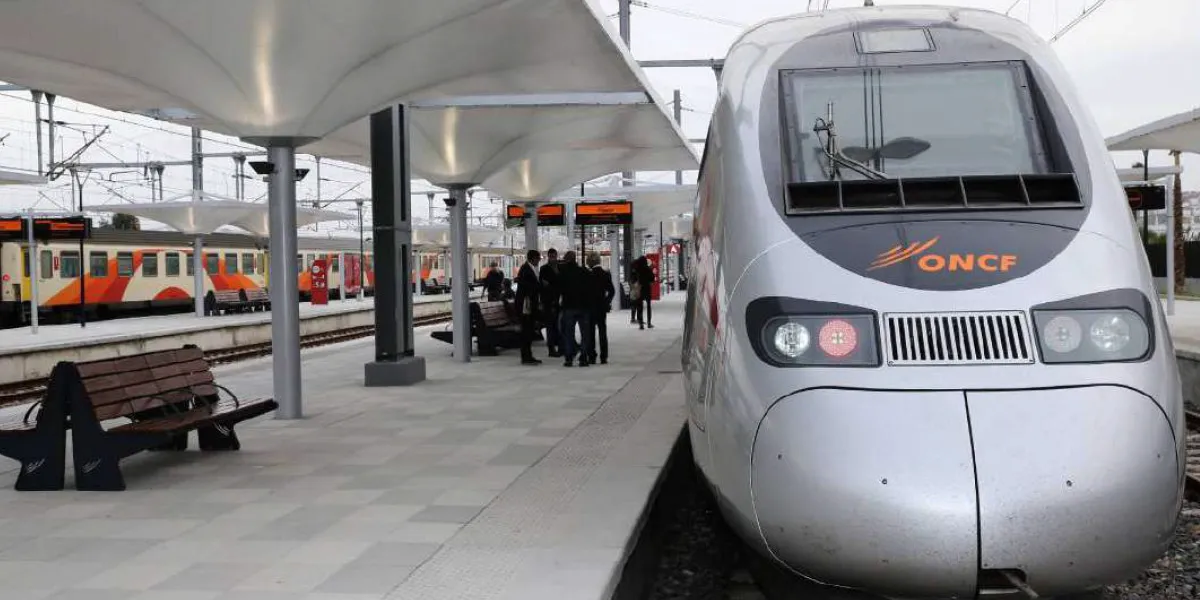
The National Office of Railways (ONCF) has recently published its financial results for the first half of 2026, showcasing a 6% increase in consolidated revenue, which now stands at 3.13 billion dirhams. This growth has been primarily driven by the success of the Al Boraq high-speed train and a robust phosphate transport sector. However, the organization is experiencing a significant decline in investments, which have plummeted by 54%, coinciding with the ambitious rail program aimed for completion by 2030 and the execution of major infrastructural projects. The financial debt has risen by 7%, reaching 48.9 billion dirhams, aligning with the strategic financing plan designed to support this transformative journey.
In the wake of the official launch of the new high-speed line connecting Kenitra to Marrakech by King Mohammed VI, ONCF has presented its mid-term assessment. The results from the first half of 2026 paint a picture of a company undergoing substantial changes: on one hand, operational resilience has been bolstered by the commercial success of Al Boraq and the dynamic freight sector, while on the other, there is a noticeable pause in investment activities before a projected acceleration in the major railway projects. The figures clearly illustrate this trend: consolidated revenue has increased by 6% to 3.13 billion dirhams, while investment expenditures have decreased by 54% to 4.8 billion dirhams.
Investment Trends and Financial Strategy
This substantial decline in investment is not indicative of a slowdown; rather, it is a normal part of the trajectory for a comprehensive infrastructural program, with the most capital-intensive phases still to come. According to the group's announcement, "all structural projects are well underway, in accordance with the planned schedule and operational objectives." ONCF is thus preparing to embark on a new chapter in its railway history, where sustainable mobility and infrastructure modernization will be of paramount importance.
The first half of 2026 has been characterized by a significant slowdown in investment spending, with ONCF's capital expenditures (CAPEX) totaling 4.8 billion dirhams by the end of June 2026, down from 10.5 billion dirhams during the same period in 2025. This sharp decline occurs against the backdrop of a growing commitment to the extensive investment program set to unfold by 2030. The group emphasizes that this investment is integral to the new high-speed line project linking Kenitra to Marrakech and all components of its investment plan for 2030. The steady trajectory of investment reinforces the expectation that the most significant spending phases will occur in the upcoming financial periods.
Furthermore, ONCF's financial debt has reached 48.9 billion dirhams by the end of June 2026, reflecting a 7% increase compared to the end of 2025. This increase aligns with expectations and is consistent with the defined financing strategy to support the 2030 investment program. The group maintains a controlled debt trajectory, ensuring the feasibility of its structural projects while safeguarding its financial sustainability. ONCF's operational performance is also on an upward trend, with consolidated revenue reaching 3.13 billion dirhams by the end of June 2026, marking a 6% increase compared to 2.96 billion dirhams in the first half of 2025.
In conclusion, despite facing challenges in investment and operational disruptions, ONCF's commitment to ethical governance and fiscal responsibility remains steadfast. The organization has successfully retained its ISO 37001 certification for its Anti-Corruption Management System for the second consecutive year, underscoring its dedication to transparency and ethical practices. The results from the first half of 2026 confirm that ONCF is poised for a progressive ramp-up of its 2030 investment program, with structural projects well underway and in line with its planned timeline. As the organization navigates the latter half of the year, it does so with a positive operational momentum driven by the performance of the Al Boraq train, resilient passenger traffic, and a robust phosphate transport sector.
As reported by leseco.ma.