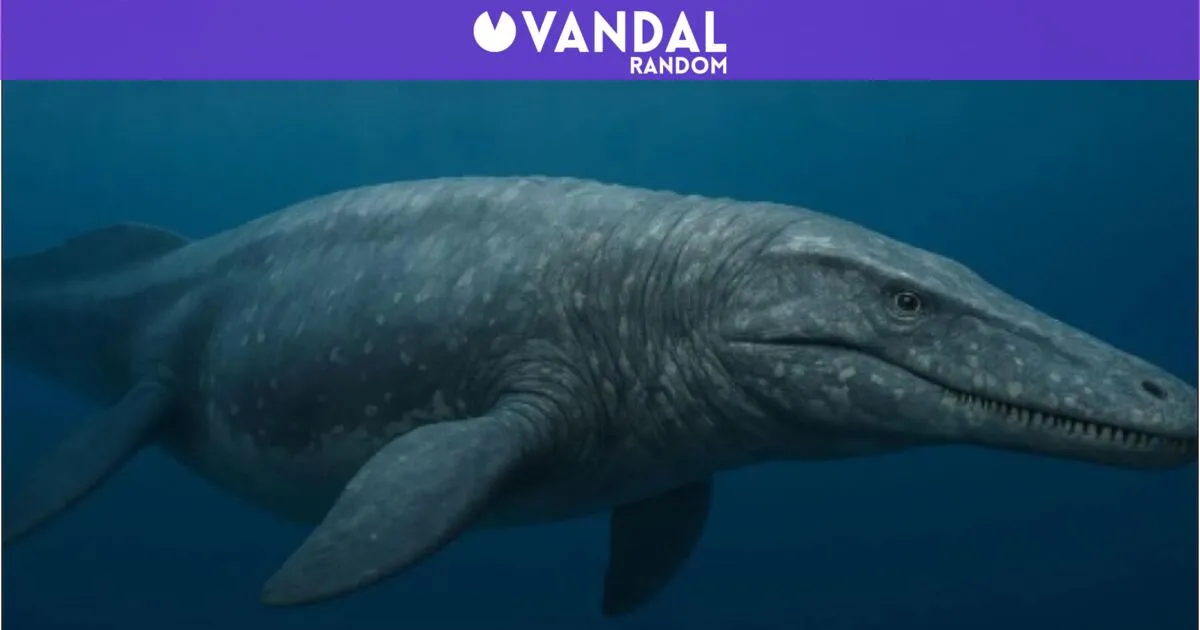

Unveiling a New Species: Pluridens imelaki
A groundbreaking discovery in Morocco is prompting paleontologists to reconsider some of their most entrenched ideas about the marine fauna that roamed the Earth during the twilight of the dinosaur era. An international team of researchers has unearthed the remains of a previously unknown species of large mosasaur, a marine reptile that ruled the seas during the Cretaceous period, living only a few hundred thousand years before the asteroid impact that led to one of the most significant mass extinctions in Earth's history.
The fossils were found in the phosphate mines of Sidi Chennane, one of the most significant paleontological sites in North Africa. After thorough analysis, scientists determined that these remains belonged to a new species named Pluridens imelaki, a formidable predator that navigated the oceans approximately 66 million years ago.
Redefining Prehistoric Marine Predators
What makes this discovery particularly astonishing is that it challenges the traditional image of large prehistoric marine predators. Measuring between eight and nine meters in length, Pluridens imelaki did not possess the enormous jaws or colossal teeth typically associated with other giant mosasaurs. Instead, it featured an elongated and extremely narrow snout filled with small, sharp teeth, an anatomical configuration much more suited for capturing fast fish and small prey.
This specialization has sparked significant interest among researchers. The existence of a marine reptile of such dimensions with such a specific diet indicates that the oceanic ecosystems at the end of the Cretaceous were far more complex than previously thought. Large predators did not merely compete for the same prey; they occupied different ecological niches and developed hunting strategies tailored to specific resources.
The discovery of Pluridens imelaki contradicts the notion that many marine reptiles were in decline before the mass extinction of non-avian dinosaurs. This specialized and successful species suggests that biodiversity in the North African seas remained high and that evolution was still creating new life forms adapted to their environment.
Experts now view Pluridens imelaki as further evidence that the oceans at the end of the Cretaceous were not depleted ecosystems. On the contrary, they harbored a wide variety of predators with significantly different behaviors and diets, reflecting an extraordinary biological richness right before the mass extinction that transformed life on Earth.
The fossil remains are currently housed at the Moroccan Natural History Museum, where specialists are working to reconstruct the anatomy and evolutionary position of this unique species with greater precision. Researchers hope that studying Pluridens imelaki will enhance our understanding of how prehistoric marine food webs functioned and what factors influenced the evolution of the gigantic sea creatures that vanished alongside the dinosaurs 66 million years ago.
As reported by vandal.elespanol.com.