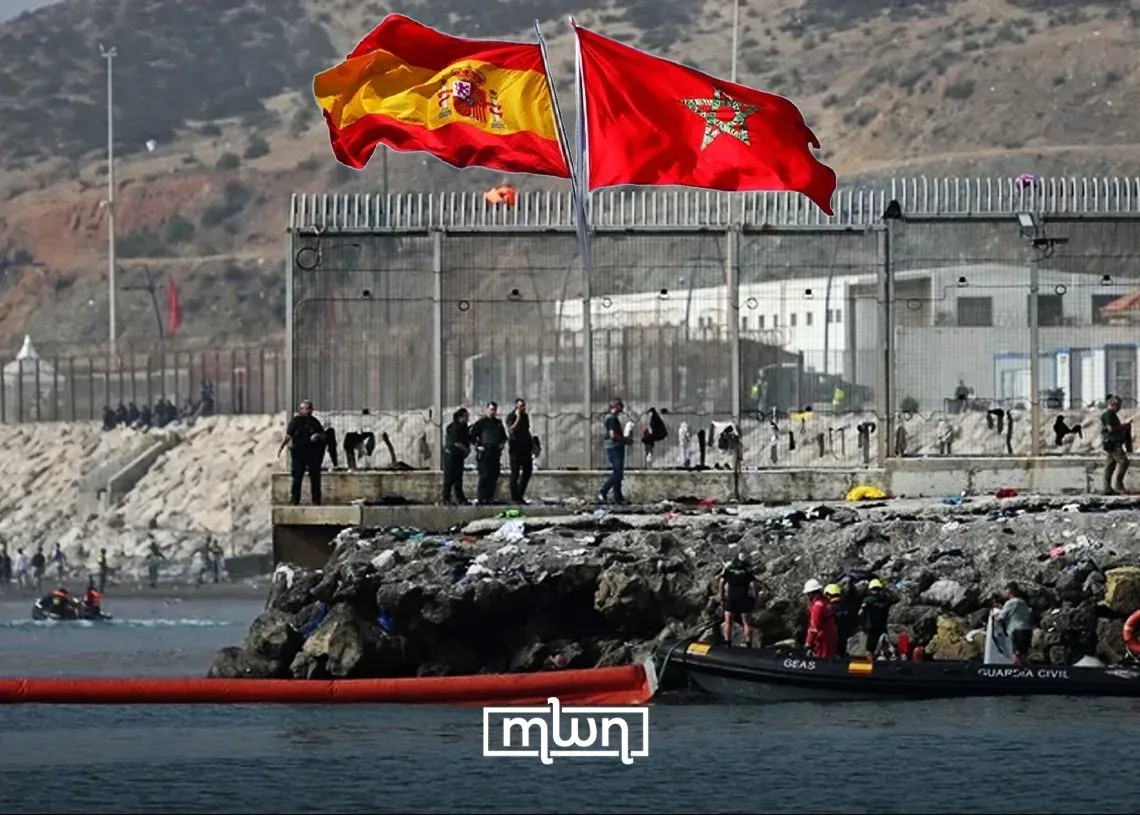
In a recent development that has captured the attention of both Moroccan and Spanish audiences, Spanish media outlets have revived allegations concerning the Royal Moroccan Navy's presence near Ceuta during the tumultuous migration crisis of July. Despite an ongoing judicial inquiry which has failed to provide substantive evidence linking Moroccan naval activity to the large influx of migrants at that time, the Spanish newspaper El País reported on October 26 that Moroccan naval vessels allegedly entered disputed waters near Ceuta on July 30 and 31, purportedly with their automatic identification systems (AIS) turned off. According to unnamed sources cited in the report, these vessels did not respond to radio communications from the Spanish Navy, leading to claims that Spanish naval ships had to approach the Moroccan vessels to signal their departure from the contested area.
The report further alleged that one of these encounters nearly resulted in a collision between a Spanish patrol vessel and a Moroccan ship. In response to these incidents, Spain reportedly bolstered its naval presence in the region and raised the issue through diplomatic channels with Moroccan authorities. Notably, these reported encounters tapered off by early August, following communications between the military officials of both nations. However, it is essential to highlight that the allegations made by the Spanish media do not substantiate that the Moroccan naval forces had any involvement in facilitating the mass arrival of migrants during that period.
Judicial Inquiry Finds No Evidence of Wrongdoing
On October 21, investigating judge María Tardón sought clarification from Spain's Defense Ministry regarding the alleged movements of Moroccan military vessels in waters claimed by Spain between July 29 and August 10. The inquiry focused on gathering information about the specific dates and times of any such naval movements, the interactions between the two navies, and any available recordings of the incidents. Judge Tardón emphasized that thus far, the investigation has not produced any objective evidence connecting the potential presence of Moroccan naval vessels to the surge of migrants arriving in Ceuta. The court's findings also indicated a lack of evidence that Moroccan naval units had organized, facilitated, or executed the crossings. Therefore, the request for information appears aimed at clarifying the events at sea rather than confirming any misconduct on the part of Moroccan authorities.
Complicated Maritime Sovereignty Issues
The allegations have reignited discussions regarding the maritime boundaries surrounding the Spanish-occupied city of Ceuta. Notably, the maritime areas adjacent to Ceuta and Melilla have not been clearly defined through a bilateral agreement between Morocco and Spain, leading to competing claims over sovereignty and jurisdiction. This situation raises pertinent questions about the legal basis for describing the alleged naval movements as violations of Spanish territorial waters, particularly without clear evidence establishing the specific locations of the vessels and the relevant maritime boundaries. To determine whether an international maritime violation occurred, it is crucial to establish concrete evidence detailing the operational areas of the vessels, the activities they were engaged in, and the legal frameworks that apply.
The latest report by El País relies heavily on unnamed sources, and the publicly available information lacks the precise coordinates necessary to evaluate the validity of the allegations. These developments arrive against the backdrop of ongoing cooperation between Morocco and Spain regarding migration management and border security, despite historical tensions surrounding Ceuta and Melilla. Spanish Prime Minister Pedro Sanchez recently emphasized the importance of Moroccan cooperation in addressing irregular migration, underscoring that such collaboration is essential to mitigate the extensive influx of migrants from Moroccan territory.
As reported by moroccoworldnews.com.