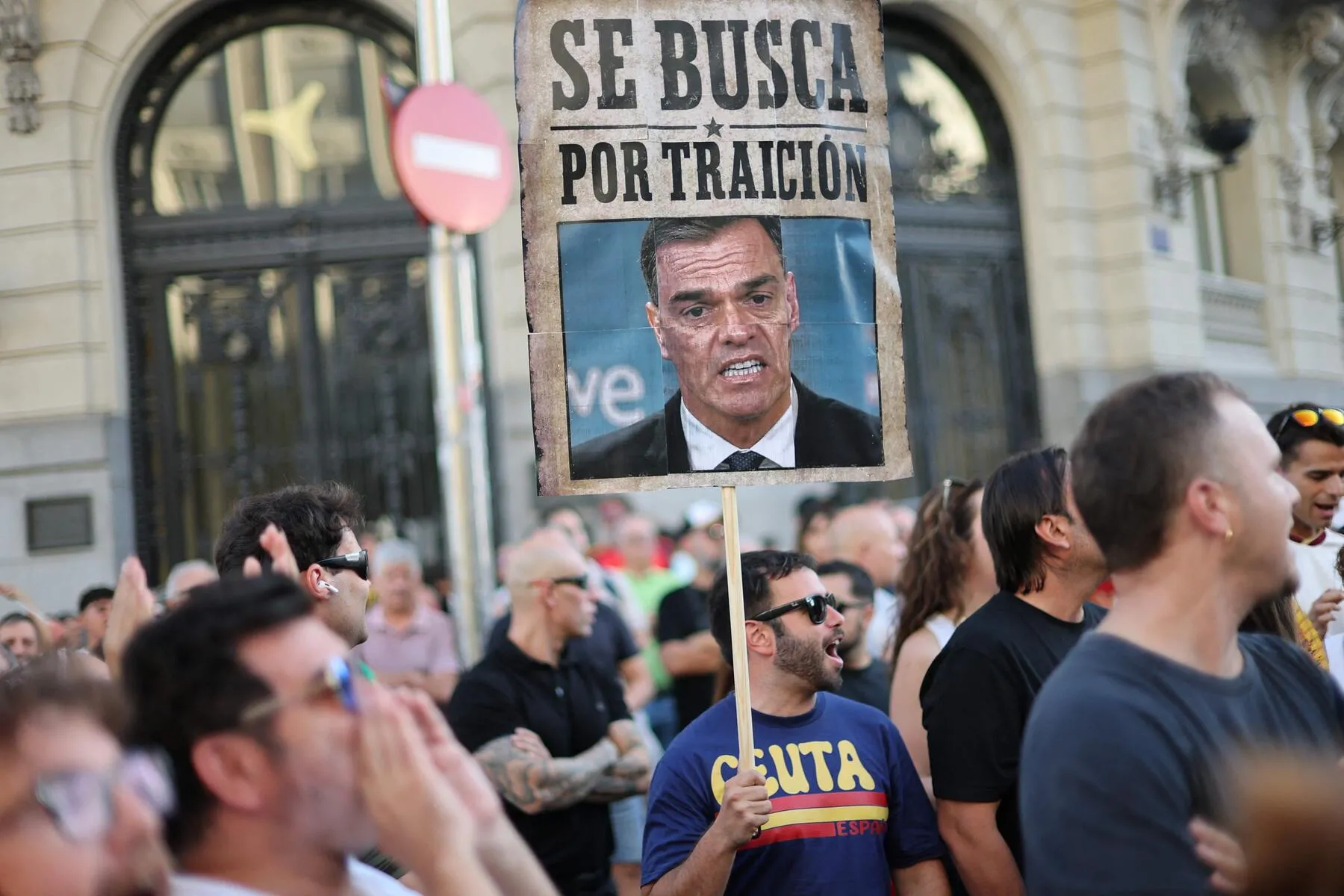
In light of the recent migrant influx into Spain’s North African exclave of Ceuta, Prime Minister Pedro Sánchez and his socialist government are facing mounting political pressure from opposition parties. The conservative Popular Party (PP), led by Alberto Núñez Feijóo, alongside the far-right Vox party, organized nationwide demonstrations accusing Sánchez of losing control and failing to secure the European external borders. Sánchez dismissed these protests as "hypocritical," asserting that while the opposition claims to show solidarity with Ceuta, they are obstructing genuine solutions by refusing to utilize the capacities of other autonomous communities for accommodating migrants and instead advocating for mass deportations that contravene legal standards.
In an interview with the SER radio station, Sánchez expressed that the real motive behind the opposition’s actions is to undermine his government. This sentiment was echoed by migration expert Sonia Martínez, who stated that the government's response to the migrant surge has indeed been slow and chaotic. The main accusation from opposition parties is that the Sánchez administration has not only been unprepared but has also disregarded warnings from the Spanish National Intelligence Centre (CNI), using this situation to politically attack the Prime Minister.
On Wednesday, members of the European Parliament from the PP and Vox held a solidarity rally in front of the European Parliament in Brussels, where they demanded Sánchez’s resignation and called for new elections. Dolors Montserrat, the Spanish Secretary General of the European People's Party (EVP), criticized Sánchez, claiming he misled both the people of Ceuta and the broader Spanish and European public by failing to defend Spain's territorial integrity in light of the alleged impending invasion.
The debate surrounding the government's handling of the migrant situation has intensified following a report from the Spanish National Police, which indicated that there were prior warnings about increased migration flows from Morocco to Ceuta. Interior Minister Fernando Grande-Marlaska strongly refuted this claim, stating that the CNI had not provided any reports or warnings, a point that further complicated the crisis management narrative. Defense Minister Margarita Robles seemed to present a different perspective, enhancing the perception of disorder in the government’s response. However, the Interior Ministry supported Sánchez by asserting that the police had not received such information.
Despite the government’s stance, Feijóo insisted that immediate action is necessary, urging Sánchez to summon the Moroccan ambassador to Spain. He pointed out that the report from the National Police suggests that Morocco may have orchestrated the migrant surge, advocating for the recall of the Spanish ambassador for consultations to discuss appropriate measures. Feijóo emphasized that the operation originated from Morocco, was sanctioned by Moroccan authorities, and appeared to be coordinated by them as well.
Sonia Martínez remarked that this situation places Sánchez in a precarious position, revealing Madrid's dependence on Rabat in managing the EU's external borders. The Moroccan government has historically reacted sensitively to issues concerning the exclaves of Ceuta and Melilla, claiming territorial rights over them.
While Sánchez acknowledged that Morocco delayed its response by a day before directing its security forces to halt the migrant influx, he indicated that Rabat quickly offered its cooperation afterward. He emphasized the necessity of resolving this crisis collaboratively with Morocco, cautioning against the loss of trust, which could exacerbate the situation.
However, this could lead to diplomatic tensions, as Sánchez announced plans for King Felipe VI to visit Ceuta soon as a gesture of solidarity. The last visit to Ceuta by Felipe's father, Juan Carlos I, in 2007, resulted in outrage from Moroccan King Mohamed VI, who denounced the visit as "regrettable" and "counterproductive," warning that Spain must take responsibility for the repercussions. The Moroccan Prime Minister at the time, Abbas El Fassi, even viewed the visit as a provocation, leading Rabat to recall its ambassador in Madrid for several months.
As reported by diepresse.com.