Internal Crisis in the Spanish Interior Ministry
The recent upheaval within Spain's Interior Ministry has intensified following the emergence of a police report that implicates Moroccan gendarmes in the surge of migrants attempting to cross into Ceuta. This situation is on the verge of reaching a critical point, as sources within the ministry indicate that significant personnel changes are imminent in the coming days, reflecting one of the most tumultuous mornings the department has experienced. At the forefront of these developments is the necessity to clarify the nature of the accusations outlined in the report, which has been compiled using open-source information. According to reports from _El Español_, the National Police have submitted a dossier to Judge María Tardón of the National Court, which asserts that Moroccan gendarmes, both in uniform and out, were actively guiding and encouraging the influx of migrants. This mass entry aimed to overwhelm the border and the city of Ceuta rather than facilitate legal migration into Spain.
Official statements from the Interior Ministry have yet to be made as they seek to determine whether the specific content of the report constitutes a police suspicion or if the officers involved consider it an established fact. Currently, the prevailing theory suggests that the report lacks definitive evidence linking Morocco and its security forces to the orchestration of the migrant surge. Police sources have conveyed to this publication that the report does not contain anything that would allow for direct attribution of responsibility to Moroccan authorities, indicating that while Moroccan gendarmes are mentioned as suspects, they are not regarded as confirmed perpetrators.
Potential Consequences and Ongoing Investigations
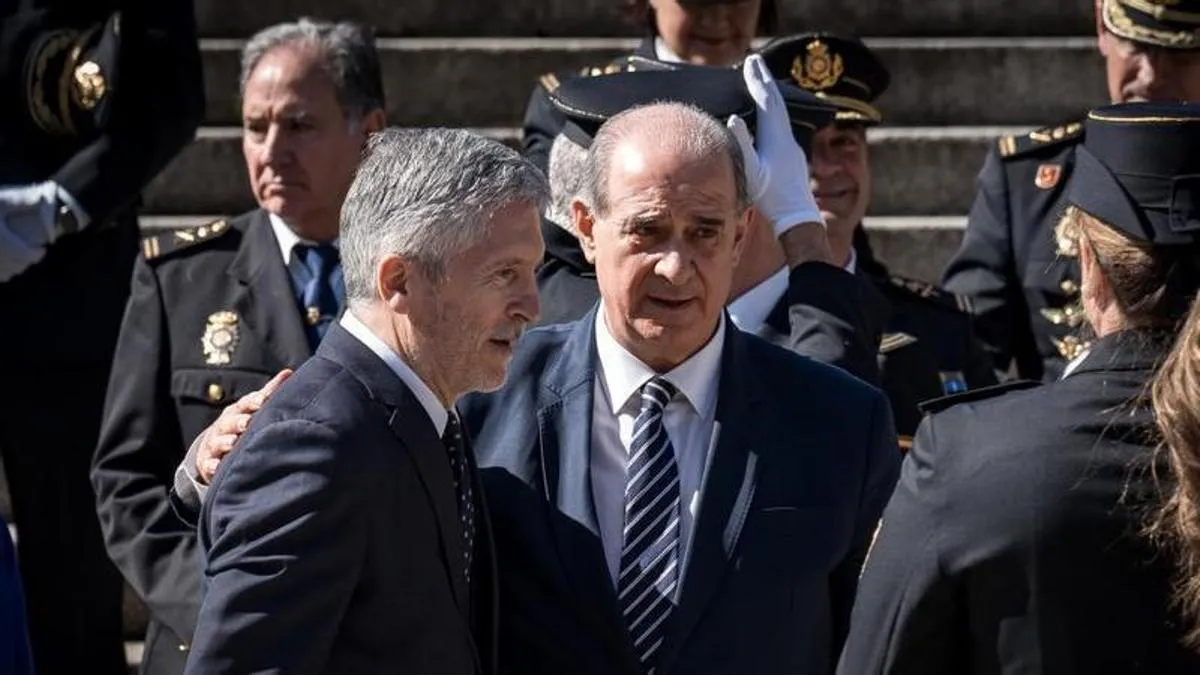
This situation culminated in a response from the Director General of the Police, Francisco Pardo, who addressed Minister Marlaska roughly twelve hours after the latter requested clarification. A letter from Minister Marlaska to his close associate and Police Director has fortified the potential for future dismissals, as it outlines the extent of accountability that could be imposed, ranging from the officers who drafted the report to higher-ups within the department. Notably absent from this chain of accountability are the Secretary of State for Security, Aina Calvo, and the Director of Coordination and Studies, Eugenio Pereiro, both of whom have significant roles within the Interior Ministry.
Internal tensions escalated further as a meeting between Francisco Pardo and Minister Marlaska was postponed while Pardo continued consultations with key operational figures. Initial discussions were held with José Luis Santafé, followed by consultations with Julián Ávila, the Chief Commissioner of Immigration, and Javier Susín, the Chief Commissioner of the General Information Commission. The reports from both of these officials formed the basis of Pardo's response to Marlaska following the alarm raised by the minister upon receiving the dossier late at night. The situation was further complicated by the realization that Pereiro, who is closely trusted by both Pardo and Marlaska, was also unaware of the report's contents.
Political circles within the ministry had anticipated that the information presented to the judge would primarily consist of a formal account regarding the migrant influx and the timeline of events surrounding July 30 and 31, rather than direct accusations against Moroccan security forces. Another report awaited by the judge, this one from the Civil Guard, could corroborate the findings of the National Police. Early reports from the Civil Guard had already hinted at the presence of Moroccan agents or guides communicating with Rabat amidst the crowd.
The political ramifications of this hybrid operation concerning Ceuta have sparked significant divisions among various factions, including the EU, the Spanish government, political parties, and ministries responsible for national security. This ongoing crisis not only underscores the complexities of Spain's response to the migrant situation but also reignites longstanding conflicts within the government that have previously surfaced in congressional discussions regarding police leadership and accountability.
As reported by elperiodico.com.